NIKKOR Z 24-70mm f/2.8 S vs S II: Which Nikon Standard Zoom Makes Sense in Singapore?
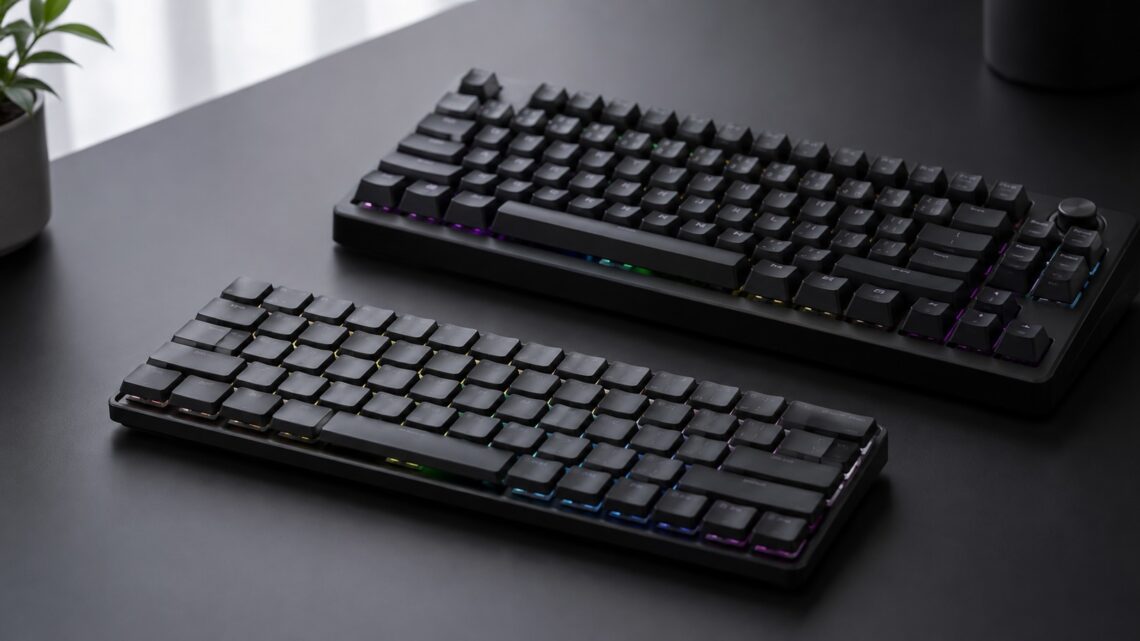
Razer Huntsman V3 Pro Low-Profile vs Standard 8KHz in Singapore

About the Author
Sesera editorial account organises laptop, AI, and gadget guides for readers in Singapore.
For the Singapore versions of the Razer Huntsman V3 Pro Tenkeyless 8KHz, the main choice is not polling rate. Both models support up to 8000 Hz polling, Rapid Trigger and Snap Tap. The practical differences are the keyboard height, switch design, adjustment range, weight and wrist-rest support.
Choose the Low-profile model if you want a lower and lighter keyboard. Choose the standard 8KHz model if you prefer a taller board, a wider actuation range, or a magnetic wrist rest. Both Singapore SKUs use a US layout.
Which one should you choose?
Start with the way you want the keyboard to sit on your desk.
| If you want… | Choose… |
|---|---|
| A lower keyboard and lighter body | Razer Huntsman V3 Pro Low-profile Tenkeyless 8KHz |
| Actuation adjustment up to 4.0 mm | Razer Huntsman V3 Pro Tenkeyless 8KHz |
| A magnetic leatherette wrist rest | Razer Huntsman V3 Pro Tenkeyless 8KHz |
| A US layout | Both Singapore SKUs |
The Low-profile model is the more distinctive upgrade. The standard model still covers the core rapid-input features, so changing models only for 8000 Hz polling or Rapid Trigger does not make much sense.
What changes between the two SG models?
These are the confirmed specifications for the exact Singapore SKUs: Low-profile RZ03-05850100-R3M1 and standard 8KHz RZ03-05520100-R3M1.
| Specification | Low-profile 8KHz | Standard 8KHz |
|---|---|---|
| Switch | Low-profile Analog Optical Switches | Gen-2 Analog Optical Switches |
| Adjustable actuation | 0.1 to 2.8 mm | 0.1 to 4.0 mm |
| Polling | Up to 8000 Hz | Up to 8000 Hz |
| Rapid Trigger | Yes | Yes |
| Snap Tap | Yes | Yes |
| Dimensions (L × W × H) | 361 × 139 × 28 mm | 363 × 139 × 38 mm |
| Weight | 795 g | 981 g |
| Wrist rest | None | Magnetic firm leatherette wrist rest |
| Layout | US | US |
Razer uses different analogue optical switch families here. The Low-profile version is built around a shorter, lower design, while the standard 8KHz version offers the broader actuation adjustment range.
Low-profile suits a lower, lighter setup
The Low-profile model is 28 mm high and weighs 795 g. The standard 8KHz model is 38 mm high and weighs 981 g, so the difference is 10 mm in height and 186 g in weight.
That makes the Low-profile model the clearer choice if you prefer a lower keyboard position or move the board between desks. Its confirmed total travel is 2.8 mm, and its adjustable actuation range runs from 0.1 to 2.8 mm.
It also supports Snap Flex. That feature matters only if you plan to use the additional input behaviour it enables. If you mainly want a low board with the core rapid-input features, the lower profile and lighter body are the simpler reasons to choose it.
Standard gives you more adjustment range
The standard 8KHz model supports adjustable actuation from 0.1 to 4.0 mm. This gives you more room to set a deeper actuation point than the Low-profile model.
Razer also lists a magnetic firm leatherette wrist rest for this model. That is useful if you want the keyboard and wrist support to work as one setup, rather than adding a separate rest later.
Razer’s current official materials do not state a total-travel figure for this exact standard 8KHz SKU. They also do not confirm whether this SKU supports Snap Flex. Those points are therefore left out of the comparison instead of being inferred from the actuation range.
Check the layout and desk fit
Both Singapore SKUs in this comparison use a US layout. Do not carry over layout information from Japan-only or older regional listings when checking these models.
The width is almost the same: 139 mm for both models. The Low-profile version is 361 mm long and the standard version is 363 mm long, so switching for a narrower desk will not make a meaningful difference. The bigger desk change is the 10 mm difference in overall height.
If you are also comparing other US-layout keyboards, our guide to US ANSI and ISO hot-swappable keyboards explains why the layout affects key positions and compatibility.
For a related 75% keyboard comparison, see Razer BlackWidow V4 75% with a US layout.
FAQ
Do both models support 8000 Hz polling?
Yes. The checked Singapore product and support pages confirm up to 8000 Hz polling for both exact SKUs. This does not by itself determine which keyboard feels better for you.
Which model is lower and lighter?
The Low-profile model is 28 mm high and weighs 795 g. The standard 8KHz model is 38 mm high and weighs 981 g.
Which model should you choose for a US layout?
Both Singapore SKUs use a US layout. Choose between them based on profile, actuation range, weight and wrist-rest support instead.
In short, choose the Razer Huntsman V3 Pro Low-profile Tenkeyless 8KHz for its lower, lighter design and confirmed Snap Flex support. Choose the Razer Huntsman V3 Pro Tenkeyless 8KHz if you want the 0.1 to 4.0 mm actuation range and the magnetic wrist rest listed by Razer.
Official references: Razer Singapore Low-profile product page, Razer Singapore standard 8KHz product page, Razer Low-profile support specification, Razer standard 8KHz support specification and Razer Low-profile product announcement.
Related Articles
-


- Lost Your Camera Lens Cap? How to Find the Right Size in Singapore
- Keychron V6 Ultra 8K in Singapore: Is a Full-Size Hot-Swap Keyboard Right for You?
- Jackery Explorer 1000 Plus vs 1000 v2: What to Check Before Buying in Singapore
- VITURE Pro 2 vs VITURE Pro: Which XR Glasses Make More Sense in Singapore?
- Canon EF24-70mm vs RF24-70mm: Which f/2.8 Zoom Makes Sense in Singapore?
- US ANSI vs ISO Hot-Swappable Keyboards in Singapore: What to Check Before You Choose
- HOVERAir VERSA vs X1 PROMAX: What to check in Singapore
- Razer BlackWidow V4 75% in Singapore: US vs Traditional Chinese Layouts
- Google Fitbit Air vs Fitbit Inspire 3: Which tracker makes sense in Singapore?
