Can an iPad Pro Replace a Laptop for Work? Office, External Monitor, and MacBook Limits
Is the iMac Good for Blender? M4, Memory, and 3D Work Limits

About the Author
Sesera editorial account organizes laptop, mini PC, smartphone, and gadget buying guides so readers can check the important points before buying.
“Can I use an iMac for Blender, or is that a mistake?”
“If I am going to learn 3D, should I buy a Mac mini, MacBook Pro, or a Windows PC instead?”
That is the right question to ask before buying an all-in-one Mac. The iMac looks simple because the screen, speakers, camera, keyboard, and mouse are handled in one purchase. Blender is less simple. Memory, GPU performance, render time, storage, and the kind of scenes you plan to build all matter.
Here is my short answer: the M4 iMac is a good Blender machine for learning, light modeling, materials, simple animation, and small 3D assets at one fixed desk. It is not the Mac I would buy mainly for heavy Cycles rendering, large scenes, simulations, or paid 3D production where waiting costs money.
This guide breaks down where the iMac works, where it becomes the wrong purchase, and how I would choose memory, SSD storage, Mac mini, MacBook Pro, or a Windows GPU PC.
Start with the kind of Blender work you will actually do
The iMac works best when Blender is part of a broader creative desk, not the only reason you are buying the computer. If you want to learn the interface, model small objects, make product mockups, build simple rooms, adjust materials, create thumbnails, or mix Blender with Photoshop and short videos, the iMac is easy to live with.
The fixed 24-inch 4.5K display is the main reason. Blender uses a viewport, outliner, timeline, shader panels, properties, and file browser. A larger built-in display feels much better than trying to learn 3D on a small laptop screen.
The mistake is buying the iMac because it looks clean, then expecting it to behave like a dedicated rendering workstation. iMac does not give you M4 Pro inside the iMac line. You cannot replace the GPU later. You cannot turn it into a CUDA or OptiX workstation. If Blender is already your main work, those limits matter.
| Blender workload | iMac fit | What I would watch |
|---|---|---|
| Learning Blender | Good | 16GB can start, 24GB is nicer |
| Low-poly modeling | Good | Display and memory matter |
| Materials and lighting | Good to fair | 24GB or 32GB helps |
| Short animation | Fair | SSD space and render time |
| Large environments | Poor to fair | Look at stronger machines |
| Heavy Cycles rendering | Poor | Mac mini, MacBook Pro, or GPU PC |
| Paid 3D production | Depends | Usually not the base iMac |
Apple lists the current iMac with the M4 chip, a 24-inch 4.5K Retina display, up to 32GB of unified memory, and up to 2TB of storage. Blender lists 8GB of RAM as a minimum and 32GB as recommended. Those two facts explain the buying decision better than the word “M4” alone.
Sources:
Apple iMac technical specifications
Blender system requirements
Buy the iMac for a clean 3D learning desk
The iMac is at its best when you want a clean desk that is ready on day one. You do not have to choose a monitor, webcam, speakers, keyboard, mouse, and desktop box separately. For a beginner or hobby creator, that has real value.
That setup is especially good for people who do several related things: Blender tutorials, YouTube learning, simple 3D assets, Photoshop thumbnails, Illustrator layouts, short video edits, and web publishing. The iMac is not only a Blender box. It is a comfortable creative desk.
If you are also choosing an iMac for Adobe work, the same memory and storage logic applies. I covered that separately in the iMac Illustrator and Photoshop guide.
Do not buy iMac if render time is the whole point
Rendering changes the answer. Modeling can feel fine on a computer that is not the fastest renderer. Waiting for final frames is different. If you render large scenes every day, the iMac can become a nice screen attached to a machine that makes you wait.
Blender can use Metal GPU acceleration on Apple silicon for Cycles rendering. That helps. It does not make the iMac the same kind of purchase as a desktop built around a high-end NVIDIA GPU.
If your work depends on Cycles rendering speed, CUDA or OptiX workflows, GPU upgrades, or heavy simulation work, compare Windows GPU desktops before you buy the iMac. If you want to stay on macOS but need more headroom, compare Mac mini and MacBook Pro as well.
Source:
Blender manual: Cycles GPU rendering
Choose 24GB memory as the practical starting point
For Blender, I would not treat 16GB as the normal iMac choice unless the work is clearly light. It can start. It can handle tutorials and small projects. But Blender scenes grow quickly once you add textures, modifiers, high-resolution assets, browser tabs, reference images, and another creative app beside it.
24GB is the configuration I would look at first for an iMac bought with Blender in mind. It gives you more room without jumping straight to the most expensive setup. If you plan to keep the iMac for years, work with Adobe apps, edit video, or run several creative apps together, 24GB is the safer baseline.
32GB is the top iMac choice for people who already know Blender will stay in their workflow. It does not turn the iMac into a workstation with replaceable graphics, but it reduces the chance that memory becomes the first wall you hit.
| Memory | Best fit | My take |
|---|---|---|
| 16GB | Learning, light models, casual use | Usable, but not generous |
| 24GB | Blender plus general creative work | The practical starting point |
| 32GB | Larger scenes, Adobe/video overlap | The safer iMac spec |
| More than 32GB | Heavy 3D production | Look beyond iMac |
If you are still deciding the iMac configuration itself, the memory and storage tradeoffs are covered in more detail in the iMac memory and SSD guide.
Do not underspend on SSD storage
Blender does not only create one small project file. Textures, downloaded assets, HDRIs, caches, reference images, rendered frames, exported videos, and backup versions start to pile up. If you also edit video or photos, storage fills even faster.
For light learning, 512GB can work. For a main creative iMac, I would look at 1TB first. Choose 2TB only if you know large project files will live on the internal drive and you do not want to manage external storage every week.
External SSDs can help, but do not use that as an excuse to buy a configuration that is too tight from day one. A fixed desk can handle external drives better than a laptop, but internal free space still affects how comfortable the Mac feels over time.
The 24-inch display is a strength, not a full workstation setup
The iMac display is one of the best reasons to buy it. For Blender, the 24-inch 4.5K screen gives you room for the viewport and panels without immediately needing an external monitor. It is also sharp enough for design, photos, video thumbnails, and general creative work.
The limit is size flexibility. You cannot choose a 27-inch or 32-inch iMac. If you already know you want a larger main display, dual monitors, a drawing tablet, a color-critical external display, or a custom desk layout, Mac mini starts to make more sense.
This is why the iMac versus Mac mini decision is really a desk decision. If you want the all-in-one desk, choose iMac. If you want to build the desk yourself, choose Mac mini. I compared that buying choice in the iMac versus Mac mini guide.
Mac mini is better when the desk needs to grow
Mac mini is the iMac alternative I would check first for Blender. It is not portable, but neither is the iMac. The difference is flexibility. Mac mini lets you choose the monitor, keyboard, mouse, external drives, speakers, webcam, and desk layout separately.
It also gives you access to M4 Pro in the Mac mini line. That matters if Blender is more than a casual tool and you want more performance while staying on macOS. You give up the simplicity of the iMac, but you gain room to build a stronger desk.
If you already own a good display, Mac mini can be the smarter Blender buy. If you own nothing and want one clean package, iMac is easier.
MacBook Pro is better when you need power away from the desk
Choose MacBook Pro when you need a portable creative machine, not just a Blender desk. The iMac cannot go to school, a studio, a client meeting, a cafe, or a trip. If your Blender work needs to move with you, the iMac is the wrong shape.
The MacBook Air is also worth checking if your work is mostly learning and light 3D. It is not stronger than the iMac as a fixed desk, but it is far more portable. I covered the tradeoff in the MacBook Air Blender guide.
The simple rule is this: iMac for a fixed all-in-one desk, MacBook Air for light portable learning, MacBook Pro for portable creative work with more headroom.
Windows GPU PCs are still worth comparing for Blender
If Blender is the main reason for the purchase, do not skip Windows GPU PCs. This is not about brand preference. It is about what Blender rewards. Dedicated graphics, GPU memory, NVIDIA CUDA or OptiX workflows, and upgrade paths can matter more than an elegant all-in-one design.
The iMac is still a good computer. It is just not the obvious answer for someone who mainly wants maximum render speed per dollar. If your work is learning, modeling, design, and general creative use, iMac can be pleasant. If your work is rendering, simulation, large scenes, and future upgrades, a GPU desktop deserves a serious look.
For a broader hardware comparison, Specsy’s creator PC list is useful for checking CPU, memory, GPU, and price instead of comparing Macs in isolation.
My buying criteria for iMac and Blender
If I were buying an iMac with Blender in mind, I would start with these rules.
- Choose iMac if Blender is for learning, light modeling, small scenes, and a clean fixed desk.
- Start at 24GB memory if Blender is a real part of the purchase.
- Choose 32GB if Blender, Adobe apps, video editing, or several creative apps will be open together.
- Do not buy the smallest storage configuration for a main creative iMac.
- Look at Mac mini if you want a larger monitor, dual monitors, or M4 Pro.
- Look at MacBook Pro if the creative machine needs to travel.
- Look at a Windows GPU PC if rendering speed is the main goal.
That puts the iMac in a clear place. It is a comfortable all-in-one creative desk that can run Blender well for the right scale of work. It is not the best answer when Blender performance is the entire purchase.
Frequently asked questions
Is the iMac good for Blender?
The M4 iMac is good for learning Blender, light modeling, materials, simple animation, and small 3D assets at a fixed desk. It is not the machine I would buy mainly for heavy Cycles rendering, large scenes, simulations, or daily production deadlines.
How much memory should I choose for Blender on iMac?
Choose 24GB as the practical starting point if Blender is a real reason for buying the iMac. 16GB is acceptable for learning and light experiments, while 32GB is the safer iMac configuration for larger scenes, Adobe apps, video editing, or several creative apps open at once.
Is the base iMac enough for Blender?
The base iMac can run Blender for tutorials and light work, but it is the configuration most likely to feel tight first. For Blender, avoid treating the lowest storage and memory configuration as the normal choice unless the work is only casual learning.
Is iMac or Mac mini better for Blender?
Choose iMac if you want a clean all-in-one desk with a sharp built-in display. Choose Mac mini if you already have a monitor, want a larger or dual-monitor setup, or want the option of M4 Pro performance in a compact desktop.
Is a Windows GPU PC better than iMac for Blender?
For Blender render speed, NVIDIA GPU rendering, CUDA or OptiX workflows, and future GPU upgrades, a Windows GPU PC can be the better tool. The iMac makes more sense when macOS, the all-in-one display, quiet setup, and general creative work matter more than maximum rendering speed.
Compare specs on Specsy
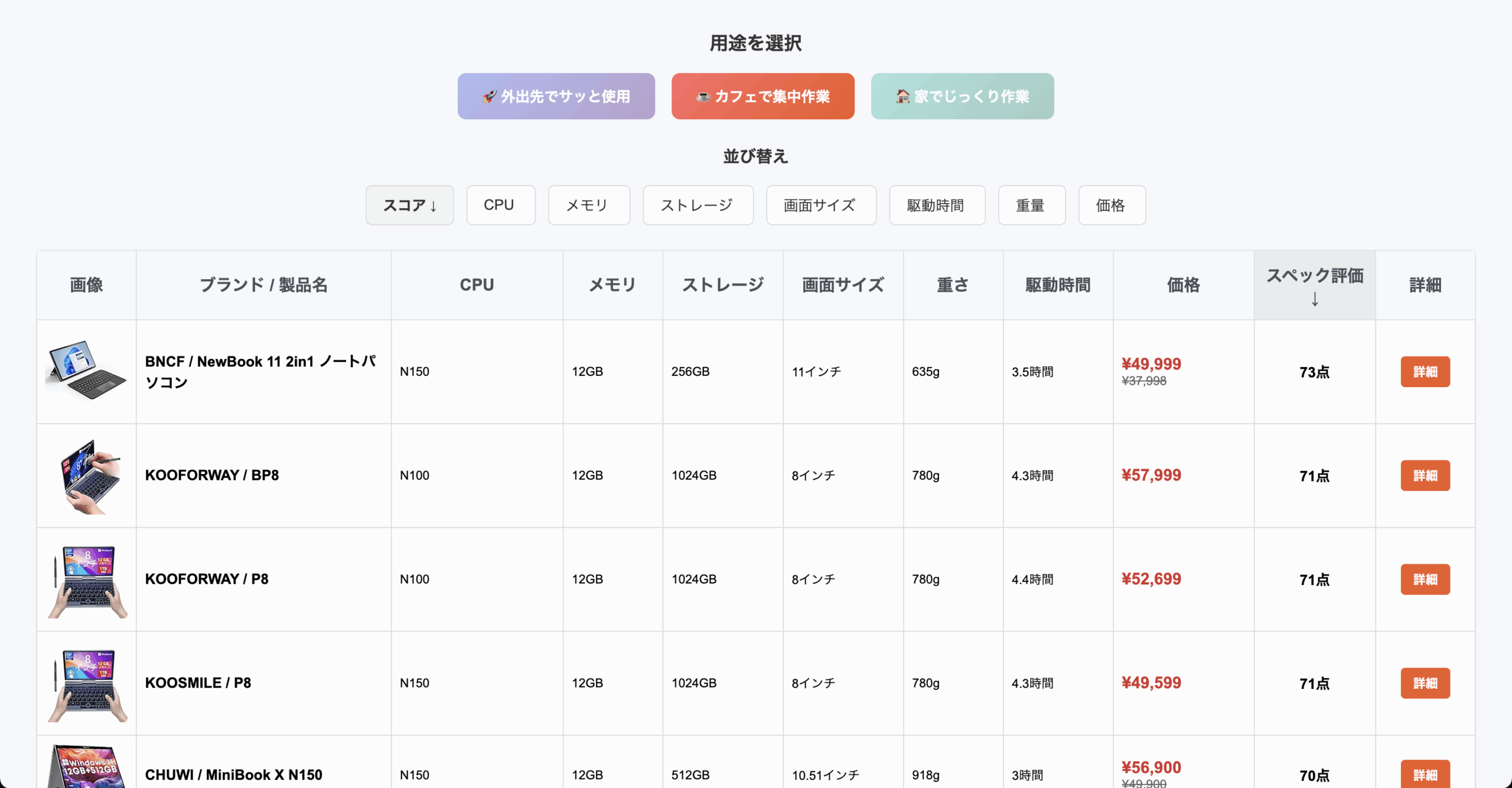
AmazonCompare compact Windows tablets, mini PCs, and laptops by specs and score.
Run by the same operator.
Related Articles
-


- Is iPad Air Good for Music Production? Logic Pro, Storage, and Limits
- Is MacBook Air good for programming? M5, memory, and Docker limits
- Is MacBook Pro good for programming? M5 Pro/Max, memory, and Docker
- How Much iPad Storage Do You Need: 128GB, 256GB, 512GB, 1TB, or 2TB?
- Is iPad Air Good for College? Notes, Reports, and Pro Tradeoffs
- Can You Still Use a Windows 10 PC? Upgrade, Replace, or Retire It
- Is iPad Pro Worth It for College? Notes, Creative Work, and iPad Air Tradeoffs
- Is the M5 iPad Pro Good for Drawing and Comics? Pencil, Size, and Storage Guide
- Is the MacBook Pro Good for AI Development? M5 Pro/Max, Memory, and Local LLMs
