
Pruning shear spring replacement: V-type, U-type, and how to tell matching size

About the Author
Sesera editorial account organizes laptop, mini PC, smartphone, and gadget buying guides so readers can check the important points before buying.
When a pruning-shear spring comes off or breaks, or the return after you squeeze gets weak, you want to look for a replacement spring of the same size right away. Length and a similar look alone do not mean it will fit, so before you buy, confirm the maker and model of the tool, then look up the officially matching spring number.
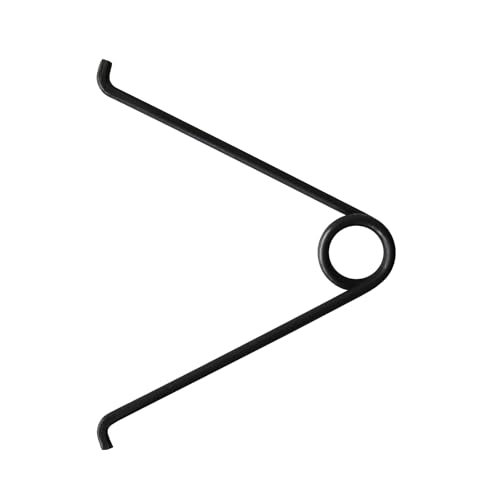
Even a spring that opens in a V, the ends that catch on the grip split into L-seat, I-seat, U-seat, and so on. “U-type” is not a separate kind next to V-type. In maker naming it is a V-type U-seat, an end shape.
If you cannot read the model, do not throw away the spring that came off. Photograph the stamp on the blade, the left and right mounts, and the shape of the pins or grooves. If the spring looks normal but the blades feel heavy, sap or a pivot problem can also be the cause. Before you buy, confirm it is a spring-only failure so you do not buy twice.
Before you buy a spring, split why it will not open
If the blades will not open after you squeeze, the spring is not always the cause. If the spring is broken, one side is missing, or it has dropped and you cannot find it, it is easier to treat as a spring swap.
When you inspect, close the blades and lock them, and do not touch the cutting edges. Look not only at the spring but also at the left and right pins or grooves and the seats that hold the spring. That makes it easier to judge whether a swap will fix it.
| What you see | Likely cause | What to do next |
|---|---|---|
| The spring is broken, or one side is missing | Damage to the spring itself | If the mounts are fine, it is a swap candidate. Confirm the maker and model of the tool |
| The spring is off, or dropped and missing | Spring came off or was lost | Check pins, grooves, and seats for chips or deformation. If none, look up the specified spring |
| A pin is broken, or a groove or seat is chipped | Damage to the mount that holds the spring | A spring alone will not fix it. Stop using it and ask the maker or a blade shop |
| The spring is still there, but sap or resin is stuck on the blades or pivot | Dirt causing poor motion | Clean the way the maker describes. Do not pry it open |
| The spring looks normal, and only the area around the center screw is stiff | Pivot adjustment, such as the center screw too tight | Do not take it apart at random. Ask the maker or a blade shop to adjust it |
| The lock is deformed, or the blades will not open even after you release it | Lock-mechanism failure | Stop using it and confirm whether it can be repaired |
| A blade is bent, there is a gap in the blades, or the pivot wobbles | Damage or wear of the blades or pivot | Stop using it and consider repair or replacement of the tool |
If you confirm a broken or dropped spring and the mounts are also fine, next confirm the maker and model of the shears. If you cannot tell the cause, do not force a spring on. Safer to send photos of the whole tool and the mounts to the maker or a blade shop.
Look up a replacement spring from the maker and model of the shears
Look up a replacement spring from the maker and model of the shears, not from the length of the spring you removed. Read the remaining letters on the blade or grip and gather clues in this order.
- Read the maker name, logo, numbers, and letters on the flat face of the blade
- Look for stamps or stickers on the inside of the grip, around the stopper, and near the pivot
- Check whether the box, backing card, or instructions from purchase list the tool model
- If you bought it online, confirm the product name and model from the Amazon or other order history
- On the maker’s official parts list, look up the spring number that matches the tool model
If the letters are gone and you cannot read the model, do not order a similar-looking spring by eye. You can send photos and ask the maker. These four shots in a bright place make the tool and mounts easier to judge.
- The whole shears with the blades closed
- Any stamp or logo left on the blade
- The pivot including the center screw
- The left and right spring seats and the shape of the pins or grooves
On Okatsune, for example, the specified spring for No.101, 180mm is No.421, and for No.103, 200mm and No.104, 210mm it is No.422. ARS is not shared across the same 120 line either: 120S-7 and 120S-8 take 999120S03, while 120B and 120DX take 999120DX01. Even if the look or overall length is close, they are different parts, so confirm the tool model first, then compare the seat shape.
V-type L, I, and U seats, mushi-type, and coil-type have different mounts
Pruning-shear springs split, in large shape, into V-shaped and coil. V-shaped also has end differences. Maker product names call them V-type L-seat, V-type I-seat, V-type U-seat, and so on. It is not a two-way choice of V-type or U-type. The accurate view is which seat shape of V-type it is.
If it is V-type, look not only at the spring but also at the seats on the grip where both ends catch. For mushi-type and coil-type, the pins on the tool and the mount positions also have to match.
| Official name | Where to look | Examples | Note when you pick |
|---|---|---|---|
| V-type L-seat | Both ends of the V spring and the seats on the grip | SS-1, SS-2, SS-7 | Small opening, large opening, and slim are different parts. Match through the tool model |
| V-type I-seat | Both ends of the V spring and the seats on the grip | SS-3, SS-4 | Split into small and large, so do not decide from overall shear length alone |
| V-type U-seat | The ends of the V spring and a U-seat mount | SS-9 | The naming is based on the 2022 official catalog. Confirm current matching models with the maker |
| Mushi-type | The coil section and both ends, and whether pins exist on the tool and where | SS-5, SS-6 | There are small and large. Also match pin position and thickness |
| Coil-type | Coil mount position and how both ends sit | For SGP-37, SGP-38, and similar | Specified parts differ by model. Do not reuse even if outer diameter or length is close |
Even the same V-type, L-seat and I-seat, and small opening and large, are different springs. A similar shape is not evidence of interchange, so confirm official fit from the tool model. If you cannot judge, measure the old spring and the mounts and ask the maker.
Q. Does the feel in the hand change between V-shaped and coil-type?
A. ARS describes V-shaped as a spring with a snap-back feel, and coil-type as a spring that absorbs shock and feels softer in the grip. The feel differs, but for a swap use the shape specified for the tool model, not preference.
If you cannot read the model, measure the mounts and the old spring
If you cannot read the tool model, measure the shear mounts and any old spring you still have, and send that to the maker with photos. Numbers alone do not show where you started measuring or damage on the part, so also keep a photo with a ruler or caliper against it.
| Where to measure on the tool | How to record | Why a photo is needed |
|---|---|---|
| The pin the spring hangs on | Record pin diameter and how far it sticks out from the grip face, in mm | You can also see bend or wear, not only thickness |
| Left and right pins | Measure center to center from one pin to the other | It shows which point you used as the base |
| The groove that holds the spring | Measure groove width and depth, and note orientation toward the tip or the grip end | Easier to see how the groove opens, and whether a chip has widened it |
| Mount holes | Measure hole diameter and center-to-center distance of the left and right holes | You can check hole shape, layout, and cracks around them together |
Measure the old spring in a state with no force applied, at the places each shape needs. Especially on coil-type, free length, outer diameter, inner diameter, wire diameter, and turn count are each separate values. Do not collapse them into one “spring diameter.”
| Spring shape | Where to measure | Values to tell the maker |
|---|---|---|
| V-type | From each end to the fold, and the width when it sits open | Free overall length or height, opening width, strip width, thickness, shape of both ends |
| Mushi-type | The center coil and both ends that extend from it | Overall length, outer diameter of the coil, wire diameter, length and direction of both ends |
| Coil-type | The whole coil and the wire with no force applied | Free length, outer diameter, inner diameter, wire diameter, turn count, shape of both ends |
“Product size” on a maker product page can mean the outer shape or packing of the goods, not the mount dimensions. Measured values are an aid for asking the maker or a blade shop. They do not guarantee interchange with a spring of similar size. Do not cut, bend, or spread a spring that does not fit. Confirm the official spring number that matches the tool model.
Match tool model and spring number on the official fit table
You can buy a replacement spring when maker, tool model, and spring number all match official information. Do not decide from a rough label such as “for 180mm” or “for the 120 series.” Compare through the letters and numbers at the end.
If the parts list does not have your tool, or you cannot read the stamp, it is safer not to swap in a similar generic part. Attach photos of the tool and mounts and ask the maker or a blade shop for a matching part.
On Okatsune, No.101 takes No.421, and No.103 and No.104 take No.422
On Okatsune pruning shears, confirm not only the length of the tool but the model that starts with No. No.103 and No.104 share No.422 even if overall length differs, while No.101 is specified as No.421.
| Tool model | Specified matching spring | Shape | Note when you choose |
|---|---|---|---|
| No.101, 180mm | No.421, 2-pack | V spring | Do not mix it up with the part for No.103 and No.104 |
| No.103, 200mm | No.422, 2-pack | V spring | Shared with No.104. Do not use it on No.101 |
| No.104, 210mm | No.422, 2-pack | V spring | Still No.422 at 210mm. Do not generalize it to another maker’s 210mm |
If the stamp on the tool is No.101 and overall length is 180mm, No.421 applies. Also confirm the mounts are not damaged before you pick it.
No.103, 200mm and No.104, 210mm use a shared No.422. Do not decide that 210mm overall length needs a different, larger spring.
On Senkichi, match L-seat, I-seat, and coil-type through the tool name
You cannot pick a Senkichi replacement spring from the large class V-type alone. Match the tool name and length, plus the difference of L-seat, I-seat, and coil-type.
| Class | Tool model / name | Specified matching spring | Note when you choose |
|---|---|---|---|
| V-type L-seat | SGP-1N | SS-1, small opening | Do not mix it up with the large opening for SGP-2N |
| V-type L-seat | SGP-2N | SS-2, large opening | Do not mix it up with the small opening for SGP-1N |
| V-type I-seat | Kin-Senkichi pruning shears 180mm, Senkichi gold forged pruning shears 180mm | SS-3, small | Confirm both the tool name and 180mm |
| V-type I-seat | Kin-Senkichi pruning shears 200mm, Senkichi gold forged pruning shears 200mm | SS-4, large | Confirm both the tool name and 200mm |
| Coil-type | SGP-37, SGP-38 | Round-handle coil spring | Do not use it on models other than the labeled match |
SGP-1N matches V-type L-seat, small-opening SS-1. Treat even a similar shape as separate from large-opening SS-2.
SGP-2N takes V-type L-seat, large-opening SS-2. Even if the tool name is similar, do not use it on SGP-1N.
For Kin-Senkichi pruning shears or Senkichi gold forged pruning shears in 180mm, V-type I-seat small SS-3 is a candidate. Confirm both the tool name and 180mm match.
The same tool name in 200mm splits to V-type I-seat large SS-4. Do not reuse 180mm SS-3 because the shape is close.
SGP-37 and SGP-38 specify a coil spring for a round handle. Even if outer diameter or length is close, do not use it on models other than those two.
On ARS, read past the series name and look up the parts list
On ARS, similar names such as 120, V, and VS still split spring numbers. Do not stop at the series name. Read S, B, DX, and PRO after the numbers and match the parts list.
| Tool | Official spring number | Easy-to-mix other part |
|---|---|---|
| 120S-7, 120S-8 | 999120S03 | Different from 999120DX01 for 120B and 120DX |
| 120B, 120DX | 999120DX01 | Do not use 999120S03 for 120S |
| VS-7Z / 8Z / 9Z, VS-7R / 8R / 9R, 130DX / 130B, 140DX / 140B / 140L-DX | 999VS04 | Different from 999VP02 for V-7PRO and V-8PRO |
| V-7PRO, V-8PRO | 999VP02 | Do not mix it up with 999VS04 for VS |
| 133DX-W | 99913305 | Do not swap in a spring from another similar series |
120S-7 and 120S-8 take 999120S03. The 120S tools are discontinued, but the official parts list plans to supply replacement parts through December 31, 2030.
120B and 120DX, the VS line, the V-PRO line, and 133DX-W each specify a different spring number. If your tool is not in the table above, do not substitute 999120S03. Confirm on the ARS parts list or with support.
Close the blades and photograph the spring orientation before you swap
The steps below are for manual one-hand pruning shears. Electric pruning shears have a different structure and safety setup, so do not swap them this way. Follow the maker’s instructions or repair guidance.
Even on manual pruning shears, where the spring mounts and which way it comes off differ by model. Do not set a single left-or-right rule. If the instructions have model-specific steps, those come first.
- Place the pruning shears on a flat, bright bench away from branches and soil
- Wear cut-resistant gloves. If you worry the spring will fly, also have safety glasses
- Check the instructions, close the blades and lock them, or put them in the maker’s stated safe position
- Before you remove the old spring, photograph overall orientation, both ends, and how they catch on pins or grooves
- Match the new spring number to the tool model, and compare end shape and mount position with the old spring
- Keep your face and fingers out of the spring’s return path, and remove the old spring the way the instructions show
- Hold the grip side, not the blades, and seat both ends of the new spring in the specified pins, grooves, or seats. Do not cut, bend, or spread the spring
- Release the lock slowly and open and close a few times without cutting a branch. Look for ends that have shifted or lifted
- If blade open-close, the lock, and the pivot are fine, last check the cut on a thin branch
If it will not go in unless you push hard, the spring lifts after mounting, or it comes off while opening and closing, stop the work there. The mount may be damaged or the number may be wrong. Safer not to force it, and to ask the maker or a blade shop.
Stop the work if a mount is damaged or a blade wobbles
If a new spring does not fit, or you find damage on the tool, do not keep swapping with force. If you can close the blades, lock them, and pick who to ask by the groups below.
| Group | What matches | Action |
|---|---|---|
| Stop at once | The new spring will not go in unless you bend it a lot. Even mounted, it keeps flying out | Stop working or remounting it. Keep face and hands out of the return path. Confirm the number and mount method with the seller or maker |
| Confirm with the maker | You cannot fix the maker and model of the tool. You cannot confirm official fit. After cleaning sap, blade motion is still heavy | Send photos and any readable stamp to the maker. Also ask the shop or a blade shop whether a matching part or an inspection is possible |
| Consider repair or replacement of the tool | A pin, groove, or seat is chipped or bent. A blade is bent, there is a gap, or the pivot wobbles. The lock will not hold, or it comes off by itself. Heavy rust on a mount or the pivot | Stop using it. Ask the seller, maker, or a blade shop whether it can be repaired. If you cannot confirm it is safe, consider replacing the tool |
When you ask, gather photos that show the state first. Shoot these three sets in a bright place, and send them without forcing the blades open or remounting the spring.
- The whole shears closed, and the stamp of the maker name and tool model
- Close-ups of the spring number, both ends, and the pins, grooves, or seats
- The blades, pivot, lock, and any heavy rust
If a stop condition matches, this is not the stage to try another spring and see if it fixes it. Confirm whether the mount or lock needs repair, and have them judge whether it can return to a state you can use safely.
Summary: pick only a product where the tool model and spring number match
Before you pick a replacement spring, first confirm it is a spring-only failure, then look up the official spring number from the maker and model of the tool. Then look at damage to pins, grooves, and seats, and judge whether you can swap it yourself safely.
Spring shape and measured values are aid information to tell the maker when you do not know the number. They do not guarantee interchange. If your tool is not in the table below, do not cut or bend a generic part. Attach photos and ask the maker or seller.
| Maker | Matching tool | Spring number / product name |
|---|---|---|
| Okatsune | No.101, 180mm | No.421 / Okatsune Unique 180mm pruning-shear replacement spring 2-pack No.421 |
| Okatsune | No.103, 200mm and No.104, 210mm | No.422 / Okatsune pruning-shear No.103 200mm and No.104 210mm shared replacement spring 2-pack No.422 |
| Senkichi | SGP-1N | SS-1 1P / Senkichi garden-shear replacement spring V-type L-seat small opening SS-1 1P |
| Senkichi | SGP-2N | SS-2 1P / Senkichi garden-shear replacement spring V-type L-seat large opening SS-2 1P |
| Senkichi | Kin-Senkichi pruning shears 180mm, Senkichi gold forged pruning shears 180mm | SS-3 1P / Senkichi garden-shear replacement spring V-type I-seat small SS-3 1P |
| Senkichi | Kin-Senkichi pruning shears 200mm, Senkichi gold forged pruning shears 200mm | SS-4 1P / Senkichi garden-shear replacement spring V-type I-seat large SS-4 1P |
| Senkichi | SGP-37, SGP-38 | JAN 4977292070133 / Senkichi pruning-shear replacement part round-handle coil spring |
| ARS | 120S-7, 120S-8 | 999120S03 / ARS Corporation ARS 120S-series replacement spring 1-pack 999120S03 silver |
As an Amazon Associate I earn from qualifying purchases.
