Is the Mac mini Good for Blender? M4, M4 Pro, Memory, and GPU Limits
What Computer Do You Need for Japan e-Tax? Card Reader, Phone, Printer

About the Author
Sesera editorial account organizes laptop, mini PC, smartphone, and gadget buying guides so readers can check the important points before buying.
“I want to file Japanese taxes with e-Tax, but I do not know what kind of computer I need.”
“Do I also need an IC card reader, a printer, or accounting software?”
This is a common place to get stuck. e-Tax itself does not require a powerful computer, but tax filing is not just one web form. You may need a supported browser, My Number Card authentication, PDF saving, scanned documents, a printer, accounting records, and a device that is safe enough for tax and identity information.
The practical answer is this: for Japan e-Tax, choose a computer that matches the National Tax Agency’s current supported environment, can run an updated browser, handles PDFs comfortably, and lets you authenticate with either a smartphone or an IC card reader. A high-end laptop is unnecessary. An old unsupported computer is the bigger risk.
This guide separates what you actually need: the computer, smartphone authentication, IC card reader, printer, file storage, accounting software, and when a simple Windows laptop is enough.
Start with the official e-Tax environment
For Japan e-Tax, the first check is not CPU performance. It is the official supported environment. Before filing, check the current operating system, browser, and required setup on the National Tax Agency e-Tax site: e-Tax software web version environment.
This matters because tax filing can fail even on a fast computer if the browser, extension, app, or authentication method is not supported. It can also become unsafe if the computer no longer receives updates.
| What to check | Why it matters | Safe decision |
|---|---|---|
| OS and browser | Decides whether e-Tax works | Match the official environment |
| My Number Card authentication | Needed for card-based filing | Use smartphone or card reader |
| PDF handling | Needed for receipts and copies | Use a computer you can organize |
| Printer | Needed only for paper copies or mailing | Do not buy automatically |
| Accounting software | Useful for business income | Choose based on filing complexity |
| Security updates | Protects tax and identity data | Avoid unsupported old PCs |
If the computer can run the official environment smoothly and you know how to save your documents, it is probably good enough for e-Tax. If it is old, unsupported, or confusing to use, replace or prepare it before filing season.
You do not need a high-end laptop
e-Tax does not need a gaming laptop, creator laptop, or expensive workstation. For normal tax filing, the workload is browser tabs, PDF files, forms, email, cloud storage, and perhaps accounting software.
For salary income deductions, medical expense deductions, hometown tax donation records, and ordinary PDF documents, a regular laptop is enough. The screen and file organization often matter more than raw speed.
| Filing use | Computer need | Judgment |
|---|---|---|
| Salary income deductions | Browser and PDF comfort | Ordinary laptop is enough |
| Medical expense deduction | Spreadsheet or list handling | Use a larger, readable screen |
| Hometown tax records | PDF and receipt organization | Storage clarity matters |
| Freelance or sole proprietor | Accounting app plus browser | 16GB memory is safer |
| Family filings | Folders and shared records | Use a reliable main computer |
If you are buying a computer mainly for tax filing and home paperwork, 16GB of memory and a 512GB SSD are comfortable. You can file with less in simple cases, but do not choose the cheapest machine if it will also handle family documents, printer setup, video calls, and daily browser use.
Avoid old unsupported computers for taxes
An old computer is risky for tax work when it cannot update the browser, cannot receive security updates, opens PDFs slowly, or has years of unclear files and saved passwords. Tax filing involves identity information, My Number Card authentication, income records, and sometimes banking-related sites. That is not the place to rely on an abandoned machine.
The problem is not only speed. It is trust. If you do not know whether the operating system, browser, security settings, and file storage are still reliable, prepare a safer device before filing season.
If you use an older Windows laptop, check its support situation before using it for tax work. The English guide to home printers and computer needs also explains why old drivers and unsupported devices can create extra trouble around paperwork.
Use smartphone authentication when it works
An IC card reader is not mandatory for everyone. The National Tax Agency explains that My Number Card authentication from a computer can use either an IC card reader/writer or a smartphone in supported flows: starting My Number Card method from a PC.
If your smartphone supports the required app and you are comfortable scanning the QR code shown on the computer, start there. It is cheaper and avoids buying another device for a once-a-year task.
The National Tax Agency also explains QR-code authentication for using a smartphone with the PC flow: QR-code authentication guide. If this works smoothly for you, there is no need to buy a card reader first.
Buy a card reader for repeated filing
A card reader becomes useful when you want the filing process to stay on the computer, help family members every year, avoid smartphone authentication problems, or use a setup that feels more predictable.
Do not buy a random reader only because it says “IC card.” Check supported card readers through the official guidance. The e-Tax site points users to compatible IC card reader/writer information: IC card reader/writer guidance.
| Situation | Best choice | Reason |
|---|---|---|
| You file once a year | Try smartphone first | Cheaper and simpler |
| You help family members | Consider card reader | More repeatable workflow |
| Your phone is unsupported | Use compatible card reader | Authentication is the blocker |
| You dislike app switching | Use card reader | PC-centered workflow is easier |
| You use multiple devices | Check compatibility first | Reader, OS, and browser must align |
The safe order is smartphone first for simple personal filing, card reader for repeated or family filing, and official compatibility checks before buying anything.
Prepare apps and passwords before filing
Many e-Tax problems happen before the tax form itself. The computer may need browser settings, an extension, the MynaPortal app flow, My Number Card PINs, PDF save folders, or printer setup.
The National Tax Agency has guidance related to the MynaPortal app and required setup depending on the authentication flow: MynaPortal app guidance. For Chrome users, the e-Tax AP extension may also be part of the setup: e-Tax AP extension guidance.
Prepare these before the deadline week. A fast laptop will not help if you do not know the My Number Card PIN, cannot install the required app, or cannot find the saved PDF after filing.
| Before filing | Why it matters | Do it early |
|---|---|---|
| My Number Card PINs | Needed for authentication | Before opening e-Tax |
| Browser and extension | Can block submission | Before deadline week |
| MynaPortal app | Needed for smartphone flow | Install and test |
| PDF save folder | Needed for records | Create by tax year |
| Printer check | Needed only for paper copies | Test one page first |
A printer is useful but not mandatory
For e-Tax electronic submission, a printer is not automatically required. You may only need PDFs and digital records. Buy or prepare a printer when you want paper copies, need to mail supporting documents, help family members, or prefer physical files for tax records.
If you do buy a printer, prioritize plain-paper reliability, scanning, Wi-Fi, ink cost, and easy setup over photo quality. Tax filing is not a photo-printing task. It is a paperwork task.
The English guide to home printers, phone printing, and scanning covers the broader printer decision. For e-Tax, keep the printer simple unless you also need it for family paperwork throughout the year.
Organize tax files by year
File storage is easy to underestimate. After filing, you may have submission receipts, PDFs, medical expense documents, donation receipts, accounting files, scanned papers, and screenshots of important confirmations.
Create one folder per tax year before you start. Inside it, create simple folders such as income, medical expenses, donations, e-Tax copies, accounting software, and scans. This is not about being neat. It is about not wasting time next year.
Cloud storage can help, but do not leave sensitive tax documents scattered across shared devices. If family members use the same computer, use separate accounts and avoid saving tax files in random Downloads folders.
Accounting software depends on filing complexity
If you are an employee filing simple deductions, paid accounting software may be unnecessary. If you are self-employed, file blue return, manage multiple income sources, track expenses, or need invoice and receipt records, accounting software can save time.
| Filing case | Accounting software? | Computer priority |
|---|---|---|
| Employee deductions only | Usually no | Browser and PDF comfort |
| Small side income | Maybe | Clear income and expense records |
| Sole proprietor | Recommended | 16GB memory is safer |
| Blue return filing | Strongly recommended | Stable laptop and backups |
| Many receipts | Useful | Scanning and storage matter |
If you enter many numbers, a larger keyboard or external numeric keypad may be more useful than buying a faster CPU. Think about the actual work: typing, checking, saving, and backing up.
Choose a reliable home laptop
If you buy a computer for e-Tax and home paperwork, choose reliability and comfort over flashy performance. A simple Windows laptop with a readable screen, enough storage, current updates, and ports for a printer or card reader is enough for most homes.
A 13- or 14-inch laptop is easier to store and move. A 15-inch laptop is easier for tax forms, PDFs, and family paperwork at a desk. If you do not carry it often, the larger screen can be the better home choice.
Windows on Arm laptops can have strong battery life, but check printer drivers, card reader support, and accounting software before buying one for tax work. Compatibility matters more than battery life when the task involves government sites and peripherals.
If you need a general laptop shortlist, use Specsy’s PC buying check after deciding your screen size, memory, storage, and printer or card reader needs.
The practical answer before filing
For Japan e-Tax, you do not need a high-performance PC. You need a supported and updated environment, a reliable browser, My Number Card authentication, a clear PDF save location, and a device you trust with tax information.
Use smartphone authentication if it works for your phone and filing style. Buy a compatible IC card reader if you file every year from the PC, help family members, or want a more predictable workflow. Prepare a printer only if you need paper copies, scanning, or mailing.
If your current computer is old, unsupported, or confusing to use, replace or prepare it before filing season. You can check current laptop prices on Amazon, but confirm e-Tax compatibility, printer support, and card reader support before buying.
Frequently asked questions about e-Tax computers
Do I need a high-performance computer for e-Tax?
No. For most Japan e-Tax filing, a normal laptop is enough. The important checks are the official supported environment, updated browser, PDF handling, authentication method, and security updates.
Is an IC card reader required for e-Tax?
Not always. If your smartphone supports the required authentication flow, it can replace a card reader in many PC-based e-Tax workflows. A card reader is useful for repeated filing, family filing, or avoiding smartphone authentication trouble.
Do I need a printer for e-Tax?
Not if you submit electronically and keep digital copies. A printer is useful when you need paper records, mailing, family paperwork, or printed copies for your own files.
Can I use an old computer for e-Tax?
Avoid old unsupported computers for tax work. If the OS or browser cannot update, PDF handling is slow, or saved accounts are messy, use a safer and more current device before entering tax or My Number information.
Is Windows or Mac better for e-Tax?
Use the platform you can manage reliably, but check the National Tax Agency’s current supported environment and your accounting software, printer, and card reader compatibility before filing.
Compare specs on Specsy
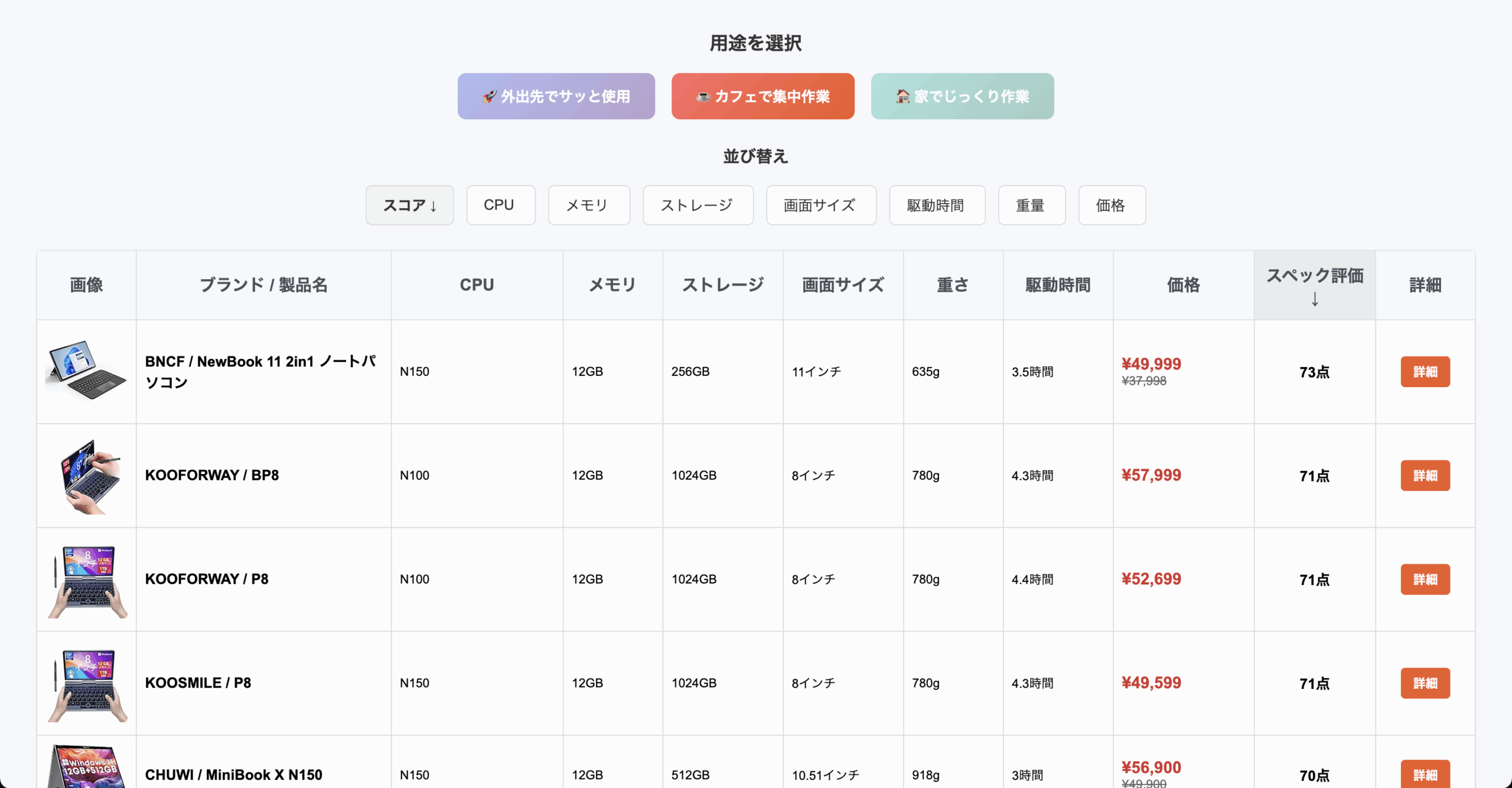
AmazonCompare compact Windows tablets, mini PCs, and laptops by specs and score.
Run by the same operator.
Related Articles
-


- Is the MacBook Pro Good for Illustrator and Photoshop? Memory and SSD Guide
- How much SSD storage for MacBook Air: 512GB, 1TB, 2TB, or 4TB?
- Is the iPad Air Good for Digital Art? iPad Pro Differences, Size, and Storage
- Is iPad Pro good for video editing? M5, storage, and Final Cut Pro
- Is the iMac Good for Blender? M4, Memory, and 3D Work Limits
- Can you edit video on MacBook Air? M5, memory, and Pro limits
- Best Laptop Brands by Use: Work, College, Home, and Creative Tasks
- What to Ask Before Buying a Laptop in a Store
- How Much iPad Storage Do You Need: 128GB, 256GB, 512GB, 1TB, or 2TB?
