iPad Air 11-inch or 13-inch: Which Size Should You Buy?
Is MacBook Air good for college? Reports, classes, and portability

About the Author
Sesera editorial account organizes laptop, mini PC, smartphone, and gadget buying guides so readers can check the important points before buying.
MacBook Air is a good college laptop for most students, especially if your work is reports, slides, research, PDFs, online classes, email, and campus portals.
The mistake is buying only by the lowest price or the biggest screen. College use depends on the whole routine: carrying the laptop, charging it, using it in class, writing for hours, joining video calls, and following department software rules.
My default pick is the 13-inch MacBook Air with 16GB memory and 512GB SSD. Move to 24GB memory or 1TB storage if you plan to keep it through four years, store many photos and videos, or use heavier creative apps. Choose MacBook Pro only if your major has a clear reason for it.
| Student use | MacBook Air fit | Check before buying |
|---|---|---|
| Reports and essays | Very good | Keyboard, storage, Microsoft 365 access |
| Online classes | Very good | Camera, mic, battery, USB-C accessories |
| Handwritten notes | Mixed | iPad may fit better if handwriting is the main use |
| Intro coding | Good for many courses | Department software and Windows requirements |
| Photo or light video work | Good with enough storage | 24GB memory or 1TB SSD if projects grow |
| CAD, 3D, engineering labs | Depends on the course | Windows-only software, GPU needs, lab rules |
MacBook Air fits report-heavy college work
MacBook Air is strongest when college work is built around writing, reading, research, presentations, PDFs, browser tabs, video calls, and cloud storage. That covers a lot of students.
Apple’s current MacBook Air uses the M5 chip, starts with 16GB unified memory and 512GB SSD, and comes in 13-inch and 15-inch sizes. Apple also lists up to 18 hours of video streaming and up to 15 hours of wireless web use, though real battery life depends on brightness, calls, tabs, and apps.
The point is not that every student needs the newest chip. The useful part is the balance. MacBook Air is light enough to carry, quiet enough for class, fast enough for normal assignments, and simple enough to use as the main laptop for home, campus, and travel.
Source:
Apple MacBook Air technical specifications
13-inch is the safer campus size
If you are not sure which size to buy, I would start with the 13-inch MacBook Air. It is easier to carry across campus, easier to use on small lecture hall desks, and easier to fit into a backpack with books, a charger, and a water bottle.
The screen is smaller, but college work often happens in short spaces: between classes, in libraries, in cafes, on trains, or at shared tables. A laptop that comes with you every day is usually more useful than a bigger one that stays in the dorm.
Apple lists the 13-inch MacBook Air at 2.7 pounds. That difference sounds small on a spec sheet, but it matters when the laptop is carried for months, not minutes.
Related reading:
MacBook Air 13-inch or 15-inch: which size should you buy?
15-inch is for screen-first students
The 15-inch MacBook Air makes sense when the built-in screen matters more than the carry weight. If you write long papers, keep lecture slides and notes side by side, or rarely work in cramped classrooms, the larger display can feel calmer.
It is also useful if you do not plan to use an external monitor. A 15-inch screen gives you more room for documents, spreadsheets, browser research, and video calls without turning every window into a shuffle.
I would still avoid choosing 15-inch only because it looks more comfortable in a store. Think about your real week. If you walk a lot, use public transport, or carry the laptop every day, the 13-inch model is usually the cleaner student choice.
16GB memory is the floor, not the upgrade
For college use, 16GB memory is the sensible starting point. It is enough for Word, PowerPoint, browser research, Zoom or Teams, PDFs, note apps, and normal multitasking.
I would not buy less for a laptop you expect to keep for several years. Browser tabs, cloud sync, video calls, background apps, and future macOS updates add up. A laptop can still be technically usable while feeling cramped.
Choose 24GB if you do heavier multitasking, creative projects, programming, large spreadsheets, or you want more room for a four-year plan. Choose 32GB only when your major or workload gives you a real reason. Do not buy it only because it is the biggest option on the page.
Related reading:
How much memory for MacBook Air: 16GB, 24GB, or 32GB?
512GB is the practical baseline
Storage is where many student laptops become annoying. Reports and slides are small, but photos, videos, downloads, PDFs, app installers, offline files, class recordings, and project folders build up over time.
The current MacBook Air starts at 512GB SSD, which is a much better student baseline than the older 256GB entry point. For many students, 512GB is enough if cloud storage is used well and old files are cleaned up once in a while.
Move to 1TB if you keep a lot of photos and videos, work with media projects, download large class materials, or want fewer cleanup sessions over four years. External storage is useful, but your active school files usually end up on the internal SSD.
Related reading:
How much SSD storage for MacBook Air: 512GB, 1TB, 2TB, or 4TB?
Microsoft 365 works, but check campus rules
Word, Excel, PowerPoint, Outlook, OneNote, and the web versions of Microsoft 365 can work on Mac. Microsoft’s own system requirements for education and business plans list Mac support for one of the three most recent versions of macOS, with 4GB RAM and 10GB of disk space as the Mac app requirements.
That does not mean every course is Mac-friendly. Some schools use browser-based systems, which are usually fine. Some departments require Windows-only apps, exam lockdown tools, accounting software, engineering tools, or lab software that is easier on Windows.
Before buying, check your department’s laptop requirements as well as the college’s general technology page. A MacBook Air is a safe choice for many majors, but the wrong choice for a course that clearly requires Windows software.
Source:
Microsoft 365 system requirements for business, education, and government use
Online classes are fine, but ports are limited
MacBook Air is comfortable for online classes. The current model includes a 12MP Center Stage camera, a three-mic array, and a speaker system that is enough for normal calls. For lectures, office hours, and group work, that is not the weak point.
The part to plan is ports. MacBook Air has MagSafe charging, a headphone jack, and two Thunderbolt 4 USB-C ports. That is enough for many students, but it can feel tight when you need HDMI, USB-A, an SD card reader, wired Ethernet, or several accessories at once.
If your classes involve presentations, projectors, cameras, lab devices, or older USB accessories, budget for a small USB-C hub. Do not wait until the first presentation day to find out which adapter your classroom needs.
iPad is better for handwritten notes
If your main college task is handwriting notes, annotating PDFs, drawing diagrams, or reading textbooks on a couch, an iPad can feel more natural than a MacBook Air. Apple lists iPad Air in 11-inch and 13-inch sizes, with Apple Pencil Pro and Apple Pencil USB-C support.
The problem is that note-taking is not the whole college workflow. Reports, citations, file management, spreadsheet work, presentations, browser tabs, and some campus systems are still easier on a laptop.
For most students, I would buy MacBook Air first and add an iPad later if handwritten notes become important. Buy iPad first only if your program is strongly note-heavy and you already have another computer available.
Related reading:
iPad Air or MacBook Air: which should you buy for college or work?
Is iPad good for college? Notes, reports, and laptop limits
Apple iPad Air technical specifications
MacBook Pro is for heavier majors
MacBook Pro is not automatically better for college. It is heavier, more expensive, and often more power than a report-heavy student needs. For general college work, MacBook Air is usually the better value.
MacBook Pro starts to make sense for majors where the laptop is also a production machine. Think larger programming projects, video editing, music production, 3D work, design apps, external displays, or long sessions where sustained performance matters.
Apple’s current MacBook Pro lineup has M5, M5 Pro, and M5 Max options with higher memory ceilings than MacBook Air. That matters for some workloads, but it should be tied to a course requirement or real project need.
Related reading:
Do college students need a MacBook Pro?
Apple MacBook Pro technical specifications
The configuration I would buy
For most students, I would buy the 13-inch MacBook Air with 16GB memory and 512GB SSD. It is the clean default for reports, classes, research, video calls, campus life, and light creative work.
If you want it to last through four years with fewer compromises, I would consider 24GB memory or 1TB SSD. Choose 24GB first if you multitask heavily or use creative and coding apps. Choose 1TB first if you store a lot of files, photos, videos, and offline course materials.
I would choose the 15-inch model for students who work mostly at a desk and care more about screen space than carry weight. I would choose MacBook Pro only when the major, software list, or project work clearly points there.
| Student type | Configuration I would choose | Why |
|---|---|---|
| Most college students | 13-inch Air / 16GB / 512GB | Best balance of carry weight, battery, and cost |
| Long four-year use | 13-inch Air / 24GB / 512GB or 1TB | More room for multitasking and future apps |
| Screen-first student | 15-inch Air / 16GB or 24GB / 512GB or 1TB | More workspace without moving to MacBook Pro |
| Media or coding-heavy major | Air 24GB / 1TB, or MacBook Pro if required | Memory, storage, and sustained performance matter more |
| Windows-only course software | Check a Windows laptop first | Course requirements matter more than brand preference |
Frequently asked questions
Is MacBook Air enough for college reports?
Yes. MacBook Air is more than enough for reports, essays, slides, PDFs, web research, email, and normal online classes. The better question is whether your major requires Windows-only software or heavier apps.
Should a student buy the 13-inch or 15-inch MacBook Air?
Choose 13-inch if you carry the laptop every day. Choose 15-inch if you work mostly at a desk and want more built-in screen space. For most campus life, 13-inch is the safer default.
How much memory should a college MacBook Air have?
16GB is the baseline I would buy for normal college use. Choose 24GB if you want more room for four years, heavier multitasking, programming, creative work, or large browser sessions.
Is 512GB SSD enough for a college MacBook Air?
512GB is enough for many students if cloud storage is used well. Choose 1TB if you store many photos, videos, large downloads, creative projects, or offline course files.
Can an iPad replace MacBook Air for college?
An iPad can be better for handwritten notes and PDF annotation, but it is not the safer main computer for most students. Reports, files, spreadsheets, presentations, and campus systems are usually easier on MacBook Air.
Do college students need MacBook Pro instead of MacBook Air?
Most students do not need MacBook Pro. It makes sense for majors with heavy creative apps, coding, 3D, video, music production, multiple displays, or clear department requirements.
Bottom line
MacBook Air is a strong college laptop for most students. It is especially good when the work is reports, classes, research, video calls, online systems, and light creative projects.
Start with the 13-inch MacBook Air, 16GB memory, and 512GB SSD. Move up only when your real college use gives you a reason: more storage for files, more memory for heavier apps, 15-inch for screen space, or MacBook Pro for a demanding major.
Compare specs on Specsy
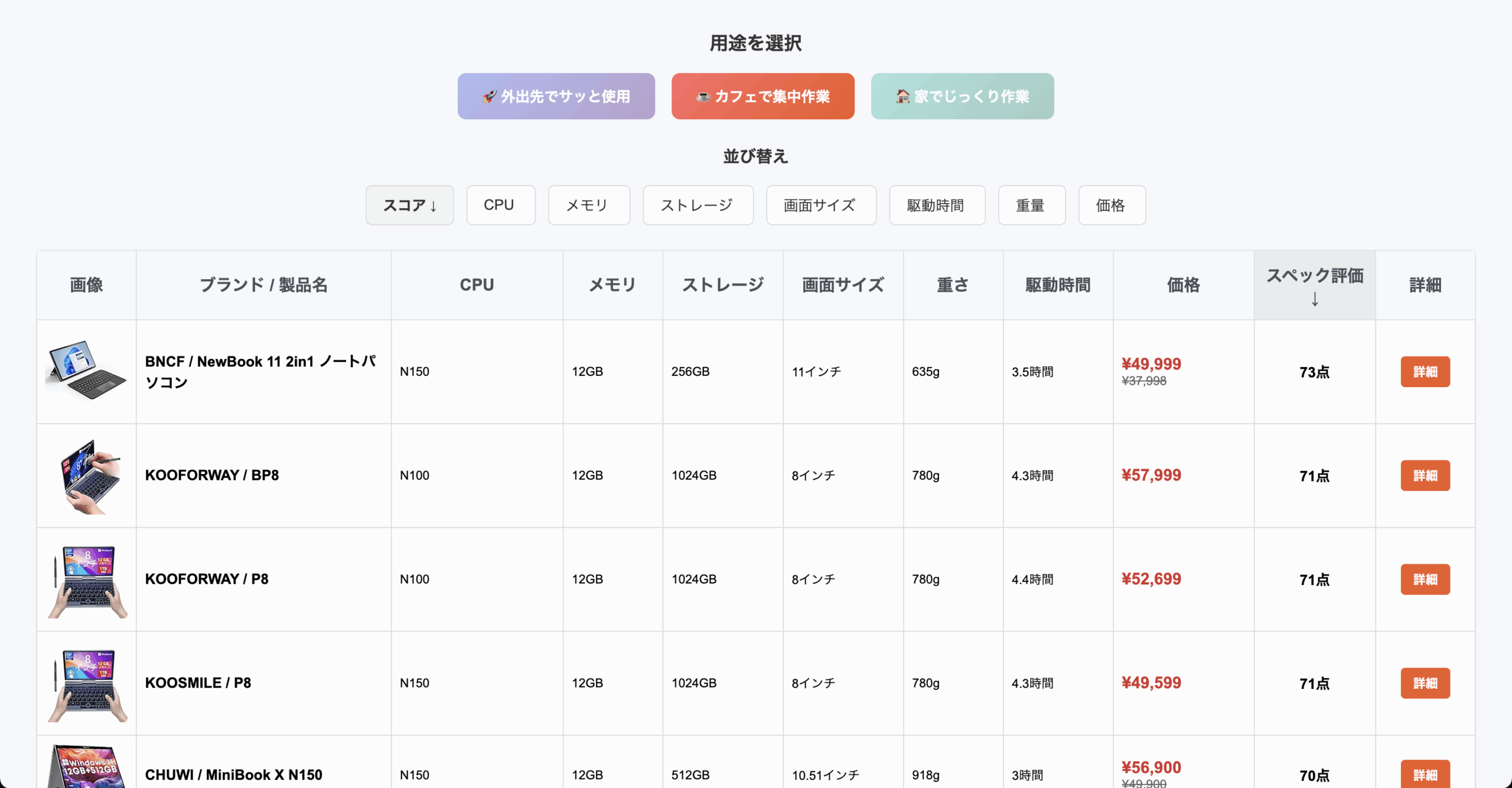
AmazonCompare compact Windows tablets, mini PCs, and laptops by specs and score.
Run by the same operator.
Related Articles
-


- Can You Edit Video on the iPad A16? Storage, Final Cut, and iPad Air Tradeoffs
- Recommended Laptop Specs for College: Memory, Storage, Windows or Mac
- Is the iPad Air Good for Study Notes? 11-inch vs 13-inch, Storage, and Apple Pencil
- Can the iPad Air Stream with OBS? M4, Screen Recording, and Mac Limits
- How to Manage Passwords for Older Parents: Accounts, 2FA, Recovery
- How much memory for MacBook Pro: 24GB, 48GB, 64GB, or 128GB?
- How much SSD storage for MacBook Pro: 1TB, 2TB, 4TB, or 8TB?
- Is MacBook Air good for programming? M5, memory, and Docker limits
- Is the Mac mini Good for Music Production? M4, M4 Pro, Memory, and Storage
