Is iPad Air Good for Music Production? Logic Pro, Storage, and Limits
Is the iPad Pro Good for Study Notes? 13-inch, Storage, and iPad Air Tradeoffs

About the Author
Sesera editorial account organizes laptop, mini PC, smartphone, and gadget buying guides so readers can check the important points before buying.
Should you really buy an iPad Pro just for study notes?
That question gets expensive fast. The iPad Pro itself is already a premium tablet, and the real study setup usually adds Apple Pencil Pro, a case, maybe Magic Keyboard, and enough storage to keep textbooks, PDFs, class slides, and recordings together.
My short answer is this: iPad Pro is excellent for study notes, but it is often overkill if notes and PDFs are all you need. It makes the most sense when you want one device for handwritten notes, large PDFs, exam prep, creative work, and light productivity beyond school.
Start with the honest answer
If your study routine is mostly handwritten notes, lecture slides, PDF highlighting, and YouTube or recorded classes, iPad Pro will feel fast, smooth, and comfortable. Apple’s current iPad Pro specs list the M5 chip, Apple Pencil Pro support, 11-inch and 13-inch sizes, and 256GB to 2TB storage options, so the hardware is not the weak point.
The weak point is value. For a student who only wants a clean digital notebook, iPad Air often lands in the better spot. It supports Apple Pencil Pro too, comes in 11-inch and 13-inch sizes, and costs less before accessories.
That does not make iPad Pro a bad study device. It means you should buy it for the parts that Air does not fully give you: the better display, ProMotion smoothness, thinner body, higher storage tiers, stronger performance headroom, and a setup that can also handle drawing, video, photo work, or serious PDF-heavy study.
Choose 11-inch if you carry it all day
The 11-inch iPad Pro is the better study size for people who move around. If you take it to class, the library, a cafe, and home every day, the smaller size matters more than it sounds on a spec sheet.
It is easier to pull out on a small desk. It fits better beside a laptop. It is less annoying to hold while reading. For quick lecture notes, flashcards, PDF review, and handwritten problem solving, 11 inches is enough.
The tradeoff is split-screen comfort. A textbook PDF on one side and handwritten notes on the other can feel cramped. You can do it, but you will zoom and move the page around more often.
If your study day is built around commuting and quick sessions, I would choose 11-inch. It keeps the iPad feeling like a notebook instead of a second computer.
For a deeper size comparison, see the 11-inch vs 13-inch iPad Pro guide.
Choose 13-inch for PDFs and desk study
The 13-inch iPad Pro is the better choice when the iPad will sit on a desk for long study sessions. This is the size that starts to feel like a real digital binder.
If you read textbook PDFs, mark up research papers, keep lecture slides open, or write notes while looking at reference material, the larger screen is not a luxury. It removes friction. You see more of the page, write with more room, and spend less time pinching and scrolling.
The downside is portability. A 13-inch tablet plus keyboard case can feel close to laptop territory, especially once you carry a charger, notebook, or other school gear. If you already own a laptop, the 13-inch Pro can become the device you love at home but hesitate to bring everywhere.
My practical split is simple: choose 13-inch if you regularly study with PDFs beside your notes. Choose 11-inch if you mainly write one page at a time in class.
iPad Air is the real rival for most students
For study notes, iPad Air is the device iPad Pro has to beat. Not the regular iPad, not a cheap Android tablet, and not a laptop. Air is the closest alternative because it handles the main study jobs well while keeping the total cost lower.
If your goal is handwritten notes, PDF annotation, online classes, and light reports, iPad Air is usually enough. You still get Apple Pencil Pro support on the current Air models, and you can choose 11-inch or 13-inch depending on how much screen space you want.
Choose iPad Pro instead when the screen matters every day, when you are sensitive to pen smoothness, or when the same device will also be used for art, design, video, photo editing, or work. If the Pro features would only be nice to have, Air is the more sensible buy.
For the student-focused Air side of the decision, read the iPad Air college notes guide. If you are deciding between the regular iPad and Air, the iPad vs iPad Air guide is the cleaner comparison.
The regular iPad is enough for a lighter setup
The regular iPad can handle notes, reading, video classes, and basic PDF markup. It is the better starting point if your budget is tight and you do not need the best pen experience.
The catch is that the iPad Pro feels better in the places students touch every day: screen, speakers, performance headroom, accessory experience, and multitasking. Those differences are not abstract. They show up when you spend two hours marking a dense PDF or keep jumping between a browser, notes, files, and a lecture video.
I would not buy iPad Pro just to escape the regular iPad. I would buy it only if the better screen, Pencil Pro workflow, and long-term headroom match how you actually study.
For a lower-cost college setup, see the regular iPad for college guide.
Storage depends on PDFs, media, and creative work
For study notes alone, 256GB is a comfortable starting point on iPad Pro. Handwritten notes are not usually the storage problem. The problem is everything that collects around them: textbook PDFs, downloaded lectures, screenshots, scanned pages, photos, app data, and creative files.
| Storage | Best fit | My take |
|---|---|---|
| 256GB | Notes, PDFs, classes, exam prep | Enough for most study-first buyers |
| 512GB | Large PDFs, videos, photos, several years of school files | The safer long-term choice |
| 1TB | Study plus art, video, photo, or large local files | Buy only if Pro is also a creative device |
| 2TB | Heavy media libraries and professional work | Too much for normal study use |
If you expect to keep the iPad for several years and you hate managing storage, 512GB is the calmer choice. If your files mostly live in Google Drive, OneDrive, iCloud, or your school system, 256GB is easier to justify.
For a broader breakdown by iPad model and use case, see the iPad storage guide.
Apple Pencil Pro is the accessory to budget for first
If you are buying iPad Pro for study notes, Apple Pencil Pro should be part of the budget from the beginning. Without a Pencil, the iPad Pro becomes a very nice screen for reading and typing, but it loses the main reason students look at it.
Apple’s compatibility page lists Apple Pencil Pro support for iPad Pro 11-inch and 13-inch models with M4 and M5, and also lists Apple Pencil (USB-C) as a compatible lower-cost option. For study notes, the cheaper Pencil can work, but Pencil Pro is the better match for a Pro setup.
The difference is not only about drawing. It is about how often you write, erase, switch tools, mark up diagrams, and stay in a note-taking flow without thinking about the tool. If you write for hours every week, buy the Pencil you actually want to use.
Magic Keyboard is useful, but not the first study purchase
Magic Keyboard is not required for handwritten notes. If your main work is writing formulas, annotating PDFs, sketching diagrams, and reviewing slides, a Pencil and a good stand case matter more.
Magic Keyboard becomes worth considering when you also want to write papers, respond to messages, manage class portals, make slides, or use the iPad Pro as a light laptop. It makes the iPad feel more like a computer, but it also adds cost and weight.
For many students, the better order is this: buy the iPad, Apple Pencil Pro, and a protective case first. Add a keyboard only if you keep reaching for a laptop for typing.
Do not replace your laptop without checking your classes
iPad Pro can replace a laptop for some students, but it should not be assumed. Notes, PDFs, reading, email, web research, presentations, and short writing are fine. Long papers, Excel-heavy assignments, coding, lab software, file uploads, and desktop-only apps are where the iPad can become frustrating.
This is especially important for college. A course syllabus can change the answer. If your major requires Windows software, programming tools, statistics packages, CAD, or strict file workflows, buy the laptop first and treat the iPad as the study companion.
If you are choosing a computer for college, the college laptop specs guide is the safer place to start.
Who should buy iPad Pro for study notes?
Buy iPad Pro for study notes if you study with large PDFs, want the smoothest Pencil experience, care about the display, and will also use the tablet for creative work, work tasks, or heavy media. The 13-inch model is especially strong if your desk setup is built around PDFs and handwritten notes.
Do not buy it just because it is the best iPad. If your study routine is simple, iPad Air gives you most of the practical note-taking value for less money. If you still need a real computer for classes, a MacBook Air or Windows laptop should come before the iPad Pro.
The cleanest recommendation is this: choose iPad Air for study-first value, iPad Pro 11-inch for premium notes with daily portability, and iPad Pro 13-inch for PDF-heavy desk study plus creative work.
Quick buying checklist
- Choose 11-inch if you carry the iPad every day.
- Choose 13-inch if you often use PDFs beside notes.
- Start at 256GB for notes and normal study files.
- Choose 512GB if you keep videos, scans, and school files locally.
- Budget for Apple Pencil Pro before Magic Keyboard.
- Pick iPad Air if study notes are the main reason to buy.
- Buy a laptop first if your classes need desktop software.
FAQ
Is the iPad Pro good for handwritten study notes?
Yes. iPad Pro is excellent for handwritten notes, PDF markup, textbooks, lecture slides, and exam prep. It becomes hard to justify only when notes and PDFs are the entire job and iPad Air would already be enough.
Should I choose the 11-inch or 13-inch iPad Pro for studying?
Choose the 11-inch model if you carry it every day and take quick notes in class. Choose the 13-inch model if you often read PDFs beside your notes, study at a desk, or want the iPad to feel closer to a notebook-and-textbook setup.
Is iPad Air enough for study notes instead of iPad Pro?
For most note-taking and PDF study, iPad Air is enough. iPad Pro is easier to justify if you also want the OLED display, ProMotion, higher storage tiers, creative work, external display use, or the best possible writing experience.
Can iPad Pro replace a laptop for college work?
It can replace a laptop for notes, PDFs, reading, short writing, presentations, and simple web-based work. It is weaker for long papers, Excel-heavy assignments, coding, file management, and classes that require desktop software.
Compare specs on Specsy
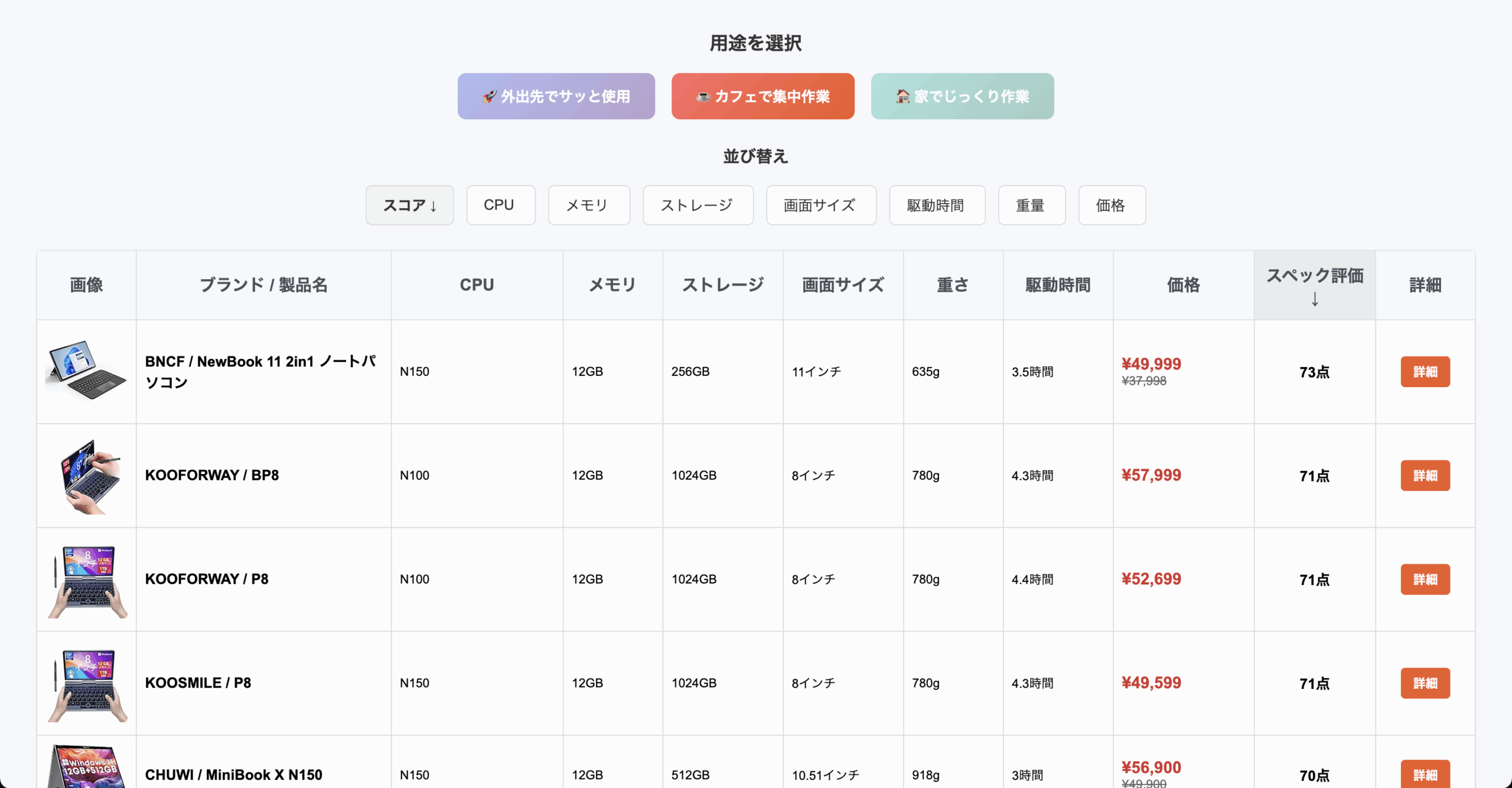
AmazonCompare compact Windows tablets, mini PCs, and laptops by specs and score.
Run by the same operator.
Related Articles
-


- Is MacBook Air good for college? Reports, classes, and portability
- Can You Use the iPad A16 for Work? Office, Meetings, and Laptop Limits
- Can You Edit Video on the iPad A16? Storage, Final Cut, and iPad Air Tradeoffs
- Do You Need a Computer for a Home Printer? Phone Printing, Scanning, Forms
- iPad Air or MacBook Air: Which Should You Buy for College or Work?
- Is the MacBook Air Good for Blender? M5, Memory, and 3D Limits
- How Much Memory and SSD Storage for iMac: 16GB, 24GB, or 32GB?
- MacBook Pro 14-inch or 16-inch: Which Size Should You Buy?
- Is iMac Good for College? Home Study, Campus Use, and MacBook Air
