Mac mini for programming: M4 vs M4 Pro, memory, and Docker
How Much iPad Storage Do You Need: 128GB, 256GB, 512GB, 1TB, or 2TB?

About the Author
Sesera editorial account organizes laptop, mini PC, smartphone, and gadget buying guides so readers can check the important points before buying.
“Is 128GB enough for an iPad?”
“Should I pay for 256GB, 512GB, 1TB, or even 2TB?”
If you are unsure, start with 256GB. It is the safest middle choice for notes, PDFs, photos, a few games, offline files, and light creative work. Choose 128GB only when the iPad is mostly for streaming, reading, web browsing, light notes, and cloud storage. Choose 512GB when files stay on the iPad. Choose 1TB or 2TB only when the iPad is a serious creative device.
The model matters too. Apple lists iPad (A16) with 128GB, 256GB, and 512GB. iPad Air is available from 128GB to 1TB. iPad Pro starts at 256GB and goes up to 2TB. On iPad Pro, the 1TB and 2TB models also move to the higher memory tier and unlock the nano-texture display glass option.
Official source: Apple iPad comparison, iPad (A16) technical specifications, iPad Air technical specifications, and iPad Pro technical specifications.
| Storage | Best fit | Buyer’s note |
|---|---|---|
| 128GB | Streaming, reading, notes, cloud files | Low-cost start, not much room |
| 256GB | Students, PDFs, photos, notes, light games | Best default for most people |
| 512GB | Games, drawing, photos, offline media | For files kept on the device |
| 1TB | Creative work, video, illustration, large files | Worth it when the iPad is a work tool |
| 2TB | Large video, photo, and project libraries | Only for a small Pro audience |
Start with 256GB for most everyday buyers
256GB is the clean starting point for most iPad buyers. It gives enough room for note apps, PDFs, textbooks, screenshots, photos, downloaded shows, a few games, and offline work files without turning storage cleanup into a weekly task.
It is especially sensible for students, family iPads, people who annotate PDFs, and anyone who wants the iPad to last several years. You still need basic storage discipline, but you are not living at the edge the way you can with 128GB.
If you are choosing between the standard iPad and iPad Air before deciding storage, read the EN comparison of iPad vs iPad Air first.
Choose 128GB only for streaming and notes
128GB is fine when the iPad is a simple media and note device. You can use it for YouTube, Netflix, ebooks, web browsing, email, light notes, cloud documents, and a small number of apps.
Do not choose 128GB if you plan to store many photos, videos, large games, offline movies, downloaded lectures, scanned PDFs, or creative project files. It can still work, but the iPad will ask you to manage storage earlier than you want.
The key question is not whether 128GB can run iPadOS. It can. The question is whether your actual files will stay small for the whole time you own the device.
Choose 512GB when files stay on device
512GB is for people who keep data on the iPad instead of treating it as a thin cloud screen. It makes sense for large games, photo libraries, many PDFs, offline video, drawing projects, class materials, music files, and several years of local files.
This is also the storage level where you should check whether the model still makes sense. A standard iPad with 512GB can be useful, but if you are paying that much because your workload is growing, iPad Air may become a better fit for the display size, chip, Pencil support, and keyboard workflow.
Choose 1TB for serious creative workflows
1TB is not for ordinary notes and streaming. It is for people who use the iPad as a creative device: illustration, photo work, short video, music, large project files, or a mobile file library that needs to be available offline.
On iPad Air, 1TB is the ceiling. Choose it only if you know files will live on the device. On iPad Pro, 1TB also matters because it moves into the higher-end configuration tier, not just a bigger storage number.
If the iPad is trying to replace a laptop, compare the workflow carefully. The EN guide to iPad Pro vs MacBook Pro is the better place to decide whether the iPad should be the main creative machine.
Choose 2TB only for portable production libraries
2TB is for a narrow group: people who carry large video projects, photo libraries, illustration assets, audio files, or client work directly on the iPad Pro. It is not a normal upgrade for students, casual creators, or family use.
If 2TB feels necessary because you never clean up files, that is not a good reason by itself. External SSDs, iCloud, a Mac, or a NAS may solve the storage problem for less money. Choose 2TB when the iPad must carry the working library without depending on another device.
Match storage to the iPad model first
Storage should follow the model decision, not replace it. If you want a low-cost tablet for reading, streaming, light notes, and web use, the standard iPad can make sense. If you want longer-term study, drawing, 13-inch space, Apple Pencil Pro, or stronger multitasking, iPad Air is the broader middle.
If you want the best display, fastest chip, Thunderbolt / USB 4, and serious creative headroom, iPad Pro is the right model to evaluate. At that point, 512GB or 1TB often makes more sense than the entry storage.
For a broader model decision, use the EN guide to iPad Air vs MacBook Air if you are also considering a laptop.
iPad A16 buyers should avoid over-upgrading
For iPad (A16), choose 128GB for light use, 256GB for a safer everyday device, and 512GB only when you know local files, photos, games, or offline media will grow.
The warning is the 512GB configuration. It can be useful, but it also pushes the budget toward iPad Air territory. If you need that much room because you draw, edit, study heavily, or want a better long-term device, compare the Air before buying the biggest standard iPad.
iPad Air buyers get the broad middle
iPad Air is the easiest model to match with 256GB or 512GB. Choose 256GB for notes, PDFs, study, work documents, light games, and everyday use. Choose 512GB if you keep photos, videos, drawing files, downloaded lessons, or larger games on the device.
1TB on iPad Air is for people who are already using the iPad as a serious creative or study device and want most active files on the device. If the iPad Air is mainly for browsing, note-taking, and media, 1TB is more room than most people need.
iPad Pro storage also changes performance tier
On iPad Pro, storage is not only storage. Apple’s specifications list the 256GB and 512GB models with 12GB unified memory, while the 1TB and 2TB models move to 16GB unified memory. Apple also limits the nano-texture display glass option to 1TB and 2TB models.
This does not mean every iPad Pro buyer needs 1TB. If you buy Pro for the OLED display, Pencil feel, and speed but your files are small, 256GB or 512GB can still be enough. But if you buy Pro for heavy creative work, 1TB has a stronger argument than it does on cheaper models.
Students should pick comfort over minimum price
For students, 256GB is the safer choice. Notes, PDFs, screenshots, scanned handouts, lecture files, textbooks, voice memos, and downloaded videos build up over years. A cheaper 128GB iPad can work, but only if you keep cloud storage organized and avoid heavy downloads.
Choose 512GB if the iPad will also hold games, art projects, video clips, large textbooks, or several years of offline files. Do not jump to 1TB for ordinary study unless the iPad is also a creative work device.
Work users need offline room and discipline
For work, 256GB should be the minimum target. PDFs, meeting notes, photos, presentation files, offline documents, and cloud sync caches can grow quietly. 128GB is usable for a viewer-style iPad, but it is cramped for a work device.
If the iPad is expected to replace a computer, storage is only one part of the decision. File handling, spreadsheet work, external display behavior, keyboard shortcuts, and company systems matter more than capacity. A bigger SSD does not fix a workflow that needs a laptop.
Games and downloads punish small storage quickly
Games are one of the fastest ways to outgrow 128GB. The app itself, downloadable assets, updates, screenshots, and screen recordings can use more space than expected. If you want several large games installed at once, start at 256GB.
Choose 512GB if the iPad is also used for offline movies, school files, photos, or creative apps. Storage feels comfortable only when the whole device has room, not when games alone barely fit.
Video and illustration projects need local space
Short social videos, simple edits, and occasional drawing can start at 256GB if you clean up projects. For repeated video editing, large drawing files, photo imports, or Procreate-style workflows with many canvases, 512GB is the better floor.
Choose 1TB when the iPad is a real production device and you want current projects, assets, exports, and backups on the device. Choose 2TB only when you carry a large working library and cannot depend on another computer or drive.
External SSDs help but do not replace storage
External SSDs can help, especially on USB-C iPads. But they do not make internal storage irrelevant. Apps, caches, downloads, photos, notes, active projects, and temporary files still use the internal drive.
The port speed also matters. Apple’s iPad (A16) specifications list USB 2.0 over USB-C, up to 480Mb/s. iPad Air supports USB 3 up to 10Gb/s. iPad Pro supports Thunderbolt / USB 4 up to 40Gb/s. If external drives are central to the workflow, model choice matters as much as storage choice.
Use iCloud for archives, not everything
iCloud is useful for photos, documents, backups, and keeping devices in sync. It can make 128GB or 256GB feel more manageable if you usually have a reliable connection.
It is not a full substitute for internal storage. Offline textbooks, downloaded videos, games, creative assets, app caches, and files you need while traveling still need local space. If the iPad must work on planes, trains, school Wi-Fi, or job sites, choose more internal storage.
The safer iPad storage choice before checkout
- Streaming, reading, light notes, cloud files: 128GB.
- Most students, families, and everyday buyers: 256GB.
- Games, drawing, photos, and offline files: 512GB.
- Serious iPad Air creative use: 512GB to 1TB.
- iPad Pro creative use: 512GB to 1TB.
- iPad Pro higher memory tier or nano-texture option: 1TB or 2TB.
- Large portable production libraries: 2TB.
My default recommendation is 256GB for an everyday iPad, 512GB for an iPad that will store games or creative files, and 1TB only when the iPad is a real work or production device.
Compare tablets before choosing storage
Use Specsy to compare iPad, iPad Air, iPad Pro, and other tablets by storage, screen size, chip, and budget.
Useful US Amazon searches
Use these as search shortcuts, then confirm the exact model, storage, and generation before buying.
Frequently asked questions before choosing storage
How much iPad storage should I get?
Choose 256GB if you are unsure. Choose 128GB only for streaming, reading, light notes, and cloud files. Choose 512GB if photos, games, drawing, videos, or offline files will stay on the iPad.
Is 128GB enough for an iPad?
128GB is enough for light use, but it is not generous. It works for streaming, ebooks, web browsing, notes, and cloud storage. It is cramped for games, videos, photo libraries, downloaded lessons, and creative projects.
Should students choose 256GB or 512GB?
Most students should choose 256GB. Choose 512GB if the iPad will keep many PDFs, textbooks, photos, games, art projects, or offline videos for several years.
Is 1TB worth it on iPad Air or iPad Pro?
1TB is worth it when the iPad is a serious creative or work device with large local files. On iPad Pro, 1TB also moves to the higher memory tier and can unlock the nano-texture display option.
Do external SSDs let me buy less storage?
External SSDs help with archives and large files, but they do not replace internal storage. Apps, caches, active projects, downloads, notes, and offline files still need space on the iPad itself.
Compare specs on Specsy
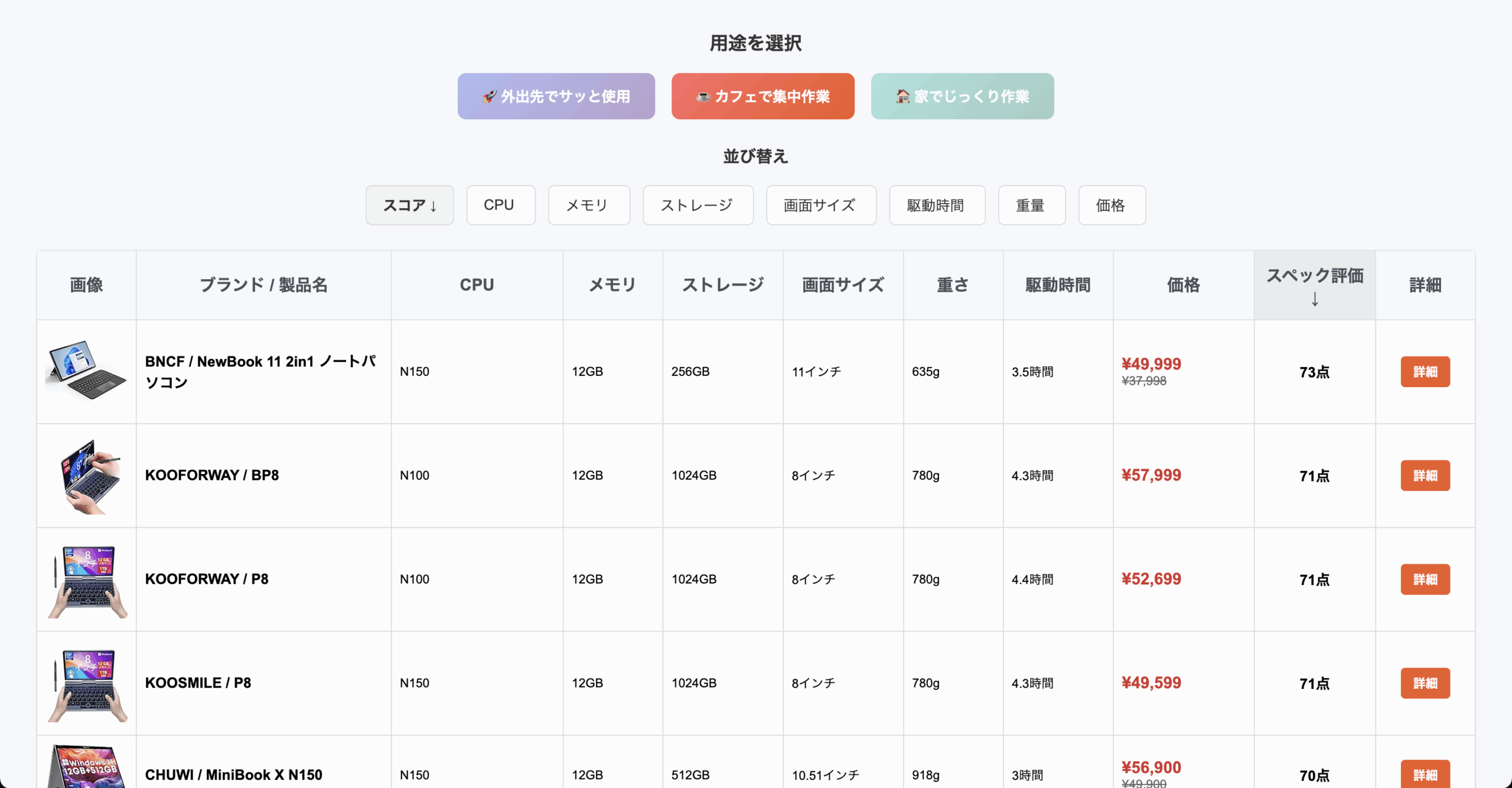
AmazonCompare compact Windows tablets, mini PCs, and laptops by specs and score.
Run by the same operator.
Related Articles
-


- Is MacBook Pro good for programming? M5 Pro/Max, memory, and Docker
- MacBook Pro or Mac mini: which Mac is better for creative work and development?
- iMac or MacBook Air: Which Should You Buy for Home, College, or Work?
- Mac mini or MacBook Air: Which Should You Buy for Desk or Portable Use?
- Best Computer for Photo Storage: SSD Size, Backup, and Family Photos
- Is MacBook Neo good for Office? Word, Excel, PowerPoint, and 8GB RAM
- Can the MacBook Air Handle OBS Streaming? M5, Memory, Heat, and Limits
- Can You Still Use a Windows 10 PC? Upgrade, Replace, or Retire It
- Is the iPad Air Good for Study Notes? 11-inch vs 13-inch, Storage, and Apple Pencil
