iMac or MacBook Air: Which Should You Buy for Home, College, or Work?
Can the iPad A16 Stream with OBS? Screen Recording, Storage, and iPad Air Tradeoffs

About the Author
Sesera editorial account organizes laptop, mini PC, smartphone, and gadget buying guides so readers can check the important points before buying.
“Can I use the cheaper iPad A16 for OBS streaming?”
“If I only want to record lessons, app demos, or study videos, do I really need an iPad Air?”
The short answer: the iPad A16 is a good low-cost device for screen recording, simple app demos, study videos, and short tutorial footage. It is not a real replacement for a Mac or PC running OBS Studio.
If you want to capture the iPad screen and make simple videos, choose the iPad A16 256GB. If you want scenes, alerts, chat overlays, external cameras, audio mixing, long recordings, and a proper live-streaming setup, buy a Mac or Windows PC instead. iPad Air is a better iPad, but it still does not turn iPadOS into a full OBS workstation.
Use iPad A16 for screen recording
The iPad A16 works best when the job is capture, not production control. Recording a lesson, explaining an app, drawing over a PDF, showing a study workflow, or making a short tutorial is a natural fit. You can hold the iPad, tap directly on the screen, speak into a microphone, and save the recording without building a full desktop setup.
That is different from running an OBS stream. OBS-style streaming usually means multiple scenes, a starting screen, chat, alerts, audio sources, cameras, capture devices, overlays, and local recording at the same time. The base iPad can help create footage for that workflow, but it should not be the control center.
| Use case | iPad A16 fit | Practical call |
|---|---|---|
| Screen recording | Strong | A16 is enough |
| Class or study videos | Strong | Choose 256GB if possible |
| App walkthroughs | Strong | A good low-cost pick |
| Short tutorial footage | Medium to strong | Keep projects simple |
| OBS Studio host | Weak | Use a Mac or PC |
| Gaming stream setup | Weak | Use a Windows PC |
Do not buy it as an OBS computer
OBS Studio is a desktop app. OBS lists Windows, macOS, and Linux as the supported operating systems, with macOS requirements including macOS 11 Big Sur or later on Intel or Apple Silicon hardware. iPadOS is not listed as a desktop OBS platform.
That matters because the weak point is not only processor speed. A serious stream depends on window capture, audio routing, capture cards, plug-ins, browser sources, local file management, and quick control over multiple inputs. Those jobs are still much cleaner on a laptop or desktop.
Sources:
OBS Studio system requirements
Single-app live streaming stays limited
You can still go live from some iPad apps. Social platforms, meeting apps, education tools, and screen-sharing features can be enough for a simple class, casual live session, or quick demonstration. If that is the whole job, the iPad A16 is not a bad starting point.
The problem starts when you want the stream to look produced. A waiting screen, scene changes, chat layout, alerts, background music, separate microphone control, and a second camera all push you toward a Mac or PC. The iPad A16 is easy to use, but it is not the easier tool once the stream has moving parts.
iPad screen recording is the real strength
For built-in screen recording, the iPad A16 is much easier to recommend. Apple lets you add Screen Recording to Control Center, start recording after a short countdown, include microphone audio, and save the result to Photos. That covers many practical videos without any OBS setup.
There are limits. Some apps block recording, and screen recording cannot be used at the same time as screen mirroring. For your own slides, notes, app demos, study sessions, and interface tutorials, it is useful. For protected video or complicated streaming control, it is the wrong tool.
Sources:
Apple Support: take a screen recording on iPad
The A16 chip is enough for light capture
The iPad A16 has enough performance for light capture work. Apple lists the 11-inch iPad with an A16 chip, 5-core CPU, 4-core GPU, and 16-core Neural Engine. For screen recordings, short clips, and simple exports, that is a reasonable entry point.
It is still not the same class of device as an M-series iPad Air or iPad Pro. The difference becomes visible when you record often, edit several videos, keep large files on the device, or expect the iPad to serve as your main content machine. The A16 is fine for starting; it is not the model I would buy for a long streaming workflow.
Sources:
Apple iPad technical specifications
Pick 256GB for recording work
For screen recording, 256GB is the storage size I would treat as the center of the iPad A16 lineup. The 128GB model can record short clips, but video files, exported versions, apps, photos, and system storage make it feel cramped sooner than people expect.
The 512GB model is useful if you want to keep many recordings on the iPad. The price question changes there. Once you are paying for the largest base iPad, compare it with iPad Air before buying. For content work, a better display, stronger chip, and faster workflow can matter more than storage alone.
| Storage | Best fit | Recording decision |
|---|---|---|
| 128GB | Short tests and light use | Only if price is the priority |
| 256GB | Study videos and app demos | The safest A16 choice |
| 512GB | Keeping many recordings locally | Compare with iPad Air |
Related article:
How Much iPad Storage Do You Need?
USB-C helps, but file transfers are slow
The iPad A16 has USB-C, which is useful for charging, accessories, and display output. For recording work, the important detail is speed. Apple lists the USB-C port as USB 2.0 up to 480Mb/s, with external display support up to 4K at 60Hz.
That is fine if your recordings stay on the iPad and you only export finished clips occasionally. It is not ideal if you constantly move large recordings to external storage, connect several accessories, or expect a desktop-style production desk. Heavy cable workflows belong on a Mac, PC, or at least a higher-end iPad.
The 11-inch size works for capture
The iPad A16 comes in the 11-inch class, with Apple listing a 10.86-inch measured display and a 477g Wi-Fi model. That size is good for handheld recording, writing on slides, showing app steps, and carrying the device around a classroom, desk, or home setup.
A larger screen becomes valuable when you want to keep notes, a script, the recording area, and editing controls visible at the same time. If the iPad itself is your main production screen, the 13-inch iPad Air is easier to live with. If you only need a portable capture device, the iPad A16 size is a strength.
Choose iPad Air for regular editing
The iPad Air is the better iPad once recording turns into a routine. You get an M-series chip, 11-inch and 13-inch choices, Apple Pencil Pro support, a better creative workflow, and more room for editing after the recording is done.
It is important to keep the upgrade honest. iPad Air is better for recording and editing on iPad. It is still not the right answer if the real goal is OBS Studio with scenes, plug-ins, alerts, and multiple sources. For that, move to Mac or PC before overbuying an iPad.
Related articles:
iPad or iPad Air: Which Should You Buy?
iPad Air or MacBook Air: Which Should You Buy?
Choose a Mac for OBS control
A Mac is the cleaner choice when OBS is the main reason you are buying hardware. OBS Studio runs directly on macOS, and a MacBook or Mac mini gives you better control over files, windows, cameras, microphones, browser sources, and local recordings.
For many people, the useful split is simple: the iPad A16 records the tablet screen; the Mac controls the stream. If you want a portable setup, a MacBook Air is closer to the job than an iPad. If you are building a desk setup, a Mac mini can also make sense.
Use Windows for gaming streams
If the goal is game streaming, do not start with the iPad A16. Most game streaming setups need a GPU, game capture, audio routing, overlays, chat, and recording at the same time. A Windows PC with enough graphics performance is the practical baseline.
The iPad can still be useful as a secondary device for chat, notes, or simple control panels. It should not be the machine that carries the stream. Buying an iPad for gaming OBS work usually means buying the wrong device first and the right computer later.
Study videos are the best match
The iPad A16 makes the most sense for study videos, lesson recordings, PDF explanations, note-taking demos, and app walkthroughs. You can write with Apple Pencil USB-C or the first-generation Apple Pencil, speak while recording, and create a simple video without setting up a camera over a desk.
The limit is creative control. Apple Pencil Pro is not supported, and a small screen can feel tight if you edit heavily after recording. For study notes and simple explanations, the base iPad is enough. For drawing-heavy lessons or regular content production, iPad Air is the safer long-term pick.
Related articles:
Can You Draw on the iPad A16?
Can You Edit Video on the iPad A16?
Use this buying table as the final call
| Your use | Best pick | Why |
|---|---|---|
| Short screen recordings | iPad A16 128GB or 256GB | The base model can handle it |
| Study and lesson videos | iPad A16 256GB | Enough storage without overpaying |
| Keeping many recordings | iPad A16 512GB | Useful, but compare iPad Air |
| Regular iPad editing | iPad Air | More screen and performance headroom |
| OBS live-stream control | MacBook or Mac mini | OBS Studio runs as intended |
| Gaming streams | Windows GPU laptop or desktop | Capture and graphics matter |
If I were buying an iPad only to record lessons, app walkthroughs, study videos, or short explainers, I would choose the iPad A16 256GB and keep the setup simple. That is where the base iPad gives you the most value.
If I were buying hardware for OBS streaming, I would not choose the iPad A16 as the main device. I would buy a Mac or Windows PC first, then use the iPad as a capture source, note screen, or secondary device if it helps the workflow.
Related articles:
Can You Use the iPad A16 for Work?
Can You Edit Video on the iPad A16?
Related tool:
Specsy tablet comparison
FAQ
Can the iPad A16 run OBS Studio?
No. The iPad A16 is not a normal OBS Studio host because OBS Studio is built for Windows, macOS, and Linux. Use the iPad A16 for screen recording and simple capture, then use a Mac or PC when you need full OBS control.
Can you stream from the iPad A16?
Yes, for simple app-based live streaming or screen sharing. It is fine for casual sessions, lessons, and demonstrations. It is not the best choice for produced streams with scenes, alerts, chat overlays, multiple cameras, and audio routing.
How much storage do you need for iPad screen recording?
256GB is the safest choice for most people who record on the iPad A16. 128GB works for short recordings and light use, while 512GB is for keeping many recordings locally. If you are considering 512GB, compare the iPad Air before buying.
Is iPad Air better than iPad A16 for recording?
Yes, if you record and edit often. iPad Air gives more performance, screen options, and creative headroom. For simple screen recordings, the iPad A16 is enough. For full OBS streaming, choose Mac or PC before upgrading from A16 to Air.
Should you buy a Mac instead for OBS?
Yes, if OBS is the main reason you are buying hardware. A MacBook or Mac mini can run OBS Studio directly and gives better control over scenes, files, cameras, microphones, browser sources, and local recordings.
Compare specs on Specsy
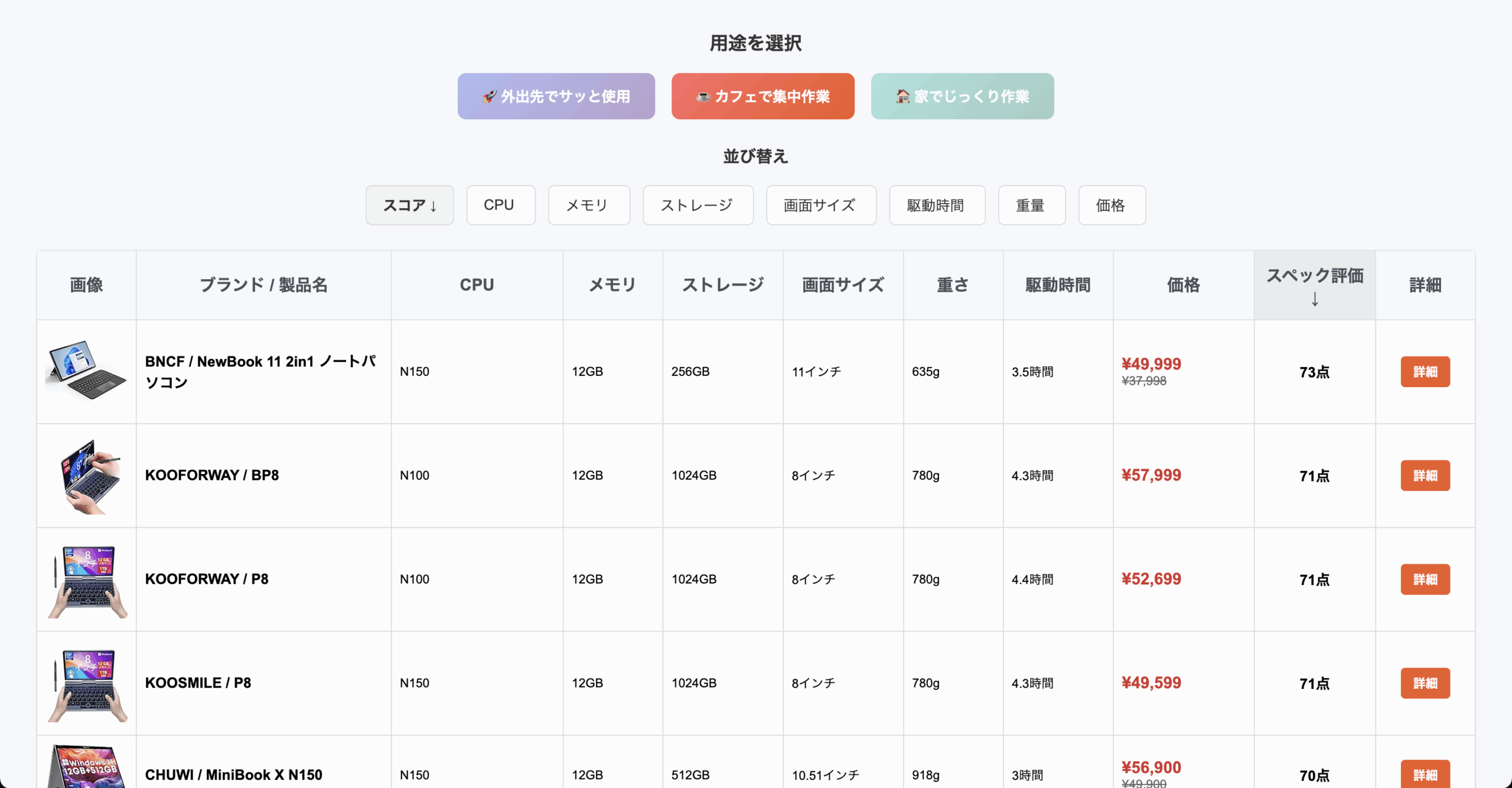
AmazonCompare compact Windows tablets, mini PCs, and laptops by specs and score.
Run by the same operator.
Related Articles
-


- Can You Still Use a Windows 10 PC? Upgrade, Replace, or Retire It
- Is the iMac Good for Video Editing? M4, Memory, SSD, and Ports
- Can You Trust Amazon Laptop Reviews? What to Check Before Buying
- MacBook Pro or Mac mini: which Mac is better for creative work and development?
- Can you edit video on MacBook Air? M5, memory, and Pro limits
- Best Computer for Photo Storage: SSD Size, Backup, and Family Photos
- Is iPad Pro Good for Music Production? Logic Pro, Storage, and Mac Limits
- How much SSD storage for MacBook Air: 512GB, 1TB, 2TB, or 4TB?
- Is the MacBook Pro Good for Music Production? M5 Pro, Memory, and Storage
