Can You Trust Amazon Laptop Reviews? What to Check Before Buying
Is the iMac Good for OBS Streaming? M4, Memory, Ports, and When to Skip It

About the Author
Sesera editorial account organizes laptop, mini PC, smartphone, and gadget buying guides so readers can check the important points before buying.
Can you use an iMac for OBS streaming without building a separate desktop setup?
Or should you buy a Mac mini, MacBook Pro, or a Windows PC instead?
The short answer is this: the iMac is a strong OBS machine if your stream happens at one desk and you mainly record or stream at 1080p. It is a poor fit if your plan involves PC game capture, several cameras, heavy overlays, 4K recording, or frequent on-location work.
The mistake is buying the cheapest iMac because OBS itself looks free and lightweight. Streaming quickly adds a microphone, a camera, browser tabs, chat, music, capture devices, and recorded files. For that kind of setup, memory, SSD space, and ports matter more than the color of the iMac.
This guide breaks down the practical choice: M4 performance, 16GB vs 24GB or 32GB memory, 256GB vs 512GB or 1TB SSD, two-port vs four-port iMac, and the point where Mac mini, MacBook Pro, or Windows makes more sense.
The Short Answer for OBS on iMac
Buy the iMac for OBS if you want a clean fixed desk for teaching, screen recording, video calls, talking-head streams, work demos, webinars, or light creator content. The built-in display, camera, microphones, speakers, keyboard, and mouse make the setup short. You can unbox it and have a usable streaming desk without also choosing a monitor and webcam.
Do not buy the iMac as the default answer for every streaming setup. Once your stream depends on a capture card, external microphone, external camera, lighting control, external SSD, stream deck, and several USB devices, the all-in-one design starts to feel tight. At that point, Mac mini gives you more desk flexibility, and MacBook Pro gives you mobility.
| Use case | iMac fit | Better choice if it grows |
|---|---|---|
| Teaching, webinars, screen sharing | Strong | iMac |
| Talking-head streams | Strong | iMac with external mic |
| OBS screen recording | Strong | iMac or Mac mini |
| Several cameras and capture devices | Limited | Mac mini or MacBook Pro |
| PC game streaming | Weak | Windows desktop or gaming laptop |
| Streaming away from your desk | Wrong shape | MacBook Pro |
Related reading:
iMac vs Mac mini: display, total cost, and M4 Pro choice
How much memory and SSD storage for iMac
Choose iMac for a Fixed Streaming Desk
The iMac makes the most sense when the stream always happens in the same room. A teacher, coach, consultant, office worker, podcast host, or creator who records at a desk can get a tidy setup with fewer parts. The 24-inch display is large enough for OBS preview, browser notes, chat, slides, and a file window without feeling cramped.
That tidy setup is the real appeal. With a Mac mini, you still need to choose a monitor, webcam, speakers, keyboard, mouse, and sometimes a USB hub. With an iMac, most of that is already handled. If you want fewer buying decisions and you like the all-in-one desk, the iMac is a sensible choice.
The trade-off is that the iMac is not easy to reshape later. You cannot turn it into a portable streaming machine, and you cannot upgrade the memory after purchase. If you already know the setup will grow into a serious production desk, start with the more flexible machine instead of trying to force the iMac into that role.
M4 Is Enough for 1080p Streaming
For ordinary OBS work, the M4 iMac is not the weak point. Screen recording, 1080p talking-head streaming, webinars, slides, and light overlays are realistic. Apple lists the current 24-inch iMac with the M4 chip, up to a 10-core CPU, up to a 10-core GPU, up to 32GB unified memory, and up to 2TB storage. The display is a 24-inch 4.5K Retina panel with a 4480-by-2520 resolution.
OBS also supports Apple VideoToolbox hardware encoding on Apple Silicon. That matters because H.264 streaming and H.264, HEVC, or ProRes recording can use hardware encoding instead of pushing everything through the CPU. For a clean 1080p workflow, that is exactly where the iMac feels comfortable.
The pressure starts when the stream becomes a production. Several cameras, 4K recording, high-bitrate local capture, heavy browser sources, animated overlays, and editing while streaming all add load. If those are core requirements, do not treat the base iMac as a bargain workstation. Move up to a more expandable Mac or a Windows GPU machine.
Sources:
Apple iMac technical specifications
OBS Studio system requirements
OBS Studio hardware encoding guide
Memory Matters More Than the Chip
For OBS, 16GB is the floor, not the comfortable recommendation. It is fine for simple lessons, screen recording, video meetings, and a light talking-head stream. It becomes tight when you keep Chrome tabs open, monitor chat, play background music, run a presentation, save a local recording, and use image assets at the same time.
For regular streaming, 24GB is the configuration I would center the decision around. It gives the stream room to breathe without forcing you into the most expensive iMac. If you plan to record every stream, edit clips afterward, keep the machine for several years, or run heavier scenes, 32GB is easier to justify.
| Memory | Good for | Buying judgment |
|---|---|---|
| 16GB | Lessons, meetings, simple recording | Usable floor |
| 24GB | Regular OBS streams and local recording | Best middle choice |
| 32GB | Longer use, editing, heavier scenes | Worth it for creators |
| More than 32GB | Large production setups | Choose another Mac |
If you are already asking whether 32GB is enough, the bigger question is whether iMac is the right body. Mac mini and MacBook Pro give you higher-end options and fit heavier workflows better.
Related reading:
Mac mini M4 or M4 Pro: which chip should you choose?
MacBook Pro vs Mac mini for creative work and portability
Do Not Start With the 256GB SSD
The 256GB SSD is the easiest place to save money and the easiest place to regret saving it. OBS itself does not take much space, but recordings do. So do thumbnails, music files, images, B-roll, exported clips, project files, and cached browser data. A few long local recordings can make a small SSD feel cramped quickly.
For light streaming, 512GB should be the practical floor. For regular recording, 1TB is the calmer choice. If you record long sessions or edit on the same machine, 1TB plus an external SSD is more realistic than trying to manage everything inside a small internal drive.
External storage helps, but it does not fix every bad purchase. It adds another cable, another port, another item to mount, and another thing to forget before a session. If OBS is a weekly habit, buy enough internal storage that the machine stays comfortable on ordinary days.
Two Ports Work Only for Simple Setups
The two-port iMac works when the iMac itself does most of the job. Built-in camera, built-in microphones, no capture card, no external SSD during the live session, and maybe one simple USB-C device. That is a reasonable setup for a teacher, coach, office presentation, or internal company stream.
Streaming gear grows quickly. A better microphone, a webcam, a capture card, an external SSD, a stream controller, a USB audio interface, and lights can all ask for desk space and ports. You can use a hub, but a hub is a workaround, not a reason to ignore ports when buying the computer.
If OBS is part of your regular work, choose the four-port iMac. If the two-port model is only attractive because it is cheaper, be honest about the rest of the setup. The money saved can disappear into adapters and frustration.
The Built-In Camera Helps, but Audio Still Matters
The iMac is better prepared for casual video than a bare desktop. The 12MP Center Stage camera, built-in microphones, and speakers make it easy to start. For calls, lessons, webinars, and light face-camera content, that is enough to avoid buying everything on day one.
For public streaming, spend on audio before chasing camera upgrades. Viewers tolerate a slightly ordinary image longer than harsh, echoey, or quiet audio. A simple USB microphone and basic lighting can improve the stream more than replacing the iMac camera immediately.
This is another reason the four-port model matters. The moment you add a microphone, external camera, and storage, the cleaner base setup becomes a real production desk.
Pick Mac mini When You Need Expansion
Choose Mac mini over iMac when you want to control the desk. If you already own a monitor, want a larger display, need M4 Pro, plan to use several external devices, or expect to replace the computer without replacing the screen, Mac mini is the more practical body.
The iMac wins on simplicity. Mac mini wins on flexibility. For OBS, flexibility starts to matter when the setup includes capture cards, external SSDs, audio gear, and a second monitor. It also matters if the machine will later shift from streaming into editing, development, or heavier creative work.
Related reading:
iMac vs Mac mini: display, total cost, and M4 Pro choice
Mac mini M4 or M4 Pro: which chip should you choose?
Pick MacBook Pro When You Need Mobility
The iMac is the wrong shape for streaming outside your room. If you record in classrooms, client offices, event spaces, studios, or coworking spaces, choose a MacBook Pro. You can still plug it into an external monitor at home, but you are not locked to one desk.
MacBook Pro also makes more sense when OBS is only one part of a larger creator workflow. If you shoot video elsewhere, edit on the go, or need the same computer for travel and production, portability is not a luxury. It is the workflow.
Related reading:
MacBook Pro vs Mac mini for creative work and portability
Use Windows for Game and GPU-Heavy Streaming
If the main goal is PC game streaming, the iMac is not the machine I would buy first. Windows gaming PCs have the simpler path for game capture, GPU-driven workloads, NVIDIA encoder support, game launchers, overlays, and the wider streaming accessory ecosystem.
The iMac can still be excellent for a creator who teaches, presents, records a screen, talks to a camera, or streams creative work. That is a different problem from running a demanding game and encoding a stream at the same time. Do not buy the cleaner-looking computer if the workload belongs on a gaming desktop.
Best iMac Configurations for OBS
| Streaming plan | iMac configuration to target |
|---|---|
| Lessons and simple screen recording | M4, 16GB memory, 512GB SSD |
| Regular talking-head streams | M4, 24GB memory, 1TB SSD |
| Recording plus light editing | M4, 24GB to 32GB memory, 1TB SSD |
| Several external devices | Four-port iMac, 24GB or 32GB memory |
| Heavy fixed production desk | Mac mini M4 Pro instead |
| On-location streaming | MacBook Pro instead |
| PC game streaming | Windows GPU machine instead |
My default pick for an OBS-focused iMac is the four-port model with 24GB memory and 1TB storage. It avoids the two most common regrets: running out of ports and managing storage too aggressively. If you only record lessons or internal presentations, 16GB and 512GB can work. If you plan to stream every week and keep recordings, the middle configuration is the more honest buy.
Skip the iMac when you already know the stream will become a heavy production desk. In that case, the cleaner all-in-one design is less important than ports, display choice, storage flexibility, and the ability to pick a stronger Mac or a Windows GPU system.
Common Questions About OBS on iMac
Is the iMac good for OBS streaming?
Yes, if the stream happens at a fixed desk and the workload is teaching, screen recording, webinars, talking-head video, or light creator content. It is not the best first choice for PC game streaming, several cameras, 4K recording, or mobile production.
How much memory should an iMac have for OBS?
16GB is the usable floor for simple OBS work. For regular streaming and local recording, 24GB is the better center point. Choose 32GB if you also edit clips, keep many apps open, or plan to use the iMac for several years.
Is the two-port iMac enough for streaming?
It is enough for a simple built-in-camera setup. If you expect to use an external microphone, webcam, capture card, external SSD, or stream controller, buy the four-port model instead.
Should I choose iMac or Mac mini for OBS?
Choose iMac if you want a clean all-in-one desk with display, camera, microphones, and speakers included. Choose Mac mini if you want a larger monitor, more expansion room, M4 Pro, or easier upgrades around the computer.
Is the iMac good for game streaming?
It is not the strongest choice for PC game streaming. A Windows machine with a dedicated GPU is usually a better fit for games, GPU encoding, overlays, and the broader streaming hardware ecosystem.
Compare specs on Specsy
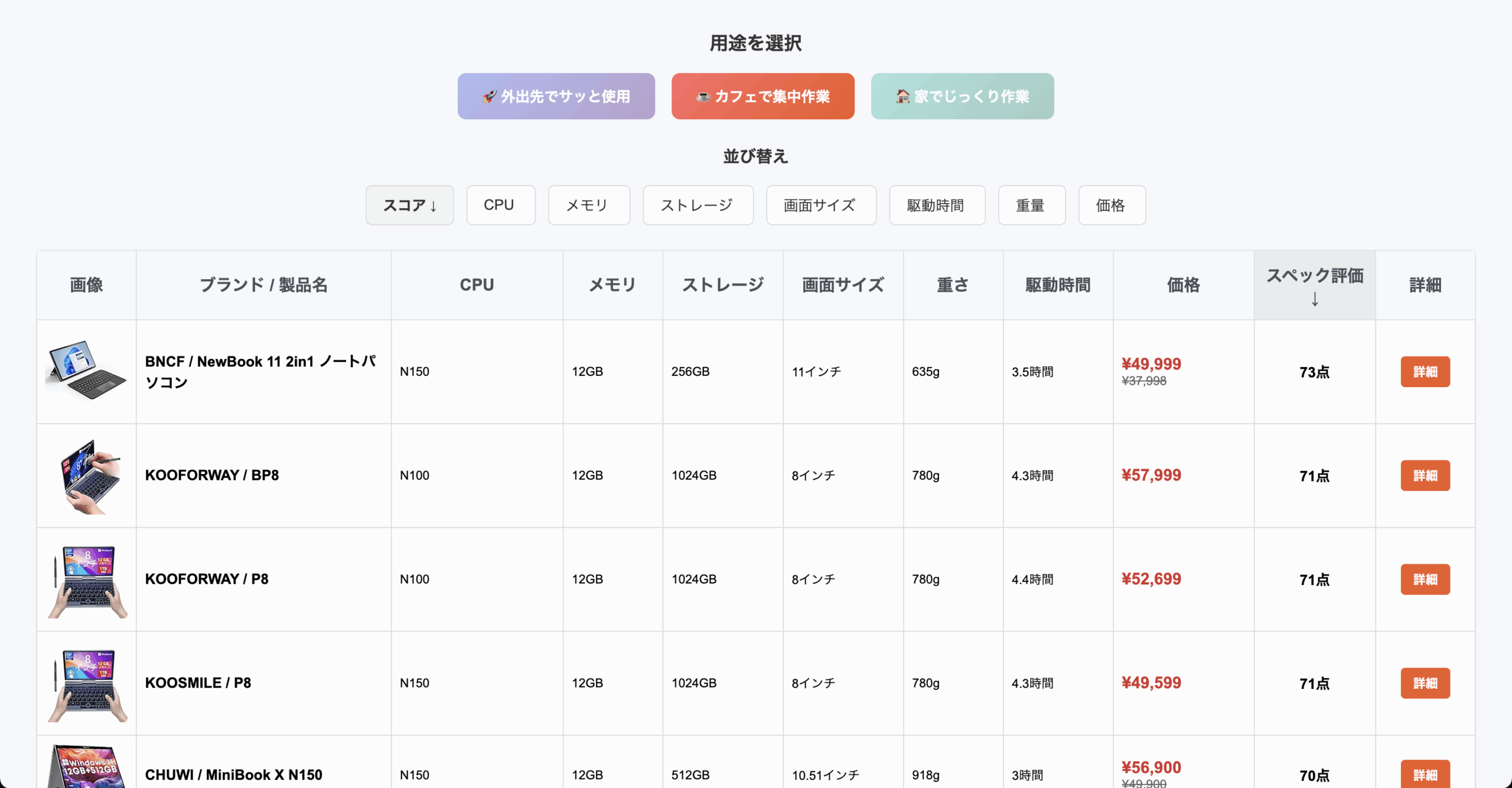
AmazonCompare compact Windows tablets, mini PCs, and laptops by specs and score.
Run by the same operator.
Related Articles
-


- Can the MacBook Air Handle OBS Streaming? M5, Memory, Heat, and Limits
- Is the Mac mini Good for AI Development? M4 Pro, Memory, and Local LLMs
- Is MacBook Neo good for Zoom? 8GB RAM, camera, and screen sharing

- iMac or Mac mini: Which Should You Buy for a Clean Desk or Custom Setup?
- Is the Mac mini Good for Illustrator and Photoshop? M4, M4 Pro, and Memory Choices
- Is the iPad Pro Good for Study Notes? 13-inch, Storage, and iPad Air Tradeoffs
- iPad Air or MacBook Air: Which Should You Buy for College or Work?
- Mac mini for programming: M4 vs M4 Pro, memory, and Docker
- Is the iPad Air Good for Study Notes? 11-inch vs 13-inch, Storage, and Apple Pencil
