iPad Air 11-inch or 13-inch: Which Size Should You Buy?
Can you edit video on iPad Air? M4, storage, and iPad Pro tradeoffs

About the Author
Sesera editorial account organizes laptop, mini PC, smartphone, and gadget buying guides so readers can check the important points before buying.
If you want an iPad for short videos, school projects, travel clips, and light 4K edits, iPad Air is strong enough. The M4 chip is not the first thing I would worry about.
The bigger questions are storage, screen size, app workflow, external drives, and whether you need a real computer for delivery. A fast tablet can still feel slow if every project turns into file cleanup.
The short version: start at 256GB for occasional editing, move to 512GB if you edit every week, and consider the 13-inch model if the iPad will sit on a desk. Choose iPad Pro or Mac only when your work has already outgrown that setup.
iPad Air is best for shorter edits
iPad Air works well when a project starts and ends without much setup. Reels, short YouTube clips, class videos, screen-recording cleanup, travel footage, and rough cuts are the right kind of work.
That is different from using an iPad as a cheaper production workstation. Longer timelines, several cameras, repeated client exports, folder naming, backups, plug-ins, and several external devices quickly make the iPad feel like the wrong center of the workflow.
Apple lists the current iPad Air with the M4 chip, 11-inch and 13-inch sizes, 128GB to 1TB storage, 12GB unified memory, a media engine with ProRes support, USB-C with USB 3 up to 10Gb/s, and support for one external display up to 6K at 60Hz. Those are serious tablet specs. They still need the right job.
Reference: Apple iPad Air technical specifications.
| Editing work | iPad Air fit | Buying call |
|---|---|---|
| Reels, Shorts, TikTok clips | Strong | iPad Air is enough |
| School and class videos | Strong | Start at 256GB |
| Travel and family videos | Strong | 256GB or 512GB |
| Light 4K projects | Good with storage headroom | 512GB feels safer |
| Weekly long YouTube episodes | Mixed | Compare a Mac |
| Multicam or paid production | Weak as the main machine | Use a Mac, or iPad Pro for a specific reason |
M4 is not the main limit
For light and moderate editing, M4 is enough. If your footage is short and your edits are simple, the iPad Air should feel quick.
The limits usually appear somewhere else. The 11-inch screen gets cramped. Storage fills up. Files sit in Photos, Files, Final Cut Pro, iCloud, and an external SSD. Exported versions need names and folders. That is where an iPad workflow starts to feel slower than the chip suggests.
So I would not ask only, “Is M4 fast enough?” A better buying question is this: will this iPad have enough screen, local storage, and file control for the way you edit?
Final Cut Pro works on iPad Air
Final Cut Pro can be part of an iPad Air setup. Apple’s App Store listing says Final Cut Pro requires iPadOS 18.6 or later and a device with an M-series or A16-or-later chip, so M4 iPad Air clears that requirement.
That does not mean the iPad version should replace a Mac for every editor. It is useful for touch editing, cutting footage on the sofa or in class, making rough cuts after filming, and finishing smaller projects without opening a laptop.
It is less comfortable when your work depends on desktop plug-ins, a large external monitor setup, many folders, several drives, or repeated client delivery. If Final Cut Pro is a learning tool or a short-project tool, iPad Air makes sense. If Final Cut Pro is paid work every week, I would start with a Mac.
Reference: Final Cut Pro for iPad on the App Store.
256GB is the practical minimum
For video editing, I would avoid 128GB unless editing is rare. It can handle a few short clips, but video files do not stay small for long.
Your storage is not only raw footage. It also holds project files, render files, exports, photos, apps, messages, downloads, system data, and files from other classes or work. That is why a storage size that looks fine on paper can feel tight after a few projects.
256GB is the practical minimum for occasional editing. 512GB is the better regular-use size. 1TB makes sense if you want to keep many active projects on the iPad, but at that price I would compare iPad Pro and Mac options before paying.
| Storage | Best fit | Plain call |
|---|---|---|
| 128GB | Watching video and rare edits | Too tight for a video-editing iPad |
| 256GB | Short videos, school projects, light travel clips | Minimum I would buy |
| 512GB | Weekly editing and light 4K | Best balance for regular users |
| 1TB | Many active projects stored locally | Compare iPad Pro and Mac first |
Related: How much iPad storage do you need? / Can you edit video on iPad A16?
13 inches helps real editing sessions
The 11-inch iPad Air is the better portable tablet. It is easier to hold, easier to pack, and better for quick review while traveling, filming, or moving between classes.
For actual editing sessions, the 13-inch model is easier to recommend. The timeline, preview window, media browser, captions, inspector, and export controls all compete for space. A larger screen does not make the iPad faster, but it makes the work less cramped.
If the iPad Air is mainly for notes, reading, browsing, and short edits, 11 inches is fine. If video editing is one of the reasons you are buying it, especially at a desk, the 13-inch model earns its price more easily.
| Size | Best fit | Tradeoff |
|---|---|---|
| 11-inch iPad Air | Carry often, edit in short bursts, hold by hand | The timeline feels tight sooner |
| 13-inch iPad Air | Desk editing, class projects, longer sessions | Less comfortable as a handheld tablet |
Related: Is iPad Air good for study notes? / Is iPad Air good for digital art?
External SSDs help, but they add friction
External storage can help an iPad Air video workflow. Apple says Final Cut Pro for iPad can export video to local storage, iCloud Drive, Photos, or an external storage device. It can also export projects so another Final Cut Pro user can open them.
That is useful for camera footage, archives, backups, and moving projects between devices. It does not fully replace buying enough internal storage. Every external SSD adds a cable, a device to carry, and another place where files can become messy.
The clean rule is simple: buy enough internal storage for the projects you are actively editing. Use an external SSD for transfer, backup, older footage, and handoff.
Reference: Apple Support: export or share a Final Cut Pro for iPad project.
Do not buy it as your main camera
iPad Air can record 4K video, and Apple lists 4K recording at 24, 25, 30, or 60 fps. That is useful for quick capture, classroom demonstrations, screen-facing explanations, and simple recording.
I still would not buy an iPad Air mainly as a camera. Most people are better off shooting on an iPhone, action camera, mirrorless camera, or another device, then using the iPad Air for review, trimming, captions, rough cuts, and export.
The large screen is the strength. Holding a large tablet as your main camera is usually not.
iPad Pro is for named advantages
Do not move from iPad Air to iPad Pro only because video editing sounds serious. Move up when you can name the Pro feature that changes your work.
Current iPad Pro models use the M5 chip, start at 256GB storage, and offer 11-inch and 13-inch sizes. Apple lists Ultra Retina XDR displays with ProMotion, Thunderbolt / USB 4, higher memory on larger storage tiers, ProRes video recording, four speakers, studio-quality mics, and stronger display support.
Those advantages matter for color-sensitive review, higher-end tablet-first creative work, fast external accessories, ProRes capture, and people who want the best iPad display. They do not matter much if you are cutting short clips and posting them online.
For most light video editors, iPad Air is the better value. iPad Pro becomes sensible when its display, storage tier, Thunderbolt / USB 4 port, or ProRes camera workflow is part of the reason you are buying it.
Reference: Apple iPad Pro technical specifications.
A Mac is cleaner for delivery work
A MacBook or desktop Mac becomes the better tool when editing includes more than cutting clips. Long projects, external monitors, keyboard shortcuts, plug-ins, audio tools, client folders, archived footage, backups, file naming, and repeated exports all favor macOS.
iPad Air is stronger when the work is visual, direct, portable, and touch-friendly. A Mac is stronger when the work becomes organized, repeatable, and tied to several files and devices.
If you want an iPad for notes, drawing, travel, and light editing, buy the iPad Air. If the device has to be your main video-editing computer, start with a Mac and add an iPad later if the touch workflow helps.
Related: iPad Air or MacBook Air for college and work / Can you edit video on MacBook Air?
My buying call
For occasional video editing, I would buy iPad Air 256GB. For weekly editing, light 4K, and travel projects, I would move to 512GB. If editing will happen at a desk, I would strongly consider the 13-inch iPad Air.
I would not jump to iPad Pro unless the display, ProMotion, Thunderbolt / USB 4, ProRes capture, or higher-end tablet workflow is part of the actual work. I would not force iPad Air into long-form client delivery when a Mac will handle files and exports with less friction.
| Your situation | Buy | Reason |
|---|---|---|
| Short social clips and school videos | iPad Air 256GB | Enough room to start cleanly |
| Weekly editing and light 4K | iPad Air 512GB | Less storage cleanup |
| Desk editing on iPad | 13-inch iPad Air | The larger timeline helps every session |
| Tablet-first pro creative work | iPad Pro | The display and pro ports can matter |
| Long videos and client delivery | Mac first | File management and exports are cleaner |
If you want to compare tablets beyond Apple’s lineup, Specsy’s tablet comparison list can help you line up screen size, storage, and price before buying.
Frequently asked questions
Is iPad Air good for video editing?
Yes, if your projects are short or moderate. iPad Air is a strong fit for social clips, school videos, travel edits, screen recordings, and rough cuts. It is not the device I would choose as the main machine for long timelines, multicam projects, or paid delivery work.
How much storage should I buy for video editing on iPad Air?
Buy 256GB as the minimum for occasional video editing. Choose 512GB if you edit weekly, keep footage locally, or work with light 4K projects. Choose 1TB only after comparing the total price with iPad Pro and Mac options.
Can iPad Air run Final Cut Pro?
Yes. Final Cut Pro for iPad supports devices with an M-series chip or A16-or-later chip on the required iPadOS version, and M4 iPad Air clears that line. The bigger question is whether the iPad workflow fits the way you edit.
Should I choose the 11-inch or 13-inch iPad Air for video editing?
Choose 11 inches if portability matters more than editing space. Choose 13 inches if you will edit at a desk or spend long sessions with the timeline, preview, media browser, and captions open.
Is iPad Air or iPad Pro better for video editing?
iPad Air is the better value for short videos and light 4K editing. iPad Pro is better when the Ultra Retina XDR display, ProMotion, Thunderbolt / USB 4, ProRes capture, higher storage tiers, or tablet-first pro workflow is part of the actual work.
Do I need a Mac instead of an iPad Air?
Choose a Mac if video editing includes long projects, desktop plug-ins, external monitors, client folders, backups, and repeated exports. Choose iPad Air if you want a portable touch-first device for short edits, review, notes, drawing, and rough cuts.
Compare specs on Specsy
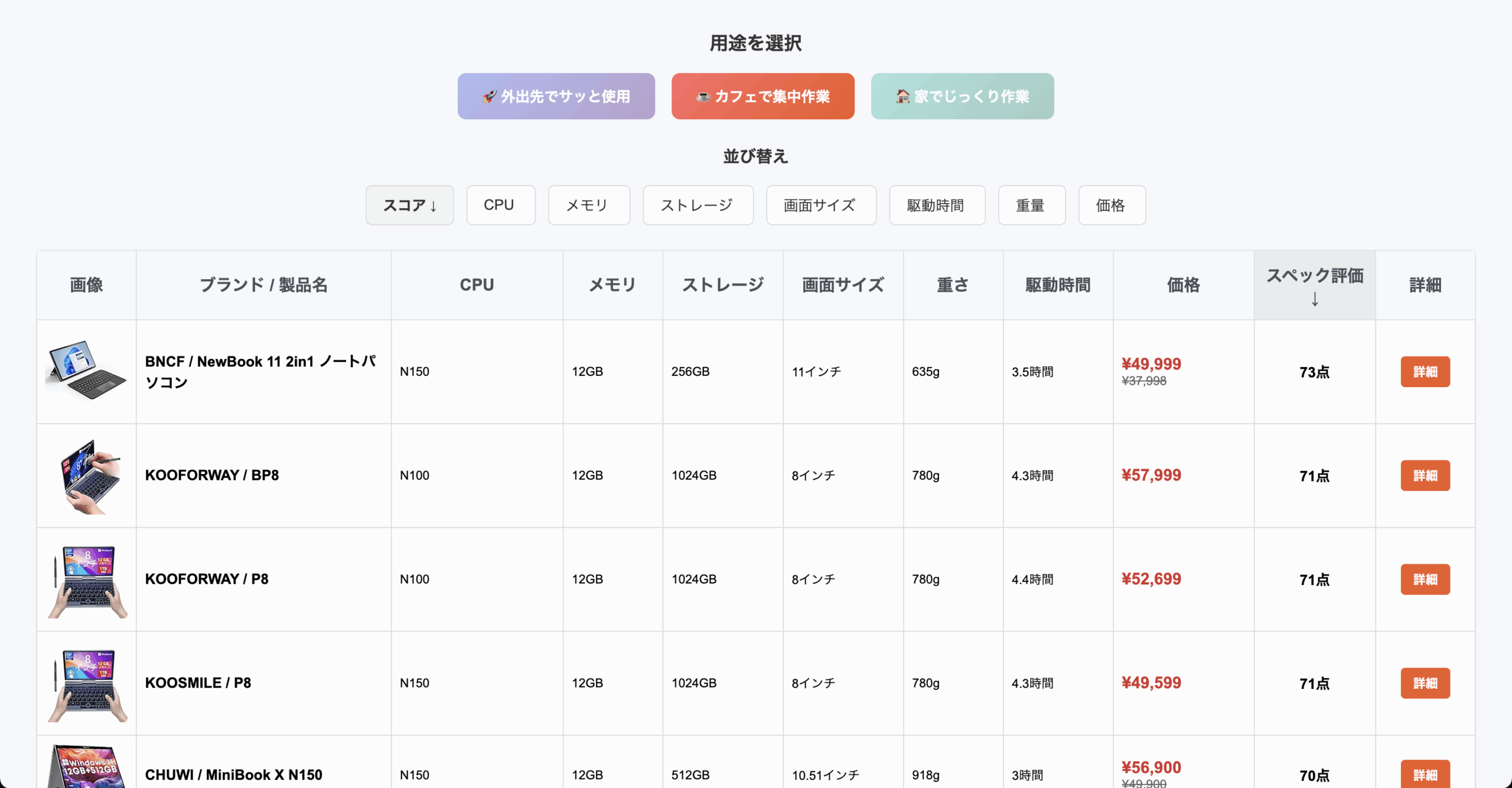
AmazonCompare compact Windows tablets, mini PCs, and laptops by specs and score.
Run by the same operator.
Related Articles
-


- What Computer Do You Need for Japan e-Tax? Card Reader, Phone, Printer
- MacBook Pro 14-inch or 16-inch: Which Size Should You Buy?
- Is the MacBook Air Good for Music Production? M5, Memory, and Storage
- Can You Still Use a Windows 10 PC? Upgrade, Replace, or Retire It
- Can the iPad A16 Stream with OBS? Screen Recording, Storage, and iPad Air Tradeoffs
- Best Laptop Brands by Use: Work, College, Home, and Creative Tasks
- Is iPad Pro Good for Music Production? Logic Pro, Storage, and Mac Limits
- Best external monitor for a laptop: 24 vs 27 inch, USB-C, HDMI, and 4K
- iMac or MacBook Air: Which Should You Buy for Home, College, or Work?
