Is the iPad Air Good for Digital Art? iPad Pro Differences, Size, and Storage
Is the Mac mini Good for Work? Remote Work, Office, and Air Tradeoffs

About the Author
Sesera editorial account organizes laptop, mini PC, smartphone, and gadget buying guides so readers can check the important points before buying.
“Can I use a Mac mini as my main work computer?”
“If I mostly work from home, is the Mac mini a smarter buy than a MacBook Air?”
The short answer: the Mac mini is a strong work computer when your work happens at a fixed desk. It is fast, quiet, compact, and easy to pair with a large monitor, proper keyboard, mouse, speakers, webcam, and external storage. For Office work, browser tools, email, video calls, writing, light creative work, development, and a clean home-office setup, the base M4 model can already make sense.
Do not buy it just because the starting price looks lower than a laptop. A Mac mini still needs a monitor, keyboard, mouse or trackpad, and usually a webcam. If you work from cafes, client offices, classrooms, trains, hotels, or shared workspaces, the MacBook Air is the safer tool. If your job depends on Windows-only software, old Excel add-ins, Access databases, CAD tools, or company systems built for Windows, choose a Windows PC before trying to force a Mac mini into the workflow.
Treat Mac mini as a desk computer
The Mac mini is best understood as a small desktop, not a cheap laptop replacement. It works well when it stays on the same desk every day. You connect a monitor, choose the keyboard and pointing device you like, keep cables in place, and build a setup that is more comfortable than working from a laptop screen for eight hours.
That fixed-desk strength is the whole point. For home office work, a Mac mini can feel better than a laptop because the screen can be larger, the webcam can sit at eye level, and the keyboard can be placed where your shoulders are relaxed. If your workday is documents, browser apps, meetings, email, spreadsheets, and occasional creative tasks, that comfort matters more than buying the most powerful Mac.
The weakness is just as clear. The Mac mini needs power and a display. It is physically small, but it is not a computer you open on a train or carry into a meeting room. If your work moves with you, a small desktop becomes a second machine problem, not a bargain.
| Work situation | Mac mini fit | Practical call |
|---|---|---|
| Home office at one desk | Strong | One of the best Mac setups |
| Office work and web apps | Strong | M4 is usually enough |
| Video calls every day | Good with extras | Buy a webcam and microphone |
| Light photo, design, or video work | Good | M4 works; M4 Pro if time matters |
| Development at a desk | Good to strong | Memory matters more than the box size |
| Travel, sales, campus, client visits | Weak | Choose MacBook Air |
| Windows-only business systems | Weak | Choose Windows |
Apple lists the Mac mini with M4 and M4 Pro options. The current M4 model starts with a 10-core CPU, 10-core GPU, 16GB unified memory, and 512GB SSD, while M4 Pro starts with more CPU and GPU headroom and can be configured higher. Those specs are more than enough for normal office work, but they do not solve portability or software compatibility.
Sources:
Apple Mac mini
Apple Mac mini technical specifications
Office work is easy if Mac is allowed
For normal Microsoft 365 work, the Mac mini is not underpowered. Word, PowerPoint, Outlook, Teams, OneDrive, browser-based tools, PDFs, email, chat, and calendar work do not come close to stressing a current M4 Mac mini. Microsoft’s Mac requirements for Microsoft 365 are far below what the Mac mini provides, so raw speed is rarely the issue.
The real question is whether your workplace is Windows-first. Some jobs look like “Office work” from the outside but depend on Windows-only details: Excel macros that only run correctly on Windows, old add-ins, Access databases, local accounting software, printer drivers, VPN tools, or internal systems that IT only supports on Windows. In that situation, a Mac mini can be fast and still be the wrong work computer.
My practical rule is simple. If your work is normal documents, spreadsheets, slides, email, cloud storage, web apps, and video calls, the Mac mini is fine. If your work has a required Windows tool that blocks even one weekly task, buy Windows or confirm the Mac workflow with your company before spending money.
Source:
Microsoft 365 system requirements
Remote work needs peripherals, not just power
A Mac mini can be excellent for remote work, but only if you budget for the parts that make a desk comfortable. The computer has no built-in display, keyboard, trackpad, battery, webcam, or laptop-style speakers aimed at your face. That is not a flaw if you plan the setup. It is a problem if you only compare the Mac mini’s base price with the price of a MacBook Air.
For a serious home-office setup, plan for a monitor first. A 24-inch Full HD monitor is the budget floor; a 27-inch QHD or 4K monitor is more comfortable for spreadsheets, writing, research, and side-by-side windows. Add a keyboard and mouse or trackpad you can use all day. If video calls matter, add a webcam and decent microphone before judging the Mac mini as a work machine.
| Peripheral | Priority | Why it matters |
|---|---|---|
| Monitor | Essential | The Mac mini has no screen |
| Keyboard | Essential | Typing comfort shapes every workday |
| Mouse or trackpad | Essential | Choose the control style you prefer |
| Webcam | High for meetings | The Mac mini has no built-in camera |
| Microphone or headset | High for meetings | Clear audio matters more than video quality |
| External SSD | High for creative work | Useful for projects, media, and backups |
| USB-C hub or dock | Situational | Needed when your desk has many devices |
Related article:
Best External Monitor for a Laptop: USB-C, HDMI, and Size
M4 is enough until waiting costs money
For office work, email, browser tools, meetings, writing, project management, light image editing, and basic content work, choose the M4 Mac mini and spend carefully on memory, storage, and the desk setup. The M4 chip is already beyond what normal office work needs.
M4 Pro makes sense when waiting is part of your job. Daily video editing, software development, Docker containers, local builds, music production, large photo batches, multiple high-resolution displays, and long exports can justify the upgrade. The question is not whether M4 Pro is better. It is whether it saves time often enough to matter.
| Configuration | Best fit | Work decision |
|---|---|---|
| M4 | Office, remote work, light creative tasks | Best default for most desk work |
| M4 with more memory | Heavy multitasking and longer ownership | Often smarter than jumping to Pro |
| M4 Pro | Video, development, DTM, heavy exports | Buy when it saves work time |
| 10Gb Ethernet | NAS and large local file transfer | Only for specific network setups |
Related article:
Mac mini M4 or M4 Pro: Which Chip Should You Choose?
Choose memory and storage for real work
For a work Mac mini, 16GB memory is the usable floor. It is fine for Microsoft 365, email, web apps, meetings, and normal multitasking. I would not buy less for a current work Mac. If you want the machine to stay comfortable for several years, 24GB is the cleaner choice for many desk workers.
Choose more memory when your workday includes many browser tabs, Teams or Slack, spreadsheets, light photo work, coding tools, Docker, local databases, design apps, or multiple displays. Once your work includes sustained creative or development loads, M4 Pro with 48GB starts to make more sense than trying to stretch a basic configuration too far.
For storage, 512GB is the starting point I would consider for work. It can be enough if most files live in OneDrive, Google Drive, Dropbox, iCloud, or a company system. Choose 1TB if the Mac mini is your main machine and you keep local photos, client files, meeting recordings, development projects, creative assets, or offline folders. External SSDs are useful at a desk, but they should not be the fix for buying too little internal storage.
| Choice | Best fit | Practical call |
|---|---|---|
| 16GB memory | Office, web, meetings | Acceptable baseline |
| 24GB memory | Longer use and heavier multitasking | Best work pick for many buyers |
| 48GB memory | Creative work, development, M4 Pro workloads | Choose when work apps stay open all day |
| 512GB storage | Cloud-first office work | Usable starting point |
| 1TB storage | Main work machine | Better balance for most local-file users |
| 2TB or more | Large project libraries | Compare against external storage and Pro models |
Related article:
Mac mini Memory and Storage: 16GB, 24GB, 48GB, and SSD Choices
Pick MacBook Air if the computer moves
Choose MacBook Air if the computer needs to move with you. The Air includes a screen, keyboard, trackpad, webcam, speakers, battery, and portability in one machine. That sounds obvious, but it is exactly what the Mac mini does not include.
If you work from home five days a week and rarely move the computer, the Mac mini can be the better desk setup. If you split time between home and office, travel for work, take calls from different rooms, meet clients, study on campus, or want one machine that works anywhere, the MacBook Air is the safer main computer.
The total cost can also flip the answer. A Mac mini plus monitor, keyboard, mouse, webcam, speakers, and storage can approach laptop money quickly. That does not make the Mac mini bad. It means you should compare the whole setup, not just the computer box.
Related articles:
Mac mini or MacBook Air: Desk Setup, Portability, and Total Cost
Is the MacBook Air Good for Work? Office, Remote Work, and Pro Limits
Choose Windows when compatibility is the job
A Mac mini is a poor work purchase when the job is built around Windows. That includes company software with no Mac version, Access databases, old Excel macros, Windows-only accounting apps, engineering tools, CAD software, inspection equipment, printer utilities, and VPN systems that IT only supports on Windows.
This is not about Mac versus Windows preference. Work computers should remove friction. If a Windows desktop or laptop opens the required files, connects to the company system, and follows IT instructions without workarounds, it is the better business tool for that job.
Use the Mac mini when the work fits macOS. Use Windows when compatibility decides the purchase. That split prevents the most expensive mistake: buying a fast computer that cannot comfortably run the actual work.
Check these points before buying
- Your work happens mainly at one desk.
- You have confirmed that your required apps work on macOS.
- Your company does not require Windows-only software, Access, old Excel add-ins, or Windows-only VPN tools.
- You have included the cost of a monitor, keyboard, mouse or trackpad, webcam, and microphone.
- You know whether M4 is enough or M4 Pro will save real work time.
- You are choosing at least 16GB memory, with 24GB worth considering for long-term work use.
- You are choosing at least 512GB storage, with 1TB better for a main work machine.
- You do not need the computer to work from cafes, trains, client offices, or meeting rooms without a monitor.
My recommendation: buy the Mac mini for a fixed desk and macOS-friendly work. Choose M4 for Office, remote work, web tools, meetings, and light creative tasks. Move to M4 Pro when exports, builds, heavy apps, or display needs slow the day down. Buy MacBook Air when the computer moves. Buy Windows when compatibility is the job. That is the cleanest way to avoid both overbuying and buying the wrong kind of computer.
FAQ
Is the Mac mini good for work?
Yes, if your work happens at a fixed desk and your required apps work on macOS. It is good for Office, browser tools, remote work, meetings, writing, light creative work, and development. It is not a good fit for frequent travel or Windows-only business software.
Is the Mac mini good for Microsoft Office?
Yes. Microsoft 365, Word, Excel, PowerPoint, Outlook, Teams, email, and browser tools are comfortable on a current Mac mini. The main risk is not speed; it is whether your workplace relies on Windows-only Excel macros, add-ins, Access, or internal systems.
Do I need M4 Pro for work?
Not for normal office work. Choose M4 for documents, web apps, meetings, email, and light creative tasks. Choose M4 Pro when video editing, development, DTM, large files, multiple displays, or long exports regularly cost you time.
Should I buy Mac mini or MacBook Air for work?
Buy Mac mini if you work mainly at one desk and want a larger monitor and custom desk setup. Buy MacBook Air if you carry the computer, move between rooms, travel, work from cafes, or need one machine that works anywhere without extra equipment.
Compare specs on Specsy
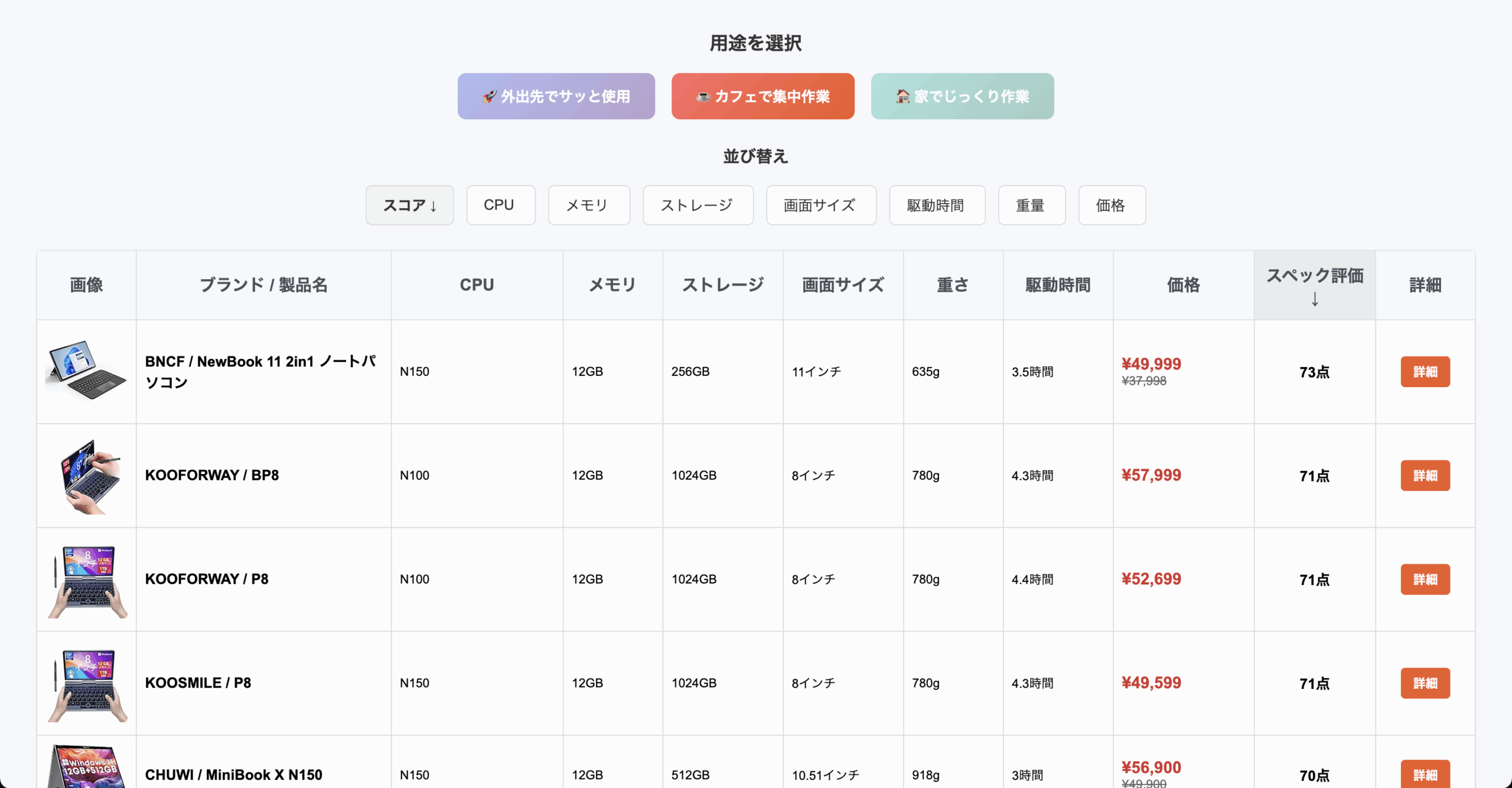
AmazonCompare compact Windows tablets, mini PCs, and laptops by specs and score.
Run by the same operator.
Related Articles
-


- Is the iPad A16 Enough for Study Notes? Storage, Pencil, and iPad Air Differences
- Do You Need a Computer for a Home Printer? Phone Printing, Scanning, Forms
- Is the iPad A16 Good for Music Production? GarageBand, Logic Pro, and Storage
- Is the M5 iPad Pro Good for Drawing and Comics? Pencil, Size, and Storage Guide
- Is MacBook Pro good for programming? M5 Pro/Max, memory, and Docker
- Is the iMac Good for Illustrator and Photoshop? M4, Memory, and SSD Choices
- Is MacBook Neo good for remote work? Zoom, Office, 8GB RAM, and limits
- How much memory and SSD storage for Mac mini: 16GB, 24GB, or 48GB?
- iPad or iPad Air: Which Should You Buy for Notes, Study, and Storage?
