MacBook Air 13-inch or 15-inch: Which Size Should You Buy?
Best external monitor for a laptop: 24 vs 27 inch, USB-C, HDMI, and 4K

About the Author
Sesera editorial account organizes laptop, mini PC, smartphone, and gadget buying guides so readers can check the important points before buying.
If your laptop feels cramped at a desk, an external monitor can be one of the easiest upgrades. The point is not to build a fancy desk setup. The point is to stop squeezing a spreadsheet, a browser, a video call, and notes into one small screen.
For most people, the simple answer is this: use one external monitor plus the laptop screen. A 24-inch Full HD monitor is fine for a compact, lower-cost desk. A 27-inch WQHD monitor is the better everyday work choice if you have enough desk depth.
USB-C is worth paying for when it really carries video and enough power to charge your laptop. HDMI is still fine when you want one simple monitor and do not need one-cable docking. Before you buy, check the laptop port, the cable, the monitor input, and the desk space together.
Start with one monitor
The best first setup is usually one external monitor and the laptop screen. Put your main work on the monitor, then keep chat, notes, email, or the video meeting window on the laptop display.
That gives you most of the daily benefit without adding a dock, two arms, extra cables, and a crowded desk. It also shows you what you actually miss. If one monitor solves the problem, you do not need to turn the desk into a bigger project.
| Laptop use | Monitor value | First move |
|---|---|---|
| Home office every week | High | Buy one good external monitor |
| Documents, PDFs, spreadsheets | High | Compare 24-inch FHD and 27-inch WQHD |
| Video calls with notes open | High | Use the monitor plus the laptop screen |
| Light browsing and video watching | Low | Keep the setup simple |
| Cafe, campus, or travel use | Low | Focus on the laptop itself |
| Gaming, editing, or streaming | Mixed | Check laptop performance first |
A monitor is worth buying when it removes a real daily bottleneck. If you regularly keep two work windows open, it will probably help. If you mostly use the laptop away from a desk, the money may be better spent on the laptop, battery life, keyboard comfort, or storage.
24-inch FHD or 27-inch WQHD
A 24-inch Full HD monitor is the practical budget choice. It fits small desks, text is normally readable without much adjustment, and it is enough for documents, browser work, email, and video meetings.
A 27-inch WQHD monitor gives more room for real work. Spreadsheets, PDFs, research tabs, and side-by-side documents feel less cramped than they do on Full HD. If you work at the same desk most days, this is the size and resolution I would compare first.
A 27-inch 4K monitor can look sharper, but it is not automatically better for office work. You may need display scaling, and the laptop, adapter, cable, and monitor all have to support the resolution and refresh rate you expect.
| Monitor type | Best fit | Plain judgment |
|---|---|---|
| 24-inch Full HD | Small desks, lower budget, general office work | Best cheap starting point |
| 27-inch Full HD | Large text, simple viewing | Comfortable, but not much extra workspace |
| 27-inch WQHD | Home office, documents, spreadsheets | Best balance for many laptop users |
| 27-inch 4K | Sharp text, photo work, higher budget | Good after checking laptop output |
| 32-inch 4K | Large desks and longer viewing distance | Check desk depth before buying |
| Ultrawide | Timelines, wide spreadsheets, many windows | Useful, but not the simplest first monitor |
If you are unsure, decide from your desk first. A monitor with better specs is still a bad purchase if it sits too close, pushes the laptop aside, or forces your neck into an awkward position.
When 4K makes sense
4K is useful when sharp text, photo work, design review, or a higher-end Mac setup matters to you. It is less urgent if your work is mostly email, documents, browser apps, and video meetings.
The mistake is treating 4K as a free upgrade. The laptop has to output 4K at a comfortable refresh rate, the adapter or cable has to support it, and the monitor has to scale text in a way you like. Some people love 27-inch 4K. Others prefer 27-inch WQHD because it feels simpler and gives enough usable space.
If you are buying your first external monitor for work, I would not start from 4K unless you already know why you need it. Start from the desk size, the work you do, and the port your laptop can actually use.
USB-C is for clean desks
USB-C is the cleanest setup when it works properly. One cable can send video to the monitor, connect USB accessories through the monitor, and charge the laptop at the same time.
The important phrase is “when it works properly.” A USB-C-shaped port does not always mean video output. Some ports handle data and charging but do not send a display signal. For monitor use, the laptop needs USB-C video output, such as DisplayPort Alternate Mode or Thunderbolt.
If you want one-cable charging, also check power delivery. A monitor that provides 65W may be fine for many thin laptops, while a larger performance laptop may need more. Match the monitor’s USB-C power delivery to the laptop’s normal charger requirement.
| USB-C check | Why it matters | Before buying |
|---|---|---|
| Laptop USB-C video output | Decides whether the monitor shows an image | Confirm DisplayPort Alt Mode or Thunderbolt |
| Monitor power delivery | Decides whether one cable can charge the laptop | Match wattage to the laptop |
| USB-C cable capability | Some cables charge but do not carry display well | Use a cable rated for display output |
USB-IF has technical material on VESA DisplayPort Alternate Mode over USB-C: USB-IF DisplayPort Alternate Mode material. You do not need to memorize the specification. Just do not buy a USB-C monitor only because your laptop has a USB-C port.
HDMI is still fine
HDMI is often the easier choice for one monitor. If your laptop has HDMI and you only need Full HD or WQHD, the setup is usually simple, cheaper, and less dependent on one perfect USB-C cable.
The tradeoff is desk convenience. HDMI does not charge the laptop. It also does not turn the monitor into a USB hub for your keyboard, mouse, webcam, or storage. You still need the laptop charger and any other USB accessories separately.
For 4K or high refresh rates, check the laptop output, the monitor input, and the cable together. HDMI’s official resources explain cable types and certified cables: HDMI cable types and Premium High Speed HDMI Cable.
Use HDMI when you want a simple one-monitor setup. Use USB-C when a cleaner desk and laptop charging through the monitor are part of the reason you are upgrading.
Add a second monitor later
Do not start with two external monitors unless you already know you need them. For many people, one monitor plus the laptop display is enough for the main work window, a meeting window, and notes.
A second external monitor helps when you still run out of workspace every day after using the first one. If that is not happening, the second screen may add more cables, more stands, more heat, and more window management before it adds much speed.
Windows supports multiple monitors and display modes. Microsoft has a setup guide for arranging screens: how to use multiple monitors in Windows. If a monitor is not detected, Microsoft also lists the usual checks for cables, inputs, adapters, display mode, and drivers: troubleshoot external monitor connections in Windows.
The order matters. Buy one good external monitor first. Add the second one only if the first setup still leaves you short on space.
Check Mac display limits
Mac users need to check the exact model before buying a monitor, dock, or adapter. External display support changes by Mac model and chip. A setup that works on one MacBook Pro may not work the same way on a MacBook Air.
Apple explains that external display support depends on the Mac model and its technical specifications: connect an external display to a Mac. Apple also has model-specific pages for MacBook Air external display support and MacBook Pro external display support.
The rule is simple: if you use a Mac and want more than one external monitor, check your exact model before buying. A dock does not automatically remove the Mac’s display limit.
Performance limits are still laptop limits
One external monitor usually does not make normal office work slow by itself. Documents, browser apps, PDFs, email, and video meetings are not heavy display workloads for most recent laptops.
Slowdowns usually come from everything around the monitor: many browser tabs, video calls, screen sharing, cloud sync, chat apps, and large files open at the same time. If you often run meetings while keeping work documents and browser tabs open, 16GB RAM is a safer baseline than 8GB RAM.
If the monitor is part of a MacBook Neo desk setup, the related English guides cover the laptop side: MacBook Neo for Zoom, MacBook Neo for Office, and MacBook Neo for remote work.
For gaming, video editing, streaming, 4K displays, or several monitors, check the laptop GPU, memory, cooling, and supported display output before buying the screen. A monitor gives you more workspace. It does not add performance that the laptop does not have.
Fix the desk before specs
A laptop monitor setup is not only a monitor purchase. Desk depth, chair height, keyboard, mouse, cable route, power adapter, Wi-Fi, and the monitor stand all affect how the setup feels.
If you close the laptop and use only the monitor, you need an external keyboard and mouse. If you keep the laptop open beside the monitor, the two screen heights may not line up. If the desk is shallow, even a good 27-inch monitor can sit too close.
Before comparing more monitor reviews, picture the desk. Where will the laptop sit? Will it stay open? Where does the charger go? Can the monitor stand fit without pushing the screen too close? These checks prevent more bad purchases than a small difference in specs.
Quick buying checklist
Use this checklist before choosing the monitor model. A popular monitor can still be wrong for your setup if the laptop cannot output the resolution, the desk is too small, or the USB-C power delivery is too weak.
| Check | What it decides | Practical call |
|---|---|---|
| USB-C video output | Whether USB-C monitor video works | Confirm before buying USB-C |
| USB-C power delivery | Whether one cable can charge the laptop | Match wattage to the laptop |
| HDMI output and cable | Whether WQHD or 4K works smoothly | Check laptop, monitor, and cable together |
| Screen size | Whether the monitor fits the desk | 24-inch for compact desks, 27-inch for more room |
| Resolution | Text size and usable workspace | Start from 24-inch FHD or 27-inch WQHD |
| Memory and daily apps | Multitasking comfort | 16GB RAM is safer for calls plus work |
| Keyboard and mouse | Comfort when the laptop is closed | Required for closed-laptop use |
| Desk depth | Viewing distance and posture | Do not oversize the monitor |
If you want to compare monitor candidates, use Specsy’s monitor list. If the laptop itself may need to be replaced, start with Specsy’s PC buying check before spending money on a monitor.
A practical choice for most laptop users
If you write documents, use spreadsheets, read PDFs, join video meetings, or work from home regularly, an external monitor is worth buying. Start with one monitor and the laptop screen.
Use 24-inch Full HD when you want a compact, cheaper setup. Use 27-inch WQHD when you want more workspace and the desk has enough depth. Move to 27-inch 4K when sharp text or creative work matters enough to justify the extra checks.
Pick USB-C for a cleaner desk only after confirming video output and charging wattage. Pick HDMI for a simple one-monitor setup. The best monitor is the one that fits your laptop, your cable, your desk, and the work you actually do every day.
Frequently asked questions about laptop monitors
Is a 24-inch monitor enough for a laptop?
Yes. A 24-inch Full HD monitor is enough for documents, email, browser work, video meetings, and small desks. Move to 27-inch WQHD if you want more room for side-by-side windows.
Is 27-inch WQHD better than 4K for office work?
For many laptop users, 27-inch WQHD is easier and cheaper. 4K can look sharper, but you need to check scaling, laptop output, adapter, cable, and refresh rate before buying.
Do I need USB-C for an external monitor?
You need USB-C if you want one cable for video and charging. You do not need it for a simple one-monitor setup if HDMI already works for the resolution you want.
Can I use HDMI from a laptop to a monitor?
Yes. HDMI is fine for many Full HD and WQHD setups. For 4K or high refresh rates, check the laptop HDMI version, the monitor input, and the cable rating together.
Will an external monitor slow down my laptop?
One external monitor usually does not slow down normal office work. Slowdowns usually come from many tabs, screen sharing, video calls, cloud sync, and heavy apps running together.
Should I buy a second external monitor?
Start with one external monitor and the laptop screen. Add a second external monitor only if you still run out of workspace every day after using that setup.
Compare specs on Specsy
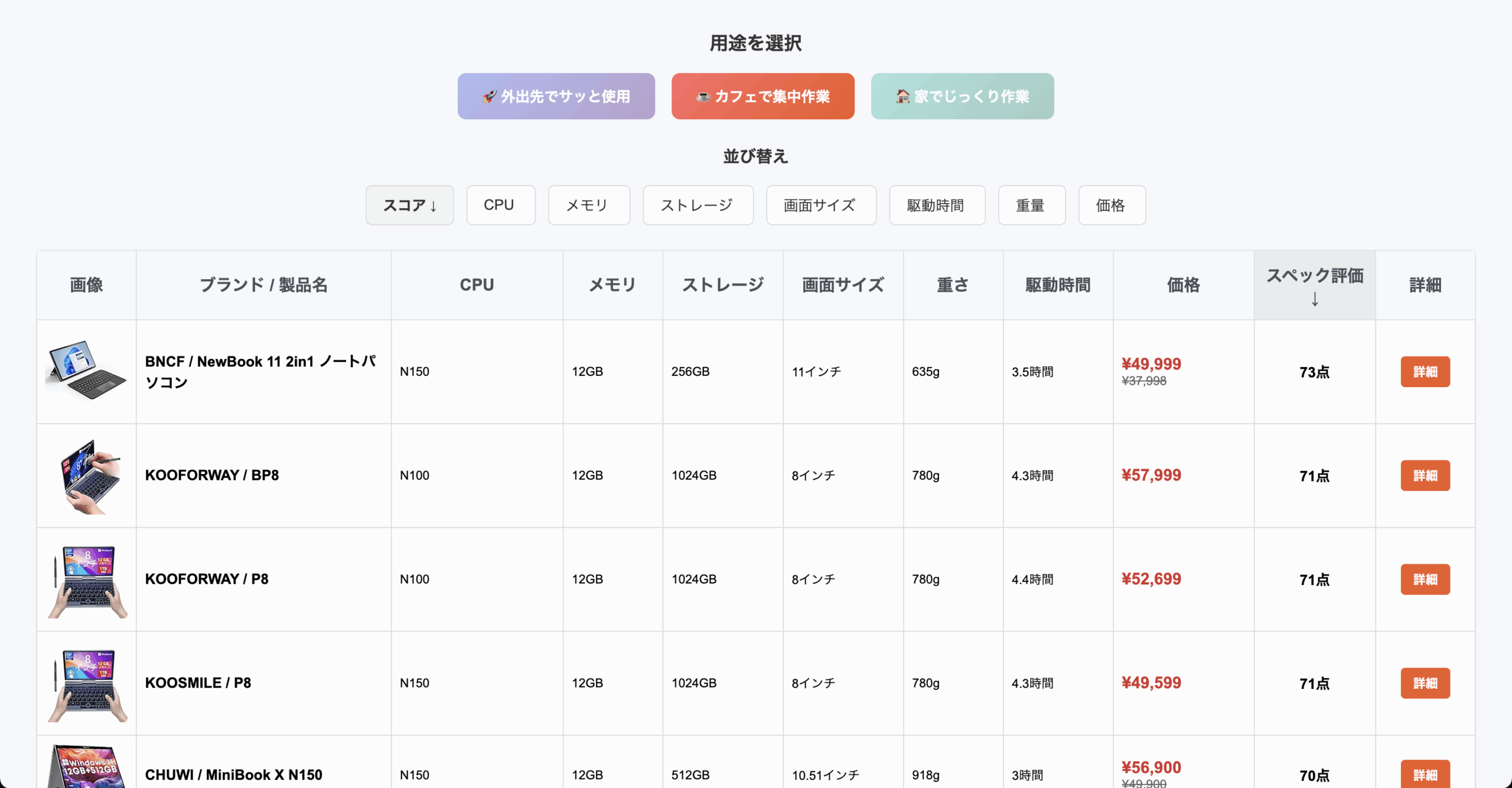
AmazonCompare compact Windows tablets, mini PCs, and laptops by specs and score.
Run by the same operator.
Related Articles
-


- Can You Draw on the iPad A16? Apple Pencil, Storage, and iPad Air Differences
- Is the MacBook Pro Good for AI Development? M5 Pro/Max, Memory, and Local LLMs
- iMac or Mac mini: Which Should You Buy for a Clean Desk or Custom Setup?
- Is MacBook Neo good for Zoom? 8GB RAM, camera, and screen sharing

- Is iPad Pro Worth It for College? Notes, Creative Work, and iPad Air Tradeoffs
- Is MacBook Pro good for programming? M5 Pro/Max, memory, and Docker
- Is the Mac mini Good for Music Production? M4, M4 Pro, Memory, and Storage
- Is iPad Good for College? Notes, Reports, and Laptop Limits
- Can You Trust Amazon Laptop Reviews? What to Check Before Buying
