Is the MacBook Air Good for Work? Office, Remote Work, and Pro Limits
Best Laptop Brands by Use: Work, College, Home, and Creative Tasks

About the Author
Sesera editorial account organizes laptop, mini PC, smartphone, and gadget buying guides so readers can check the important points before buying.
“Should I buy a Dell, HP, Lenovo, ASUS, MacBook, NEC, Fujitsu, or Dynabook laptop?”
“Is a cheaper overseas brand enough, or is it worth paying more for local support?”
The practical answer is this: choose by use first, then by brand. For most everyday buyers, Dell and HP are easy choices for work, Lenovo and ASUS are strong value picks, MacBook fits people who want battery life and the Apple ecosystem, and Japan-focused brands such as NEC, Fujitsu, and Dynabook make the most sense when local support, Japanese keyboard comfort, or store assistance matters.
The common mistake is starting with a brand ranking. A famous logo will not fix low memory, a cramped SSD, a dim screen, a heavy body, weak ports, or unclear warranty coverage. A cheaper brand can be the better buy when the configuration is right. A safer support brand can also be worth it when the user is not comfortable troubleshooting problems alone.
This guide sorts laptop brands by work, college, home, family, creative work, portability, support, and price so you can narrow the choice without buying the wrong kind of machine.
Choose by use before brand loyalty
Start with the job the laptop must do. For web browsing, Office files, video calls, online classes, photos, and family paperwork, the brand matters less than memory, storage, screen quality, weight, battery life, ports, and warranty.
For a main laptop in 2026, the safer baseline is 16GB memory, a 512GB SSD, a Full HD or better screen, and a recent enough processor. After that, brand becomes a way to choose the support style, keyboard feel, design, price, and availability.
| Main priority | Brands that often fit | What to check first |
|---|---|---|
| Everyday work | Dell / HP / Lenovo ThinkPad | Memory, ports, warranty, keyboard |
| Value for specs | Lenovo / ASUS / Acer | CPU, memory, SSD, seller, return path |
| Apple ecosystem | MacBook Air / MacBook Pro | School or work software compatibility |
| Family support | HP / local retail models / Japan-focused brands | Support path, setup help, warranty |
| College | MacBook Air / HP / Lenovo / Dell | Department requirements and weight |
| Creative work | MacBook Pro / Dell / HP / Lenovo | Memory, GPU, cooling, screen |
If you only remember one rule, use this one: brand is the final filter, not the first decision.
Value buyers should check specs first
If price matters most, Lenovo, ASUS, Acer, and some Amazon marketplace laptops can look attractive. This is where you can find strong value, but it is also where weak configurations hide behind long product names and discount labels.
Do not choose a budget laptop only because the brand looks familiar or the price is low. Avoid 4GB memory, most 8GB main-laptop configurations, 128GB or 256GB storage for a main PC, eMMC storage, old Celeron or Atom-class chips, HD-only screens, and vague warranty wording.
For Amazon listings, check the exact option in the cart because reviews and specs can be mixed across several configurations. The English guide to cheap Amazon laptops worth buying gives the safer checklist before you trust a low price.
Dell and HP fit everyday work
For work laptops, Dell and HP are usually safe starting points. Both have many business-oriented models, clear support ecosystems, and enough choices for Office work, web meetings, external monitors, travel, and desk use.
Dell tends to fit buyers who want a practical Windows laptop and are comfortable comparing configurations. HP tends to fit buyers who want a work laptop that also feels friendly at home, with more attention to design and store visibility in many markets.
For remote work, do not underbuy. Video calls, browser tabs, Office apps, chat tools, cloud sync, PDFs, and an external monitor can stack up quickly. Choose 16GB memory at minimum, avoid tiny SSDs, and make sure the laptop has the ports or dock support you need.
Lenovo and ASUS fit value seekers
Lenovo and ASUS are strong choices when you want more hardware for the money. Lenovo also has business-focused ThinkPad models, while ASUS often competes well in consumer, creator, and value categories.
The tradeoff is that model names and configurations can vary widely. One Lenovo or ASUS laptop can be excellent, while another nearby listing can have a weak screen, poor webcam, small SSD, short battery life, or limited warranty path.
Treat these brands as good hunting grounds, not automatic answers. Compare the exact CPU, memory, SSD, screen brightness, weight, battery claim, ports, seller, and warranty before deciding.
MacBook fits mobility and Apple users
A MacBook is easiest to recommend when the buyer already uses iPhone, iPad, iCloud, AirDrop, FaceTime, or other Apple services. MacBook Air is a strong fit for students, writers, office work, travel, light creative work, and people who value battery life and a quiet machine.
MacBook Pro makes more sense for heavier creative work, development, long export jobs, external displays, and people who need stronger sustained performance. Do not buy Pro just because it sounds safer; buy it because the workload actually needs the extra power, ports, screen, or memory.
The main caution is software compatibility. Some schools, employers, accounting tools, CAD tools, engineering software, test systems, or device drivers still expect Windows. For college buyers, start with the school’s official requirements. The English guide to recommended laptop specs for college covers that decision in more detail.
Local-support brands fit family buyers
NEC, Fujitsu, and Dynabook are Japan-focused examples where the value is not always raw performance per dollar. They can make sense when the buyer wants local language support, a familiar keyboard layout, store consultation, lighter Japan-market models, or a simpler support path for a parent, child, or family PC.
Outside Japan, apply the same idea to brands and retailers with strong local support in your country. Paying more can be reasonable when the user will need help with setup, warranty, repair, recovery, or basic troubleshooting.
Still, do not pay a premium for a weak configuration. A family laptop should not be stuck with too little memory or a small SSD just because the support story feels safe. For family photos and documents, storage and backup matter as much as the brand. The English guide to choosing a computer for photo storage explains the storage side.
College laptops need school compatibility
For college, the best brand is the one that fits the department requirements, backpack weight, battery needs, and software. General humanities and business students can often choose between MacBook Air, HP, Dell, and Lenovo. Engineering, architecture, data, design, or lab-heavy courses may need Windows, more memory, or stronger graphics.
Do not choose a laptop only because it is light or popular on campus. Check whether the school requires Windows-only software, specific test software, Office, CAD, statistical tools, programming environments, or external display support.
If the school gives a recommended spec sheet, use it before any brand preference. After that, choose the brand with the best balance of weight, warranty, keyboard, battery, and price.
Creative work needs stronger hardware
For video editing, illustration, Adobe apps, Blender, music production, and heavier creative work, brand names matter less than hardware. Memory, SSD size, CPU, GPU, cooling, color-accurate screen, and external monitor support decide comfort.
Light creative work can be fine on MacBook Air or a well-configured Windows laptop. Daily video editing, 3D work, large Photoshop files, motion graphics, and long exports should push you toward MacBook Pro, Dell, HP, Lenovo, or creator-focused Windows models with stronger cooling and graphics.
For this use case, do not chase the cheapest laptop. Start at 16GB memory only for light work, consider 32GB or more for serious work, and avoid tiny SSDs because project files grow quickly.
Home use should prioritize comfort
Home laptops are often used for more than people expect: web browsing, video, email, online forms, printer setup, banking, photo storage, family documents, video calls, and sometimes school work. The right brand is the one that keeps those tasks simple.
HP, Dell, Lenovo, ASUS, and local retail-friendly brands can all work. The more important decision is choosing a comfortable screen, a keyboard the user likes, enough storage, a clear warranty path, and a body that is not too heavy for the person using it.
If the laptop will be shared by parents or older family members, prioritize easy support and clear recovery options over the lowest price. The English guide to questions to ask before buying a laptop in a store is useful when someone needs help narrowing the choice in person.
Compare warranty before saving money
Warranty and repair support should be checked before purchase, not after a problem appears. Dell, HP, Lenovo, and Apple all provide official support or warranty lookup pages, but coverage differs by model, seller, country, and purchase route.
Before buying, confirm who sells the laptop, who ships it, whether returns are simple, how warranty claims work, and whether the model is supported in the country where it will be used. Official support pages such as HP Warranty Check, Lenovo Warranty Lookup, and Apple Service and Repair are useful starting points after you have a serial number or exact model. For Dell and other brands, use the official support site for your country and the exact service tag or serial number.
A cheaper laptop with unclear support is not always a bargain. If it is the main work, school, or family PC, a slightly higher price can be worth paying for a clearer repair and return path.
Use brand as the final filter
After you decide the use case, set the minimum specs and then pick the brand. This prevents the most common mistake: buying a familiar brand in the wrong configuration.
| Your situation | Shortlist first | Avoid |
|---|---|---|
| Low price, basic use | Lenovo / ASUS / Acer | 4GB, eMMC, unclear seller |
| Daily work laptop | Dell / HP / Lenovo ThinkPad | Weak ports, 8GB main models |
| Apple-heavy life | MacBook Air / MacBook Pro | Ignoring Windows-only software |
| Family support matters | HP / local retail brands / Japan-focused brands | Overpaying for weak specs |
| College main laptop | School-compatible Windows or Mac | Buying before checking requirements |
| Creative production | MacBook Pro / creator Windows models | Thin budget laptops with weak cooling |
If you want a needs-based starting point before comparing brand pages, use Specsy’s PC buying check. If you already know you want a mainstream Windows laptop, compare current options here: laptops with 16GB memory and 512GB SSD on Amazon.
The safer brand choice
There is no single best laptop brand for everyone. Dell and HP are easy work choices, Lenovo and ASUS often give strong value, MacBook fits Apple users and mobile work, and local-support brands can make sense for family buyers who need help more than maximum performance per dollar.
The safer buying order is simple: decide the use case, set the minimum specs, check software compatibility, confirm warranty and returns, then choose the brand. If a laptop fails the memory, storage, screen, support, or compatibility check, the brand name should not rescue it.
Frequently asked questions before choosing
Which laptop brand is best overall?
There is no single best brand for everyone. Dell and HP are strong for work, Lenovo and ASUS often fit value buyers, MacBook fits Apple users and portable work, and local-support brands are useful when service and setup help matter.
Is Dell or HP better for work?
Both are good work choices. Dell is often practical for buyers who compare configurations closely, while HP can be easier for people who want a work laptop that also feels comfortable at home. Choose by memory, ports, screen, keyboard, and warranty rather than the logo alone.
Are Lenovo and ASUS good budget choices?
Yes, they can be strong value choices, but the exact model matters. Check CPU, 16GB memory, 512GB SSD, screen quality, seller, return path, and warranty before buying. Avoid weak configurations even if the brand is familiar.
Should I buy a MacBook or Windows laptop?
Buy a MacBook if you value battery life, quiet operation, Apple ecosystem features, and your software works on macOS. Choose Windows if your school, employer, accounting tools, CAD tools, games, or devices require Windows compatibility.
Are local-support laptop brands worth more?
They can be worth more when the user needs easier setup, local language support, store consultation, repair help, or a familiar keyboard layout. They are not worth it if the configuration is too weak for the price.
Compare specs on Specsy
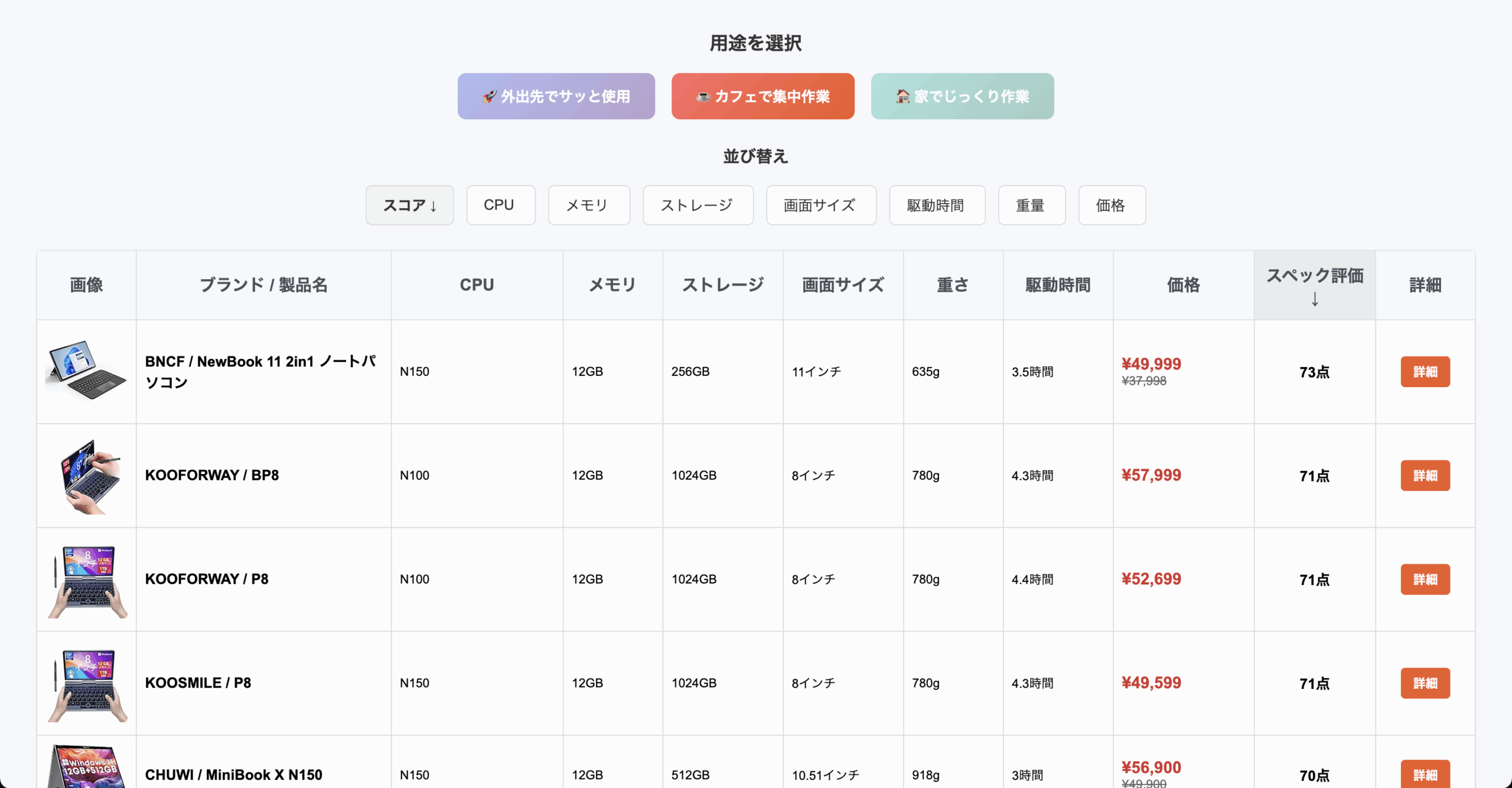
AmazonCompare compact Windows tablets, mini PCs, and laptops by specs and score.
Run by the same operator.
Related Articles
-


- Is the iMac Good for Music Production? M4, Memory, Storage, and Ports
- iPad Air for Work and School: Laptop Replacement, M4, and Pro Tradeoffs
- Recommended Laptop Specs for College: Memory, Storage, Windows or Mac
- Is MacBook Air good for college? Reports, classes, and portability
- Mac mini for programming: M4 vs M4 Pro, memory, and Docker
- What Computer Do You Need for Japan e-Tax? Card Reader, Phone, Printer
- When to Buy a Computer for a Child: Elementary and Middle School Guide
- Can the iPad Pro Stream with OBS? M5, Screen Recording, and Mac Limits
- Mac mini or MacBook Air: Which Should You Buy for Desk or Portable Use?
