When to Buy a Computer for a Child: Elementary and Middle School Guide
MacBook Air 13-inch or 15-inch: Which Size Should You Buy?

About the Author
Sesera editorial account organizes laptop, mini PC, smartphone, and gadget buying guides so readers can check the important points before buying.
"Should I buy the smaller MacBook Air because it is easier to carry?"
"Or should I get the 15-inch MacBook Air so the screen does not feel cramped?"
The short answer: choose the 13-inch MacBook Air if the laptop will leave your desk most days. Choose the 15-inch MacBook Air if the built-in screen will be your main place to work.
The usual mistake is choosing by price or display size alone. A cheaper 13-inch model can feel cramped when you live in spreadsheets and browser tabs. A larger 15-inch model can become the laptop you stop carrying because it takes more room in your bag.
This guide compares the two sizes in the order that actually affects daily use: carry habits, weight, screen space, work, school, video editing, external monitors, memory, SSD, Mac mini, and the final checkout rule.
Start with how often it moves
Before comparing specs, decide whether the MacBook Air is a portable laptop or a desk laptop that sometimes moves. That one question usually decides the size better than any spec table.
If you commute, study on campus, work from cafes, travel, move between meeting rooms, or carry the laptop with books and chargers, start with 13-inch. If the MacBook Air mostly stays open on one desk and you want a cleaner built-in workspace, start with 15-inch.
Apple sells the MacBook Air in 13-inch and 15-inch sizes. Apple also listed the M5 MacBook Air launch prices at $1,099 for 13-inch and $1,299 for 15-inch in the US, before education pricing and configuration changes. Prices can move by retailer and promotion, so confirm the exact model before checkout.
Sources:
Apple MacBook Air overview
Apple MacBook Air technical specifications
Apple Newsroom: MacBook Air with M5
| Main situation | Better size | Why |
|---|---|---|
| Daily commute or campus | 13-inch | Less bag weight matters every day |
| Travel and cafes | 13-inch | Easier to pack, open, and carry |
| Desk with external monitor | 13-inch | The monitor solves the workspace problem |
| Home work on the laptop screen | 15-inch | More room for documents, browser, and chat |
| Spreadsheets and slide decks | 15-inch | Side-by-side work feels less cramped |
| Light video editing on the laptop | 15-inch | Timeline and preview are easier to manage |
| Heavy creative work | MacBook Pro | Screen size alone is not the bottleneck |
Choose 13-inch for daily carry
The 13-inch MacBook Air is the safer default when portability is part of the reason you want an Air. It fits more bags, takes less space on small tables, and is easier to carry with a charger, notebook, tablet, water bottle, or camera gear.
This matters because a laptop’s value drops when you stop bringing it with you. A slightly larger screen is useful only when the laptop is actually there. For students, commuters, sales work, travel, and hybrid work, the smaller Air is usually the more useful computer.
Choose the 13-inch model first if your main work is writing, email, web apps, video calls, research, documents, light photo edits, and browser-based tools. It is also the better choice if you already use a monitor at home or work.
Choose 15-inch for built-in workspace
The 15-inch MacBook Air makes sense when the built-in display is the workspace, not just a fallback screen. If you often keep a document beside a browser, a spreadsheet beside notes, a video call beside an agenda, or a timeline beside a preview, the extra room changes the day.
The 15-inch model is not a performance upgrade in the way a MacBook Pro is. Buy it because you need more workspace on the laptop display. Do not buy it because the larger size feels more serious in a store.
This is the better Air for people who mostly work at home, drive between locations, move the laptop only a few times per week, or want a simple one-computer setup without a separate monitor.
Weight is the real compromise
Apple lists the 13-inch MacBook Air at 2.7 pounds and the 15-inch model at 3.3 pounds. The difference sounds small on paper, but it is large enough to change behavior when the laptop rides in a bag every day.
For a short walk from bedroom to desk, 3.3 pounds is not a problem. For a packed commute, a full campus day, airport travel, or walking between client visits, the lighter model becomes easier to live with.
My rule is blunt: if you already worry about carrying it, buy 13-inch. If the laptop usually stays open on a desk and you only carry it occasionally, the 15-inch weight is easier to defend.
Screen space changes daily work
The 13-inch MacBook Air is fine when you work in one main window at a time. Writing in Google Docs, managing email, using a browser app, taking notes, joining Zoom, and editing a few photos all fit the smaller display.
The 15-inch MacBook Air is better when your work depends on seeing more at once. Spreadsheets need columns. Slide decks need speaker notes and assets. Research needs source material beside the draft. Video calls often need chat, notes, and documents open together.
A larger display does not make the computer faster. It reduces window juggling. If your annoyance is constant switching, the 15-inch model solves a real problem. If your annoyance is slow exports, memory pressure, or heavy creative apps, screen size is not the fix.
Work and school point different ways
For college and daily school use, choose 13-inch unless you have a clear reason to carry the bigger laptop. Lecture halls, library desks, campus bags, trains, and cafes all favor the smaller model. The laptop you bring every day is more useful than the one with the nicer screen at home.
For office work, the answer depends on the desk setup. If you dock into a monitor most days, 13-inch is the better portable half of the setup. If you work from a dining table, shared desk, or hotel room without a monitor, 15-inch is more comfortable for spreadsheets, presentations, and side-by-side reference.
Related guides:
iPad Air vs MacBook Air for college, work, and PC replacement
Laptop external monitor guide: USB-C, HDMI, and resolution
Video editing does not decide alone
For light video editing, the 15-inch MacBook Air is easier to use than the 13-inch model. The timeline, preview, media list, effects panel, and captions simply have more room on the built-in screen.
That does not mean every video editor should buy the 15-inch Air. If you edit at a desk with a monitor, a 13-inch Air with enough memory and storage can be the cleaner setup. If you edit long 4K projects, use heavy effects, work with multiple cameras, or export every day, the question is no longer 13-inch versus 15-inch Air. It is whether you should move to MacBook Pro.
The same logic applies to design, music production, coding, and local AI experiments. The 15-inch screen helps the workspace. It does not turn the Air into a Pro workstation.
External monitors favor the smaller Air
An external monitor changes the size decision. If your main desk has a good display, the 13-inch MacBook Air becomes much easier to recommend. You get a light laptop when you move and a large workspace when you sit down.
The 15-inch model is most valuable when you do not want a monitor or cannot count on one. It gives you more room everywhere: kitchen table, hotel desk, classroom, coworking space, or sofa.
Related guides:
Best external monitor setup for a laptop
Mac mini vs MacBook Air for desk use, portability, and total cost
Memory and SSD can matter more
Do not spend the whole budget on the larger screen if memory or storage is the real bottleneck. For office work, school, web apps, writing, and meetings, 16GB memory is a reasonable starting point. For heavier multitasking, long-term use, photo work, light video editing, coding, or many browser tabs, more memory is easier to justify.
Storage has the same problem. If you keep photos, videos, project files, virtual machines, music libraries, or large downloads on the Mac, a bigger SSD can matter more than a bigger display. A 13-inch Air with the right memory and SSD often beats a 15-inch Air that feels cramped internally after a year.
Related guides:
MacBook Air memory guide: 16GB, 24GB, or 32GB
MacBook Air SSD guide: 512GB, 1TB, 2TB, or 4TB
Fixed desk users should compare Mac mini
If the computer rarely leaves one desk, compare Mac mini before buying a larger MacBook Air. A desktop setup can give you a bigger monitor, better keyboard position, more ports through a hub, easier cable management, and a more comfortable long-session workspace.
Buy MacBook Air when portability is real. Buy Mac mini when the setup is basically fixed. This decision can matter more than 13-inch versus 15-inch.
Related guides:
Mac mini vs MacBook Air for desk use and total cost
iMac vs MacBook Air for home, college, and work
The checkout rule is simple
Choose the 13-inch MacBook Air if you carry it every day, use public transport, study on campus, travel often, work between locations, already have a monitor, or would rather spend the difference on memory, SSD, AppleCare, or accessories.
Choose the 15-inch MacBook Air if the built-in screen is where you finish real work. That means spreadsheets, presentations, research, long writing, video calls with notes, light creative work, and laptop-only sessions where constant window switching slows you down.
My default is 13-inch for a MacBook Air you carry and 15-inch for a MacBook Air you sit with. If you cannot name the work that needs the larger screen, buy the 13-inch model and configure the parts you cannot upgrade later.
Still comparing MacBook Air with Windows laptops?
Use this only after deciding what kind of laptop you need: light carry, bigger screen, memory, SSD, monitor use, and total cost.
Useful US Amazon searches
Use these as search shortcuts only. Confirm the exact chip, memory, SSD, keyboard layout, seller, warranty, return policy, and whether the listing is new or refurbished before buying.
Frequently asked questions about MacBook Air size
Should I buy the 13-inch or 15-inch MacBook Air?
Choose the 13-inch MacBook Air if you carry it every day, commute, study on campus, travel, or use an external monitor at your desk. Choose the 15-inch MacBook Air if the built-in screen is your main workspace for long writing, spreadsheets, research, video calls, or light creative work.
Is the 15-inch MacBook Air too heavy?
It is not heavy for a 15-inch laptop, but it is noticeably less portable than the 13-inch model. Apple lists the 13-inch MacBook Air at 2.7 pounds and the 15-inch model at 3.3 pounds, so daily commuting and campus use favor the smaller size.
Is the 13-inch MacBook Air too small for work?
It is enough for email, web apps, documents, video meetings, writing, and light photo work. It feels small when you regularly keep spreadsheets, slides, browser tabs, chat, and reference material visible at the same time without an external monitor.
Is the 15-inch MacBook Air better for video editing?
It is better for light editing on the built-in screen because the timeline and preview have more room. For long 4K projects, heavy effects, multicam work, or frequent exports, the bigger Air screen does not replace the need for a MacBook Pro.
Should I spend the upgrade money on 15-inch, memory, or SSD?
If you carry the laptop often, keep the 13-inch size and prioritize enough memory or SSD first. If you mostly work on the built-in display and already have enough memory and storage for your use, the 15-inch upgrade is easier to justify.
Compare specs on Specsy
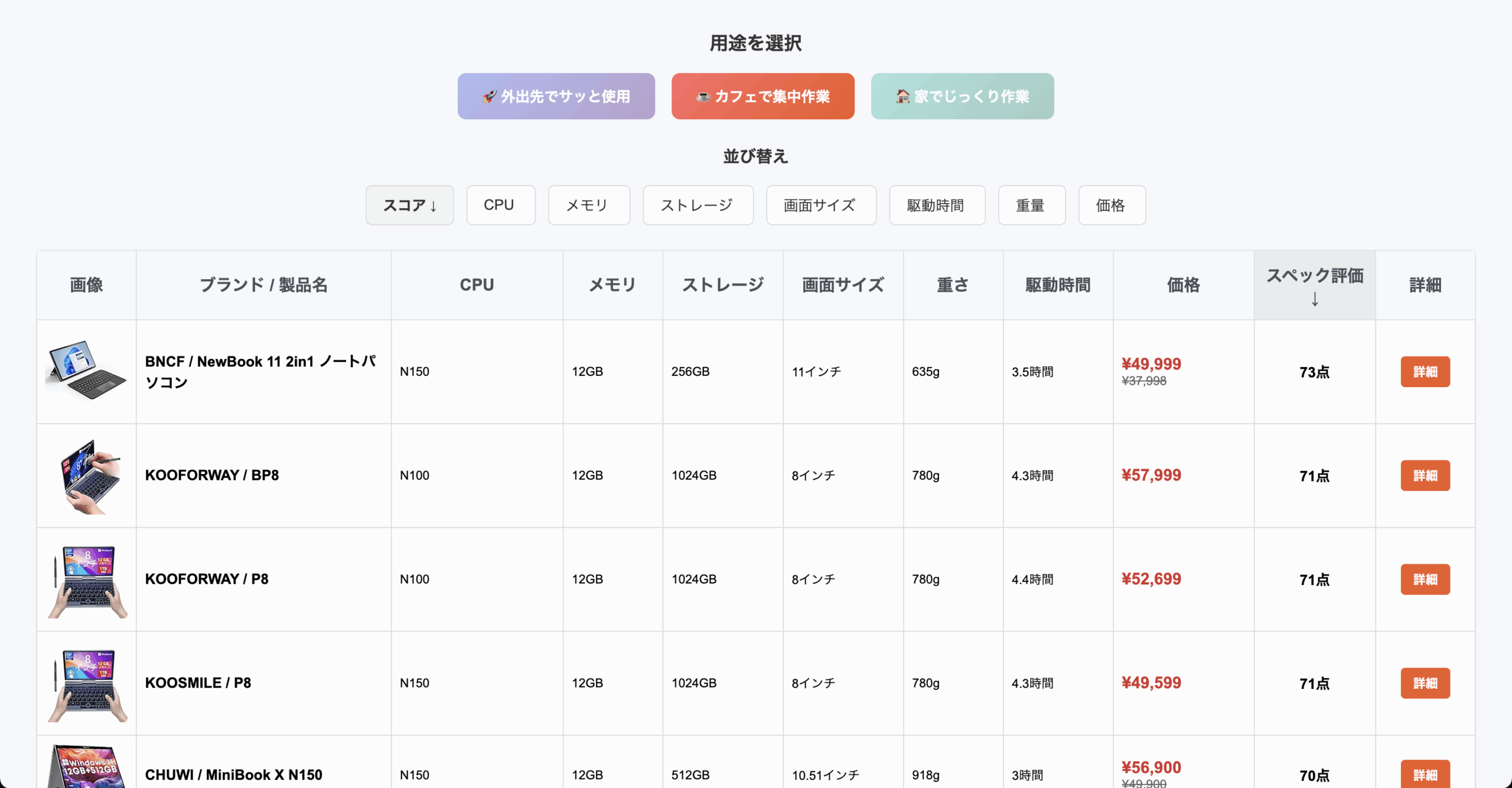
AmazonCompare compact Windows tablets, mini PCs, and laptops by specs and score.
Run by the same operator.
Related Articles
-


- Can You Draw on the iPad A16? Apple Pencil, Storage, and iPad Air Differences
- How to Protect Parents from PC Support Scams and Fake Warnings
- Is iPad Pro good for video editing? M5, storage, and Final Cut Pro
- How much memory and SSD storage for Mac mini: 16GB, 24GB, or 48GB?
- Is the iPad Air Good for Study Notes? 11-inch vs 13-inch, Storage, and Apple Pencil
- Best Computer for Photo Storage: SSD Size, Backup, and Family Photos
- Is MacBook Pro good for programming? M5 Pro/Max, memory, and Docker
- Can an iPad Pro Replace a Laptop for Work? Office, External Monitor, and MacBook Limits
- Is the MacBook Air Good for Work? Office, Remote Work, and Pro Limits
