iPad or iPad Air: Which Should You Buy for Notes, Study, and Storage?
Is iMac Good for College? Home Study, Campus Use, and MacBook Air

About the Author
Sesera editorial account organizes laptop, mini PC, smartphone, and gadget buying guides so readers can check the important points before buying.
“Is an iMac a good computer for college?”
“Should I buy the bigger screen for my dorm, or is a MacBook Air the safer choice?”
This is a real decision, because the iMac is excellent at the desk and weak almost everywhere else.
The expensive mistake is buying an iMac because the screen looks better, then discovering that your classes expect you to bring a computer to campus. The opposite mistake is buying a small laptop by default when you actually study from the same desk every night and would benefit from a larger display, better camera position, speakers, and a cleaner setup.
My short answer is this: buy a MacBook Air first if this will be your only college computer. Choose an iMac only when your study life is mostly at a fixed desk, and you have another way to handle campus work.
The short answer for college
The iMac can be a good college computer, but it is not the safest default college computer. It works best as a home or dorm desktop for students who write reports, join online classes, manage PDFs, make presentations, edit light photos, and want a large screen without building a separate monitor setup.
It becomes a poor choice when the student needs one machine for lectures, the library, group projects, internships, travel, exams, labs, or department software checks. College computers are not only about speed. They are about where the work happens.
| College situation | Better choice | Why |
|---|---|---|
| One computer for everything | MacBook Air | You can carry it anywhere |
| Dorm or home desk study | iMac can work | The 24-inch screen is easier to live on |
| Online classes from one place | iMac | Camera, speakers, mic, and display are built in |
| Frequent campus work | MacBook Air | Classrooms and libraries need portability |
| Heavy creative work | Depends | Pro chips or Windows may matter |
| Windows-only software | Windows laptop or desktop | Course requirements beat preference |
The iMac is not a bad student computer. It is a specific student computer. That difference matters before checkout.
Buy MacBook Air if campus use matters
If you will take a computer to class even a few times a week, MacBook Air is the cleaner first purchase. You can open it in a lecture hall, carry it to the library, finish a report between classes, take it to a group meeting, and use it during internships or travel.
The iMac cannot do any of that. It can be the better desk machine and still be the wrong college machine if your coursework moves around. That is why I would not buy it as the only device for a typical first-year student.
MacBook Air also avoids the awkward second purchase. If you start with an iMac and later need a portable computer, you may end up buying a laptop anyway. Starting with the laptop first is boring, but it is safer.
Related:
Recommended Laptop Specs for College: Memory, Storage, Windows or Mac
iMac or MacBook Air: Which Should You Buy for Home, College, or Work?
Choose iMac for a fixed study desk
The iMac makes sense when the student has a real desk and uses it often. A 24-inch screen changes the feel of ordinary college work. You can keep a browser, notes, a PDF, and a document open without constantly switching windows. Long report sessions feel less cramped than they do on a 13-inch laptop.
This is the best case for iMac: a student who studies mostly from a dorm, apartment, bedroom, or family desk. It is also useful when the computer doubles as a shared home machine for video calls, family admin, photos, and simple creative work.
Do not buy it only because it looks cleaner than a laptop setup. Buy it because the student actually sits at the desk enough for the large screen to pay off.
Online classes are where iMac feels strongest
For online classes, the iMac is comfortable. The screen is large, the camera is centered above the display, and the speakers and microphones are already built into the setup. You do not have to choose a monitor, webcam, keyboard, mouse, and speakers one by one.
Apple lists the current iMac with a 24-inch 4.5K Retina display, M4 chip, up to 32GB of unified memory, up to 2TB of storage, a 12MP Center Stage camera, and either two Thunderbolt / USB 4 ports or four Thunderbolt 4 ports depending on the model. Those specs are more than enough for lectures, meetings, writing, and normal student multitasking.
The weakness is location. If the class is live from your desk, iMac is pleasant. If the class expects attendance from campus, lab rooms, or changing locations, the advantage disappears.
Source:
Apple iMac technical specifications
Compare iMac and MacBook Air by role
The wrong comparison is simply “desktop or laptop.” The better comparison is role. MacBook Air is the safer one-device answer. iMac is the better fixed-place answer.
| Decision point | MacBook Air | iMac |
|---|---|---|
| Campus use | Strong | Weak |
| Desk comfort | Good with a monitor | Strong out of the box |
| Screen size | 13-inch or 15-inch | 24-inch |
| Online classes | Flexible | Better at a fixed desk |
| Reports | Works anywhere | More comfortable at home |
| Family sharing | Personal device | Easier to keep in one place |
| Total flexibility | Higher | Lower |
If the student can only buy one Mac, I would pick MacBook Air. If there is already a laptop, iPad, campus computer lab, or family notebook for outside use, then the iMac becomes much easier to defend.
Related:
MacBook Air 13-inch or 15-inch: Which Size Should You Buy?
How Much Memory for MacBook Air: 16GB, 24GB, or 32GB?
Check your major before choosing iMac
For many humanities, education, language, business, and social science students, the iMac can handle the actual workload: documents, slides, PDFs, email, video calls, research, and web apps. The bigger question is still portability.
For engineering, architecture, computer science, data-heavy business classes, media production, and lab-based programs, you need to check software requirements first. Some classes expect Windows, CAD tools, programming environments, statistical software, exam browsers, or hardware connections that are easier on a laptop or Windows machine.
| Major or use | iMac fit | What to check |
|---|---|---|
| Humanities and writing | Good at a desk | Campus portability |
| Education and language | Good | Online class location |
| Business | Mixed | Excel and course portals |
| Design | Good for light work | Display, storage, and app needs |
| Video and media | Mixed | Project size and Pro chip needs |
| Computer science | Depends | Required tools and portability |
| Engineering or architecture | Risky | Windows, CAD, and lab software |
Do not let the iMac design decide for you. If your department says a Windows laptop is required, that requirement wins.
M4 performance is not the main concern
For normal college work, the M4 iMac is fast enough. Reports, Office, browser research, PDFs, video calls, presentations, messaging, light photo edits, and basic creative apps are not the problem.
The real buying questions are more practical: can you carry it, does your major allow macOS, how much memory do you need, how much storage will you keep locally, and which port layout will avoid dongle trouble?
If you already know you will do heavy video editing, 3D rendering, AI development, complex coding environments, or long creative sessions every day, do not force the iMac into that role. MacBook Pro, Mac mini M4 Pro, or a Windows desktop may be the better fit.
Related:
iMac or Mac mini: Which Should You Buy for a Clean Desk or Custom Setup?
Mac mini M4 or M4 Pro: Which Chip Should You Choose?
Start with 16GB, consider 24GB for longevity
For a college iMac, 16GB is the minimum configuration I would treat seriously. It is enough for writing, web research, PDFs, slides, online classes, email, and normal multitasking.
Choose 24GB if the student wants more room for four years, keeps many browser tabs open, edits photos, makes short videos, uses creative apps, or tends to leave everything running. That upgrade is easier to justify than paying for an iMac and then feeling squeezed later.
Choose 32GB only when there is a real reason: heavier creative work, development, large files, or a student who already knows the workload is not light. For ordinary reports and lectures, 32GB is more than most students need.
| Memory | Best fit | My call |
|---|---|---|
| 16GB | Reports, Office, classes, browser work | Usable starting point |
| 24GB | Four-year use, photos, light video, heavy tabs | Best upgrade for many buyers |
| 32GB | Creative work, development, heavier multitasking | Buy only with a clear reason |
Related:
How Much Memory and SSD Storage for iMac: 16GB, 24GB, or 32GB?
Choose storage before choosing the color
iMac colors are fun, but storage affects daily life more. If the iMac is the main college computer, I would look at 512GB first. It gives more room for downloaded readings, PDFs, photos, lecture recordings, creative files, and local backups than the smallest configurations.
256GB can work for a cloud-first student who is disciplined with files and uses external storage. It is not the configuration I would choose for a family-shared desktop or a four-year student machine unless the budget is tight and the workflow is light.
1TB makes sense if the student stores photos, videos, music projects, design files, or many local documents. 2TB is for a much more specific buyer, usually someone already doing serious creative work.
| Storage | Who it fits | Buying answer |
|---|---|---|
| 256GB | Cloud-first light use | Acceptable but tight |
| 512GB | Most student desk setups | Safest starting point |
| 1TB | Photos, video, music, many files | Worth it for local storage |
| 2TB | Heavy creative users | Only if you know why |
Pick the port layout around your accessories
The iMac port choice matters more than it looks. A student who only uses the keyboard, mouse, cloud storage, and a few USB-C devices can live with the two-port model. A student who uses external SSDs, audio gear, card readers, drawing tablets, hubs, Ethernet, or multiple accessories will be happier with the four-port model.
Do not count ports after you buy. Count the devices first. External storage for projects, a USB microphone, a drawing tablet, a card reader, and a backup drive can turn a clean desk into a hub problem quickly.
| Accessory use | Two-port iMac | Four-port iMac |
|---|---|---|
| Documents and web classes | Usually fine | More comfortable |
| External SSD | May need a hub | Easier |
| Audio or video gear | Can get tight | Better choice |
| Drawing tablet or creative tools | Risky | Safer |
| Ethernet | Check configuration | Often easier |
Choose Windows if your department requires it
A beautiful iMac is still the wrong buy if the required software expects Windows. This comes up in CAD, some engineering tools, certain accounting or statistics setups, lab tools, testing environments, and niche department software.
Before buying, check the department page, syllabus, accepted device list, and any exam software requirements. If the school says Windows is required or strongly recommended, do not try to solve that with wishful thinking.
If you want to compare non-Mac desktop options, use a spec list after you know the required software. The goal is not to buy the fastest computer on paper. The goal is to avoid buying a computer that cannot run the class workflow.
The safer answer before checkout
Buy a MacBook Air if this is the student’s only computer, if campus work matters, or if the school has not clearly confirmed that a desktop Mac is enough. It is the safer college default because it moves with the student.
Buy an iMac if the student already has a portable option, studies mostly from one desk, wants a larger screen, takes online classes from home, or needs a clean shared computer for the household. In that role, the iMac can be excellent.
My practical configuration bias is simple: start around 16GB memory and 512GB storage for light student use, consider 24GB if the iMac needs to last comfortably through school, and choose the four-port model if accessories are part of the plan.
Still deciding between a desk Mac and a portable college laptop?
Separate the decision into two questions: where the student will work, and what software the major requires. If either answer points to campus or Windows, start with a laptop.
Frequently asked questions about iMac for college
Is an iMac good for college students?
Yes, if the student mainly studies from a dorm, bedroom, or fixed desk and already has a way to handle campus work. It is not the safest first computer for students who need to carry a device to class, the library, group work, internships, or exams.
Should college students buy an iMac or MacBook Air?
Buy MacBook Air if this will be the only college computer or if campus use matters. Choose iMac if the student has a fixed study desk, wants a larger screen, and can use another device for class or library work.
Is the M4 iMac enough for college work?
For reports, Office, web research, video calls, PDFs, light photo editing, and normal study work, the M4 iMac is enough. Heavy video editing, 3D, AI work, CAD, or daily creative production can justify MacBook Pro, Mac mini M4 Pro, or a Windows workstation instead.
How much memory should a college iMac have?
16GB is the minimum I would consider for normal college use. Choose 24GB if the student keeps many apps open, edits photos or short videos, or wants more room for four years. Choose 32GB only for heavier creative or development work.
What is the biggest downside of iMac for college?
The biggest downside is simple: it does not move with the student. A great desk computer can still be the wrong college computer if the student needs to work in classrooms, labs, libraries, study groups, or internships.
Compare specs on Specsy
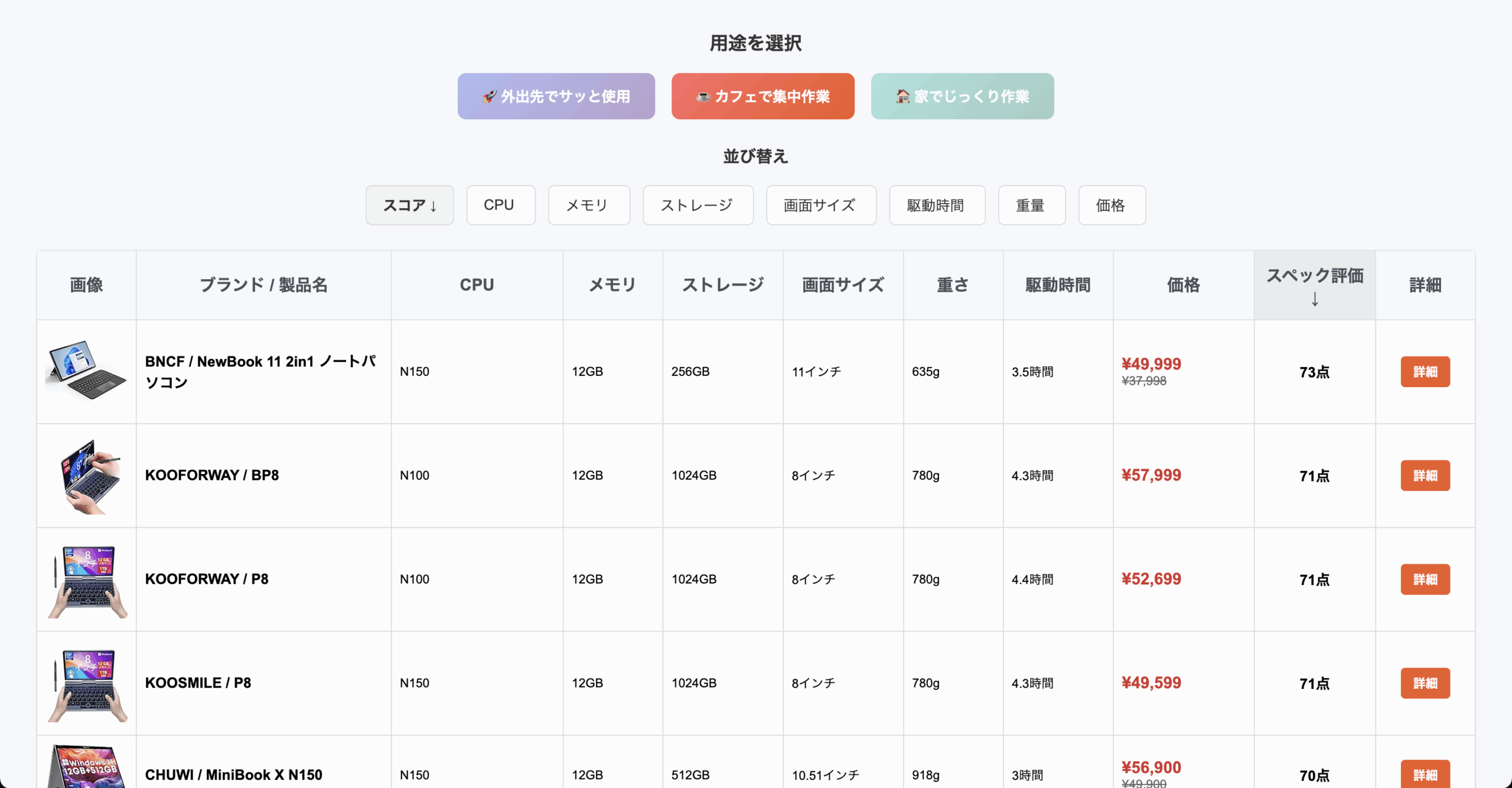
AmazonCompare compact Windows tablets, mini PCs, and laptops by specs and score.
Run by the same operator.
Related Articles
-


- Is the Mac mini Good for AI Development? M4 Pro, Memory, and Local LLMs
- Do College Students Need a MacBook Pro? Majors, Memory, and MacBook Air
- Is the MacBook Pro Good for Illustrator and Photoshop? Memory and SSD Guide
- MacBook Pro or Mac mini: which Mac is better for creative work and development?
- Is the MacBook Air Good for Work? Office, Remote Work, and Pro Limits
- Is the iPad Air Good for Digital Art? iPad Pro Differences, Size, and Storage
- Can You Trust Amazon Laptop Reviews? What to Check Before Buying
- iPad Pro or MacBook Pro: Which Should You Buy for Creative Work?
- Is the Mac mini Good for Illustrator and Photoshop? M4, M4 Pro, and Memory Choices
