Recommended Laptop Specs for College: Memory, Storage, Windows or Mac
How much memory and SSD storage for Mac mini: 16GB, 24GB, or 48GB?

About the Author
Sesera editorial account organizes laptop, mini PC, smartphone, and gadget buying guides so readers can check the important points before buying.
If you are buying a Mac mini, memory is the first decision to get right. You cannot add more unified memory later, so the cheapest configuration can become expensive if it feels tight after a year or two.
For most people, 16GB is fine for light home and office use. 24GB is the safer main-computer choice. 48GB makes sense when you are already moving to M4 Pro for heavier creative, development, music, 3D, or local AI work.
Storage is a separate decision. A small SSD can work if your files live in cloud storage or on an external drive, but a main desk Mac usually feels better with at least 1TB.
Start with memory before storage
Mac mini memory and SSD storage are easy to mix together because both are configured at checkout. Treat them separately.
Memory decides how much the Mac can keep active at once: browser tabs, office apps, photo tools, code editors, Docker containers, music projects, and local AI tools. SSD storage decides how much room you have for apps, files, caches, project folders, sample libraries, video files, and local backups.
Apple lists the current Mac mini with M4 or M4 Pro. M4 models start with 16GB unified memory and can be configured to 24GB. M4 Pro starts with 24GB and can be configured to 48GB. Storage ranges from smaller M4 configurations up to 2TB on M4, and up to 8TB on M4 Pro.
Reference: Apple Mac mini technical specifications.
| Use case | Memory I would start with | SSD I would start with | Mac mini direction |
|---|---|---|---|
| Family computer, browser, Office, video calls | 16GB | 512GB | M4 |
| Main home office Mac | 24GB | 1TB | M4 |
| Photo work and light video editing | 24GB | 1TB | M4, or M4 Pro if export time matters |
| Development, Docker, Xcode | 24GB to 48GB | 1TB or more | M4 Pro if projects are heavy |
| Music production, 3D, local AI, large media | 48GB | 2TB or more | M4 Pro |
16GB is for light desk use
16GB is enough when the Mac mini is mainly a quiet desk computer for browsing, documents, spreadsheets, email, video calls, streaming, and light photo organization.
The limit shows up when the Mac mini becomes your main work machine. Many browser tabs, cloud sync, Microsoft 365, chat apps, photo tools, and a few background utilities can add up. It may still run, but the margin gets smaller.
I would buy 16GB only when the workload is genuinely light, the budget is tight, or the Mac mini is a secondary computer. If you plan to keep it for several years as your main desktop, 24GB is easier to recommend.
24GB is the safer main Mac mini
24GB is the sweet spot for many Mac mini buyers. It gives the M4 model enough room for office work, heavier browsing, photo editing, light video work, coding, music apps, and long-term multitasking.
This is the configuration I would look at first for a home office desk, student desk, small business desk, or family computer that also handles creative work. It costs more than 16GB, but it protects the part of the Mac mini you cannot upgrade later.
24GB does not make the Mac mini a high-end workstation. It simply gives a normal main computer more breathing room. For many buyers, that matters more than paying for extra internal storage too early.
48GB means moving to M4 Pro
48GB is not a small upgrade from the base Mac mini. It means you are in the M4 Pro lane, and the reason should be clear before checkout.
It makes sense for heavier development, Docker, Xcode, video editing, larger Logic Pro or Ableton sessions, 3D work, local AI experiments, and people who keep several demanding apps open at the same time.
It is usually too much for browsing, Office, schoolwork, light photo editing, and normal home use. If you do not know why you need 48GB, you probably do not need to start there.
256GB and 512GB need caution
Some Mac mini configurations start with small internal storage. That can be fine for a shared home Mac or a machine that uses cloud storage for most files, but it is not the storage size I would pick for a serious main desk Mac.
512GB is the practical floor if you install several apps and keep only active files on the internal drive. It can work for office use, browsing, schoolwork, and light creative work.
The risk is not only your documents folder. Apps, caches, iPhone backups, photo libraries, development folders, music samples, video proxies, and temporary project files can grow quietly.
1TB is the normal starting point
1TB is the storage size I would start with for a main Mac mini. It gives enough room for apps, active projects, downloads, photos, local work folders, and some breathing room for macOS updates.
It is especially useful if you use the Mac mini every day for work, study, light video editing, development, or music. You can still use external storage, but you are not forced to move files around every week.
If the price jump from 512GB to 1TB is painful, keep 24GB memory first and solve storage with a good external SSD. If you can afford both, 24GB memory and 1TB SSD is the configuration I would check first.
2TB or more is for active files
2TB or more makes sense when large active files live on the Mac mini itself. That includes video projects, RAW photo libraries, audio sample libraries, local AI models, Docker images, virtual machines, and large development repos.
This is different from archive storage. Old projects, backups, exported videos, and media libraries can live on external SSDs or network storage. Active files are the ones you open, edit, index, render, or rebuild often.
If your work depends on those files every day, larger internal storage can save time and friction. If the files are mostly archives, external storage is usually the better value.
External SSDs help, but not everywhere
External SSDs are useful with Mac mini because the computer stays on a desk. You can connect a fast drive and leave it there for video projects, sample libraries, archives, backups, or large photo libraries.
They do not fully replace internal storage. Apps, system files, caches, temporary render files, and some development tools still prefer internal space. A tiny internal SSD can become annoying even if a large external drive is attached.
Use external SSDs to avoid overpaying for archive storage. Do not use them as an excuse to buy an internal SSD that is too small for your active work.
M4 and M4 Pro change the ceiling
M4 is enough for many Mac mini desks. It is the right starting point for office work, home use, light creative work, study, and normal multitasking.
M4 Pro matters when the work is time-sensitive or sustained: heavier video exports, development builds, larger creative projects, multi-display desk setups, Thunderbolt 5 storage, or workflows that benefit from the stronger chip and more memory headroom.
The clean split is this: buy M4 when the workload is normal and memory tops out at 24GB. Buy M4 Pro when you already know you want 48GB, Thunderbolt 5, stronger GPU performance, or higher-end display and storage options.
Development and Docker need room
For programming, the Mac mini can be a very good fixed-desk machine. The question is how much you run at the same time.
Web development, Python, lightweight Xcode work, and small local services can fit well on 24GB. Heavier Docker setups, multiple services, Android Studio, larger Xcode projects, local databases, and virtual machines make 48GB easier to justify.
If you work in meetings, travel, or often need the same machine away from your desk, also compare MacBook Pro before buying a desktop. Related: MacBook Pro or Mac mini for creative work and development.
Creative and AI work raise the floor
Video editing, music production, 3D, and local AI all make the memory and SSD decision harder because project files, plugins, previews, samples, and model files can grow quickly.
For light creative work, 24GB memory and 1TB SSD is a reasonable starting point. For heavier editing, larger music sessions, Blender, Docker plus AI tools, or local LLM experiments, 48GB and 2TB or more becomes easier to defend.
Be honest about the software. If your 3D or AI workflow needs NVIDIA CUDA, RTX features, or Windows-only tools, compare a Windows GPU PC before buying a Mac mini.
Related: How much memory for MacBook Pro and How much SSD storage for MacBook Pro.
Ports and displays matter after memory
After memory and SSD are settled, look at the desk around the Mac mini. The monitor, keyboard, mouse or trackpad, webcam, speakers, external drives, and network connection all affect the final cost.
Apple lists current Mac mini models with front USB-C ports, HDMI, Ethernet, and three Thunderbolt ports on the back. M4 uses Thunderbolt 4, while M4 Pro uses Thunderbolt 5. M4 and M4 Pro can also support up to three displays, with exact limits depending on the display setup.
If you are building the whole desk from zero, price the monitor and accessories before deciding that Mac mini is cheaper than a laptop. Related: Best external monitor for a laptop.
Compare iMac before building the desk
If you want a clean home desk and do not care about upgrading each piece of the setup, iMac may be simpler. It includes the display, speakers, camera, keyboard, and mouse in one package.
Mac mini is better when you want a larger monitor, multiple displays, a specific keyboard, wired accessories, external drives, or M4 Pro. It is also better if you already own the desk gear.
If the monitor, webcam, speakers, keyboard, mouse, and storage all need to be bought at the same time, compare the total cost against iMac and MacBook Pro before checkout. Related: iMac memory and SSD guide.
My default Mac mini configuration
For a light home or family Mac, I would start with M4, 16GB memory, and at least 512GB storage. I would avoid the smallest SSD if the Mac mini will become the main computer.
For a main desk Mac, I would start with M4, 24GB memory, and 1TB SSD. That is the clean middle configuration for office work, home office, study, browsing, light creative work, and some development.
For heavier work, I would move to M4 Pro, 48GB memory, and 1TB to 2TB SSD. Move higher only if your active files, libraries, models, or project folders clearly need the internal space.
Not sure if Mac mini is the right desktop?
Use Specsy to narrow down memory, SSD size, desktop type, and budget before comparing specific models.
Useful US Amazon searches
Use these as search shortcuts, then confirm the exact chip, memory, SSD size, seller, and return terms before buying.
Frequently asked questions before configuring Mac mini
Is 16GB enough for Mac mini?
Yes, 16GB is enough for light browsing, office work, email, video calls, streaming, and family use. Move to 24GB if the Mac mini will be your main computer for several years.
Is 24GB the best Mac mini memory size?
For many buyers, yes. 24GB is the safer middle choice for a main M4 Mac mini because it gives more room for multitasking, creative apps, light development, and long-term use.
Who should buy 48GB memory?
Buy 48GB if you are choosing M4 Pro for heavier development, Docker, video editing, music production, 3D, local AI, or several demanding apps at the same time. It is usually too much for light home and office use.
Is 512GB enough storage?
512GB can be enough for light use, especially with cloud storage or an external SSD. For a main desk Mac, 1TB is the more comfortable starting point.
Is M4 Pro worth it for Mac mini?
M4 Pro is worth it when you need 48GB memory, Thunderbolt 5, stronger GPU performance, heavier display support, or faster production workflows. For normal office and home use, M4 is usually enough.
Compare specs on Specsy
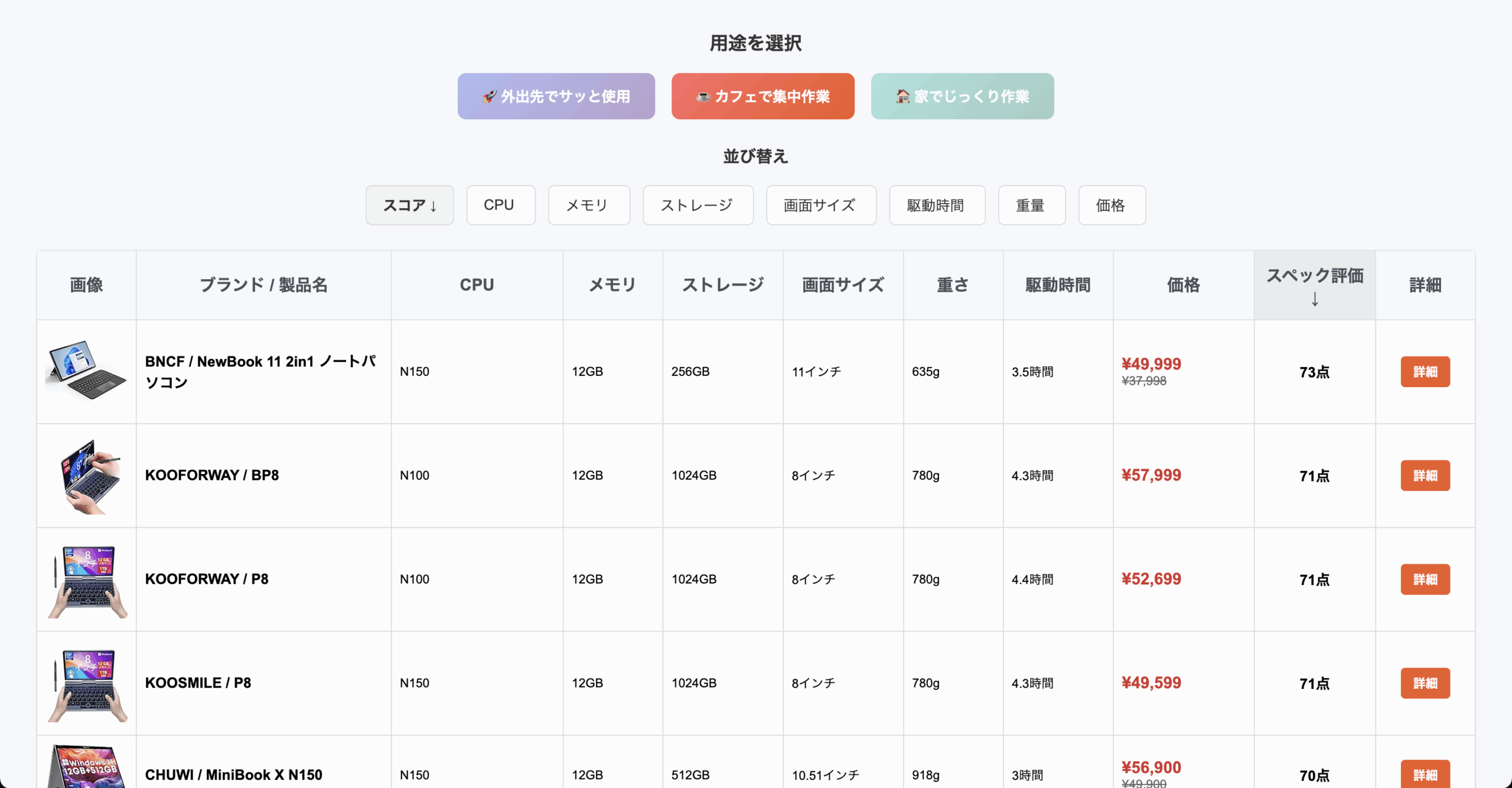
AmazonCompare compact Windows tablets, mini PCs, and laptops by specs and score.
Run by the same operator.
Related Articles
-


- Is the iPad Pro Good for Study Notes? 13-inch, Storage, and iPad Air Tradeoffs
- How to Protect Parents from PC Support Scams and Fake Warnings
- Is the iMac Good for Blender? M4, Memory, and 3D Work Limits
- What Computer Do You Need for Japan e-Tax? Card Reader, Phone, Printer
- Is iPad Pro Worth It for College? Notes, Creative Work, and iPad Air Tradeoffs
- Is the iMac Good for Video Editing? M4, Memory, SSD, and Ports
- Is MacBook Neo good for Zoom? 8GB RAM, camera, and screen sharing

- How Much iPad Storage Do You Need: 128GB, 256GB, 512GB, 1TB, or 2TB?
- Is the M5 iPad Pro Good for Drawing and Comics? Pencil, Size, and Storage Guide
