Is the iMac Good for Video Editing? M4, Memory, SSD, and Ports
Mac mini M4 or M4 Pro: Which Chip Should You Choose?

About the Author
Sesera editorial account organizes laptop, mini PC, smartphone, and gadget buying guides so readers can check the important points before buying.
"Is the regular M4 Mac mini enough, or should I pay for M4 Pro?"
"Would the money be better spent on memory, SSD storage, a monitor, or accessories?"
This is where many Mac mini buyers overspend in the wrong place. M4 Pro sounds safer, but for office work, browsing, calls, writing, photo management, and light creative work, the regular M4 model is already the right starting point.
The practical answer is simple: choose M4 if your work is light to moderate, and put the budget into 24GB memory, 512GB or 1TB storage, and a good desk setup. Choose M4 Pro only when heavier work will save real time every week.
This guide localizes the decision for English readers: workload first, then memory, SSD storage, displays, video editing, programming, music production, 3D, local AI, ports, and whether MacBook Pro is the better machine.
Start with workload, not chip names
Mac mini M4 and M4 Pro are not just two price points. They are two different desk commitments. M4 is the efficient everyday desktop. M4 Pro is for people whose desk work puts sustained pressure on CPU, GPU, memory bandwidth, ports, external storage, or displays.
Apple lists Mac mini with M4 and M4 Pro. The M4 model starts with 16GB unified memory and can be configured higher, while the M4 Pro model starts with more memory and opens the door to 48GB, 64GB, higher SSD capacities, and Thunderbolt 5 on the rear ports.
Sources:
Apple Mac mini overview
Apple Mac mini technical specifications
Apple Support Mac mini tech specs
| Workload | Start here | Why |
|---|---|---|
| Office, web, calls, writing | M4 | The chip is already fast enough |
| Main home office desk | M4 with upgrades | Memory, SSD, and monitor matter more |
| Light photo or short video | M4 or M4 Pro | Choose by project size |
| Daily video editing | M4 Pro | Exports and multitasking benefit |
| Development with Docker | M4 Pro if heavy | Memory and sustained load grow quickly |
| DTM, 3D, local AI | M4 Pro | More headroom is useful |
| Portable heavy work | MacBook Pro | Mac mini stays on the desk |
Choose M4 for everyday desk work
Choose Mac mini M4 when the computer will handle browser tabs, email, documents, spreadsheets, video calls, writing, photo organization, streaming, light editing, and casual coding. For those jobs, M4 is not a compromise; it is the correct baseline.
The key is to avoid the cheapest possible configuration only because the chip is strong. A main desk Mac usually feels better with 24GB memory and at least 512GB or 1TB storage than with a bare minimum setup and a stronger chip you do not use.
Related guides:
Mac mini memory and SSD guide
Choose M4 Pro for sustained heavy work
Choose M4 Pro when heavy work is part of the normal week, not a rare weekend experiment. Long video timelines, large Xcode projects, Docker containers, music templates, 3D scenes, local AI experiments, several displays, and fast external drives can all make M4 Pro worthwhile.
The reason is not only raw speed. M4 Pro also gives more memory headroom, higher memory bandwidth, stronger graphics, higher-end storage options, and Thunderbolt 5. If those pieces sound like daily tools, M4 Pro becomes easier to justify.
Related guides:
MacBook Pro vs Mac mini for creative work and development
Upgrade memory before chasing M4 Pro
For many buyers, memory is the upgrade that matters first. Unified memory cannot be upgraded later, and memory pressure shows up in normal ownership: browser tabs, cloud sync, photo tools, editors, music apps, development tools, and several open projects.
Use 16GB for light home and office use. Choose 24GB for a main Mac mini that should last several years. Move to 48GB or 64GB when the work already points to M4 Pro.
| Use case | Memory target | Chip direction |
|---|---|---|
| Light office and home use | 16GB | M4 |
| Main desk Mac | 24GB | M4 |
| Photo, Adobe, light video | 24GB | M4 or M4 Pro |
| Development and Docker | 24GB to 48GB | M4 Pro if daily |
| Video, DTM, 3D, local AI | 48GB or more | M4 Pro |
Choose SSD size by active files
SSD storage should be chosen by active files, not archive dreams. Apps, cache, downloads, photo libraries, video previews, Xcode, Docker images, Logic libraries, Blender files, and AI models can fill the internal drive faster than a spec sheet suggests.
Choose 512GB for light use, 1TB for a main desk Mac, and 2TB or more when large active media, audio libraries, development environments, or local models will stay on the internal drive. Mac mini is friendly to external SSDs because those drives can stay on the desk, but external storage does not replace internal room for active work.
Related guides:
MacBook Pro SSD storage guide
Video editors should count timeline pressure
Short social videos, basic YouTube edits, light 4K work, and occasional projects can start on M4, especially with 24GB memory and enough SSD space. For that level, a better monitor and faster external SSD may improve the workflow more than M4 Pro.
Choose M4 Pro when video editing is frequent, long, multicam, ProRes-heavy, effect-heavy, color-heavy, or tied to daily exports. The value is time saved and fewer interruptions, not the comfort of buying the bigger chip.
Developers should budget for growth
For learning code, web development, terminals, Git, a normal browser, and small local servers, M4 is enough. A 24GB M4 Mac mini can be a very strong development desk for many people.
Move toward M4 Pro when Docker, Xcode, multiple simulators, local databases, virtual machines, larger repositories, or AI tooling are normal parts of the day. Development setups tend to grow, and memory is harder to fix later than storage overflow.
DTM and 3D need honest limits
Music production can start on M4 when the projects are simple: GarageBand, lighter Logic sessions, podcasts, small track counts, and modest plugin chains. Mac mini is also convenient because audio interfaces, keyboards, controllers, monitors, and external drives can remain connected.
Choose M4 Pro when sample libraries, many tracks, heavy plugins, low-latency recording, Blender scenes, rendering, or 3D learning projects become serious. For CUDA-heavy rendering, game development, or large local AI models, a Windows desktop with a dedicated NVIDIA GPU may still be the cleaner tool.
Sources:
Microsoft Windows 11 specifications
Displays and ports can justify Pro
Apple's specifications list support for up to three displays on current Mac mini configurations, but the surrounding setup still matters. High-resolution monitors, fast external SSDs, capture devices, audio gear, hubs, Ethernet, and backup drives can make the desk more demanding than the app list suggests.
M4 is enough for many one- or two-monitor desks. M4 Pro becomes more attractive when you want Thunderbolt 5, heavy external storage, high-end display combinations, wired studio storage, or a desk where several devices stay connected all day.
Related guides:
External monitor guide for laptop and Mac setups
Compare the whole desk cost
Mac mini is not a complete computer purchase by itself. You still need a monitor, keyboard, mouse or trackpad, speakers or headphones, webcam if the monitor lacks one, cables, external storage, and backup planning.
That does not make Mac mini a bad buy. It means the chip decision should come after the desk decision. If you already own good accessories, Mac mini can be excellent value. If you are buying everything from zero, compare iMac, MacBook Air, and MacBook Pro before putting too much money into M4 Pro.
Related guides:
iMac vs Mac mini for display and total cost
Mac mini vs MacBook Air for desk and portability
MacBook Pro wins for portable heavy work
If the heavy work must leave the desk, MacBook Pro is the better fork. Mac mini can be faster per dollar in a fixed setup, but it cannot follow you to a client site, classroom, studio, coworking space, or trip.
Choose Mac mini M4 Pro for a fixed production desk. Choose MacBook Pro when the same production work moves. That decision should come before memory and SSD upgrades.
Related guides:
MacBook Pro vs Mac mini
MacBook Pro memory guide
The safer configuration before checkout
For light office and home use, choose M4 with 16GB memory and 512GB SSD. For a main desk Mac, choose M4 with 24GB memory and 1TB SSD. For light creative work, photo editing, and lighter development, start with M4, 24GB, and 1TB before jumping to M4 Pro.
Choose M4 Pro with 48GB or more when video editing, development, DTM, 3D, local AI, external displays, or fast external storage are part of normal work. If you cannot name the workload that benefits from M4 Pro, buy the better M4 configuration and improve the desk.
Tools:
Use the Specsy PC checklist
Compare mini PC options on Specsy
Not sure whether Mac mini is the right desk Mac?
Use Specsy to narrow down your workload, desktop type, memory, SSD size, and budget before paying for chip upgrades.
FAQ about Mac mini M4 and M4 Pro
Should I choose Mac mini M4 or M4 Pro?
Choose M4 for office work, browsing, video calls, photo management, writing, light coding, and lighter creative work. Choose M4 Pro when the Mac mini will handle daily video editing, larger development projects, music production, 3D work, local AI experiments, demanding external displays, or heavy desk accessories.
Is Mac mini M4 enough for most people?
Yes. Mac mini M4 is enough for many home, school, office, web, and light creative setups. The better upgrade for many buyers is 24GB memory or a larger SSD, not automatically M4 Pro.
Who actually needs Mac mini M4 Pro?
M4 Pro makes sense for people whose work saves real time from stronger sustained performance, higher memory bandwidth, Thunderbolt 5, more memory headroom, and heavier external storage or display workflows.
How much memory should I choose for Mac mini?
Choose 16GB for light use, 24GB for a main desk Mac, and 48GB or more when the M4 Pro model is justified by heavier video, development, DTM, 3D, or local AI work.
Should I buy Mac mini M4 Pro or MacBook Pro?
Choose Mac mini M4 Pro if the work stays at one desk with a monitor, keyboard, external SSDs, audio gear, or wired networking. Choose MacBook Pro if the same heavy work needs to leave the desk.
Compare specs on Specsy
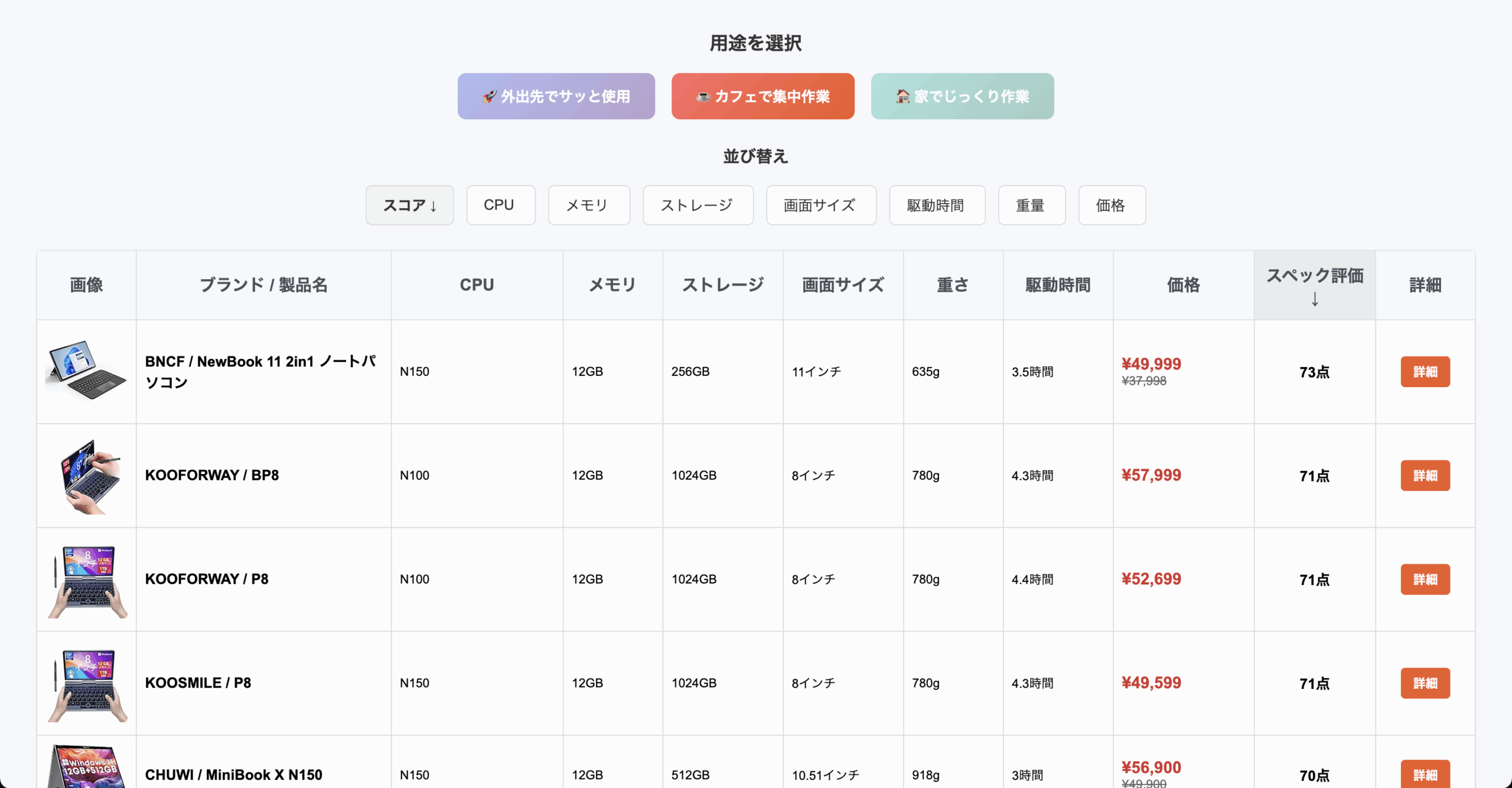
AmazonCompare compact Windows tablets, mini PCs, and laptops by specs and score.
Run by the same operator.
Related Articles
-


- Is iPad Pro good for drawing and video editing? M5, storage, and Pencil choices
- Are Cheap Laptops on Amazon Worth It? Specs to Avoid Before Buying
- Is the MacBook Air Good for Music Production? M5, Memory, and Storage
- Can You Trust Amazon Laptop Reviews? What to Check Before Buying
- Is the MacBook Pro Good for Illustrator and Photoshop? Memory and SSD Guide
- How much SSD storage for MacBook Pro: 1TB, 2TB, 4TB, or 8TB?
- Is the iMac Good for Music Production? M4, Memory, Storage, and Ports
- Is the Mac mini Good for Work? Remote Work, Office, and Air Tradeoffs
- Best external monitor for a laptop: 24 vs 27 inch, USB-C, HDMI, and 4K
