Can you edit video on MacBook Air? M5, memory, and Pro limits
Is iPad Pro Worth It for College? Notes, Creative Work, and iPad Air Tradeoffs

About the Author
Sesera editorial account organizes laptop, mini PC, smartphone, and gadget buying guides so readers can check the important points before buying.
"Do I really need an iPad Pro for college?"
"If I only want notes and PDFs, would iPad Air or the regular iPad be enough?"
The practical answer is this: most college students should not buy iPad Pro as their first or only school device. If your main work is notes, PDFs, lectures, reading, and report drafts, iPad Air is usually the cleaner buy.
iPad Pro starts to make sense when the iPad is not just a notebook. Drawing, design work, video editing, photo review, music production, heavy PDFs, 13-inch split view, Apple Pencil Pro, and fast external storage are the reasons to pay Pro prices. Buying it only because it is the best iPad is how the total cost gets out of hand.
This guide walks through the decision in a college-first order: laptop ownership, study use, iPad Air, screen size, storage, Apple Pencil, keyboard work, creative majors, majors that should avoid iPad-first setups, and the final checkout answer.
Start with whether you already own a laptop
If you do not already have a reliable laptop, buy the laptop first. iPad Pro is powerful, but college work is not only about performance. It is also about file submission, browser-based portals, Office documents, spreadsheets, printing, video calls, coding tools, exam software, and whatever your department requires at the worst possible time.
A MacBook Air or a solid Windows laptop is the safer first device for reports, LMS uploads, internships, job applications, and long writing sessions. iPad Pro is better as the second device that replaces paper, marks up PDFs, sketches ideas, and supports creative work.
Apple’s current iPad Pro lineup uses the M5 chip, comes in 11-inch and 13-inch sizes, supports Apple Pencil Pro, and uses an Ultra Retina XDR display. Those are real strengths. They do not remove the basic college problem: some assignments still expect a computer.
Sources:
Apple iPad Pro overview
Apple iPad Pro technical specifications
Related guides:
Recommended laptop specs for college
iPad Air vs MacBook Air for college and work
| College use | iPad Pro need | Better first choice |
|---|---|---|
| Handwritten notes | Low to medium | iPad Air or regular iPad |
| PDF reading and markup | Medium | iPad Air, or iPad Pro 13-inch for heavy split view |
| Long reports | Low | MacBook Air or Windows laptop |
| Excel-heavy classes | Low | Laptop |
| Illustration or design | High | iPad Pro if budget allows |
| Video editing | Medium to high | iPad Pro for mobile edits, laptop for finishing |
| Coding, CAD, or required software | Depends on major | Department-approved laptop first |
Buy iPad Pro for creation, not basic notes
For basic college notes, iPad Pro is usually more device than you need. Notes, lecture slides, textbooks, PDFs, web research, and short writing drafts do not require the Pro display, M5 chip, Thunderbolt / USB 4, or the highest storage tiers.
The Pro upgrade becomes easier to justify when the tablet is part of how you make things. Illustration, comics, design sketches, architecture ideas, photo review, music apps, rough video edits, and large reference PDFs all benefit from a better screen and more headroom.
This is the line I would use before buying: if you can name the creative app, the class, or the workflow that needs Pro features, iPad Pro is worth considering. If the reason is only "I want the best iPad for school," start with iPad Air.
Choose iPad Air when study is the main job
Choose iPad Air if your college use is mostly handwritten notes, PDF markup, reading, video lectures, calendars, light research, and report outlines. That is the most common student workload, and it does not need iPad Pro pricing.
iPad Air is especially strong when you want Apple Pencil Pro support without paying for the Pro display. For students who already have a laptop, an iPad Air plus Apple Pencil Pro is often the better study setup than stretching to iPad Pro and delaying the laptop or accessories you actually need.
Move to iPad Pro when you care about ProMotion, Ultra Retina XDR, Thunderbolt / USB 4, heavier creative apps, or the best 13-inch iPad experience. Those are real reasons. They are just not required for ordinary lecture notes.
Related guides:
Is iPad Air good for college?
iPad vs iPad Air for notes, study, and storage
| Decision point | iPad Air | iPad Pro |
|---|---|---|
| Lecture notes | Enough for most students | Smoother, but often overkill |
| PDF plus notes | Good, especially 13-inch | Best if you live in split view |
| Drawing | Strong for many students | Better for serious art sessions |
| Video editing | Fine for light projects | Better for heavier mobile edits |
| External drives and displays | Basic USB-C workflow | Thunderbolt / USB 4 is stronger |
| Total cost | Easier to keep sane | Rises fast with Pencil and keyboard |
Pick 13-inch only for desk-heavy work
The 13-inch iPad Pro can be excellent for college, but only when the larger screen fits your real routine. It is the better size for PDF plus notes, drawing, sheet music, video timelines, design apps, long annotation sessions, and keyboard use at a desk.
It is the wrong upgrade if you want a tablet that disappears into a backpack and feels easy to hold anywhere. A student who reads while commuting, takes notes in small classrooms, or carries the iPad all day may use the 11-inch model more often simply because it is less awkward.
Apple lists the current 11-inch iPad Pro at just under a pound and the 13-inch model at about 1.28 pounds before adding a case, keyboard, or Pencil. That gap sounds small on a spec sheet. In a bag with a laptop, charger, notebook, and water bottle, it starts to matter.
Related guide:
iPad Pro 11-inch or 13-inch size guide
Start storage at 512GB for Pro use
The base 256GB iPad Pro can work for notes, PDFs, streaming, and light creative use. The problem is that many students who should buy iPad Pro are buying it for creation. Photos, video clips, Procreate files, large PDFs, music projects, offline media, and app caches fill storage faster than lecture notes do.
For a student buying Pro because it is Pro, 512GB is the safer starting point. Choose 1TB if you expect large art canvases, video projects, photo libraries, or many local files. The 2TB model is hard to justify for ordinary college use unless the iPad is also part of paid creative work.
Apple’s iPad Pro technical specifications list 256GB, 512GB, 1TB, and 2TB options for both sizes. The 1TB and 2TB models also unlock the nano-texture display glass option and higher chip configuration, so storage is not only about file space at the top end.
Related guide:
iPad storage guide: 128GB to 2TB
| Storage | Best fit | College verdict |
|---|---|---|
| 256GB | Notes, PDFs, light apps | Minimum sensible Pro tier |
| 512GB | Study plus photos, art, and some video | Best starting point for many Pro buyers |
| 1TB | Large art, video, and local files | Choose for serious creative use |
| 2TB | Paid work or very large local libraries | Too much for most students |
Apple Pencil Pro is the real reason
If you buy iPad Pro for college, Apple Pencil Pro should be part of the plan. Without Pencil use, iPad Pro loses much of what makes it different from a laptop or a cheaper tablet. Notes, formulas, diagrams, PDF markup, sketches, storyboards, photo markups, and drawing sessions are where the device feels like a real study or creation surface.
Apple’s compatibility page lists Apple Pencil Pro support for iPad Pro 11-inch and 13-inch models with M4 and M5, plus current iPad Air models. That matters for students because Pencil Pro is no longer only an iPad Pro reason. The question is whether you also need the Pro screen, ProMotion, Thunderbolt, and extra headroom.
Source:
Apple Pencil compatibility
Magic Keyboard does not make it a MacBook
Magic Keyboard makes iPad Pro much better for email, notes, outlines, and short reports. It does not turn iPadOS into macOS or Windows. Long documents, spreadsheet-heavy classes, citations, downloads, multiple windows, file cleanup, and submission portals still tend to be faster on a laptop.
This is where the total cost deserves a pause. Once you add iPad Pro, Apple Pencil Pro, Magic Keyboard, storage upgrades, and a case, you are no longer comparing one tablet against one laptop. You are comparing a premium tablet setup against a full college computer plus a cheaper iPad or iPad Air.
If your weekly work includes long reports, Excel, coding, lab software, or job applications, buy the laptop first. If the laptop is already handled and you want the best digital notebook or creative screen, iPad Pro becomes easier to defend.
Related guide:
iPad Pro vs MacBook Pro for creative work
Creative majors can justify iPad Pro sooner
Art, design, illustration, photography, film, music, animation, and media students can justify iPad Pro sooner than a general lecture-note student. The screen, Pencil workflow, speakers, cameras, creative apps, and external storage support can all matter when assignments are visual or audio-based.
Even then, iPad Pro should not automatically be the only device. Long video projects, plug-ins, desktop-class file management, printing, coding, CAD, and final delivery often still belong on a Mac or Windows machine. For many creative students, the strongest setup is laptop first, iPad Pro second.
| Student type | iPad Pro verdict | Why |
|---|---|---|
| Humanities or business | Usually skip Pro | Reports and spreadsheets favor a laptop |
| Education or language | iPad Air is usually enough | Notes and PDFs are the main work |
| Art or design | Worth considering | Pencil and screen quality matter |
| Film or photography | Useful with a laptop | Great for review and rough edits |
| Music production | Useful, but not always first | Touch apps are good, desktop workflows still matter |
| Computer science | Buy a laptop first | Development tools are easier on macOS, Windows, or Linux |
| Architecture or engineering | Check the department first | Required software may be Windows-only |
Skip iPad Pro in these college cases
Skip iPad Pro if you do not own a laptop yet, want the cheapest reliable school setup, only need lecture notes and PDFs, write long reports every week, use Excel heavily, need programming tools, or have department software requirements. Those are not small edge cases. They are normal college problems.
Also skip it if the accessory cost makes you compromise on the actual computer. A student with a dependable laptop and a regular iPad is in a better position than a student with an expensive iPad Pro and no clean way to finish laptop-first assignments.
Use iPad Pro when it clearly removes friction from how you study or create. Do not use it as a way to avoid choosing a laptop.
The safer buying answer before checkout
For most college students, the safer answer is laptop first, then iPad Air if you want digital notes. Choose iPad Pro only when you already have the computer side covered and you will use the Pro features every week.
If you buy iPad Pro, I would start with the 11-inch model for carry-heavy student life and the 13-inch model for desk-heavy note, PDF, drawing, or creative work. For storage, 512GB is the more comfortable starting point for Pro buyers, while 256GB is acceptable only when notes and PDFs are the main files.
If you are still comparing iPad Pro, iPad Air, regular iPad, and Android tablets by size, chip, RAM, storage, and price, use a comparison table before buying. The point is not to buy the most powerful tablet. It is to buy the device that will actually fit your classes.
Useful next step:
Compare tablets on Specsy
Frequently asked questions about iPad Pro for college
Is iPad Pro necessary for college students?
No. For notes, PDFs, lectures, reading, and report drafts, iPad Air or the regular iPad is usually enough. iPad Pro is worth considering when you also need serious drawing, creative apps, 13-inch workspace, Thunderbolt / USB 4, or heavier local files.
Can iPad Pro replace a laptop in college?
It can handle some writing, research, notes, calls, and presentations, but it is risky as the only device. Long reports, Excel, coding, file submissions, exam tools, and department software are usually safer on a MacBook or Windows laptop.
Should college students buy iPad Pro or iPad Air?
Buy iPad Air if study notes and PDFs are the main job. Buy iPad Pro if you will use the better display, ProMotion, Pencil-heavy creative work, Thunderbolt / USB 4, or the 13-inch workspace often enough to justify the price.
Is 11-inch or 13-inch iPad Pro better for college?
Choose 11-inch for daily carry, small desks, reading, and quick notes. Choose 13-inch for desk study, PDF plus notes, drawing, video timelines, keyboard work, and long sessions where screen space matters more than portability.
How much storage should a college iPad Pro have?
Choose 256GB only for notes, PDFs, and light apps. Choose 512GB if you are buying iPad Pro for creative work, photos, video clips, or many local files. Choose 1TB or more only when the iPad is part of serious creative work.
Compare specs on Specsy
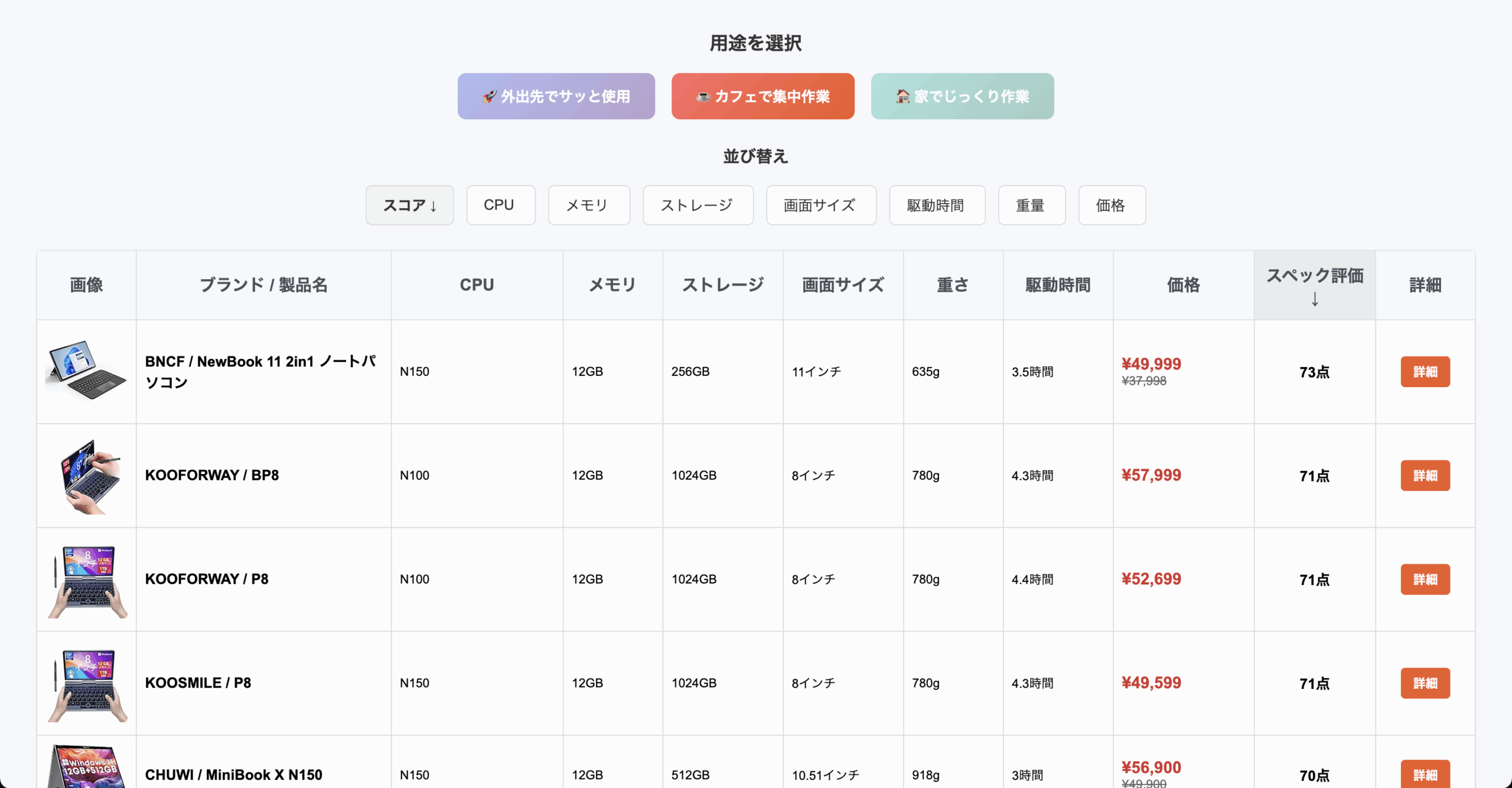
AmazonCompare compact Windows tablets, mini PCs, and laptops by specs and score.
Run by the same operator.
Related Articles
-


- Can the iPad Pro Stream with OBS? M5, Screen Recording, and Mac Limits
- Can You Still Use a Windows 10 PC? Upgrade, Replace, or Retire It
- Best external monitor for a laptop: 24 vs 27 inch, USB-C, HDMI, and 4K
- Is the MacBook Pro Good for OBS Streaming? M5 Pro/Max, Memory, and Ports
- Is MacBook Pro good for programming? M5 Pro/Max, memory, and Docker
- How much SSD storage for MacBook Pro: 1TB, 2TB, 4TB, or 8TB?
- How Much Memory and SSD Storage for iMac: 16GB, 24GB, or 32GB?
- Do You Need a MacBook Pro for Work? Office, Remote Work, and Air Tradeoffs
- How much memory for MacBook Pro: 24GB, 48GB, 64GB, or 128GB?
