Can You Use the iPad A16 for Work? Office, Meetings, and Laptop Limits
Can You Edit Video on the iPad A16? Storage, Final Cut, and iPad Air Tradeoffs

About the Author
Sesera editorial account organizes laptop, mini PC, smartphone, and gadget buying guides so readers can check the important points before buying.
“Can I edit video on the iPad A16, or do I need an iPad Air?”
“Is the cheaper iPad enough for iMovie, Final Cut Pro, school projects, and social videos?”
The short answer: the iPad A16 is good for short videos, school assignments, basic iMovie edits, simple family clips, and screen-recording cleanup. It is not the iPad I would buy for long 4K projects, heavy Final Cut Pro work, external SSD workflows, or paid video production.
If you want the lowest-cost iPad for light video editing, start with the iPad A16 256GB. If you already know you will edit often, use Final Cut Pro regularly, move large files, or want a 13-inch screen, buy iPad Air before spending more on a higher-storage base iPad.
Use iPad A16 for short video projects
The iPad A16 can handle the video work most beginners actually mean: trimming clips, adding music, making a short class video, cutting a vacation recap, exporting a social post, or cleaning up a screen recording. For that level, the base iPad is usable and much easier to justify than an iPad Pro.
The limit appears when the project stops being short. Long timelines, 4K footage from multiple cameras, heavy color changes, lots of overlays, and repeated exports all expose the same problem: the iPad A16 can do some editing, but it does not give much creative headroom.
| Video use | iPad A16 fit | Practical call |
|---|---|---|
| Short social videos | Strong | A16 is enough |
| School or class projects | Strong | A good low-cost pick |
| Screen-recording edits | Strong | A16 is enough |
| Family and travel clips | Medium to strong | Choose 256GB if possible |
| Long 4K timelines | Weak | Move to iPad Air or Mac |
| Paid client work | Weak | Use a Mac or higher-end iPad |
Apple lists the 11-inch iPad with an A16 chip, 128GB, 256GB, or 512GB storage, a 10.86-inch measured display, 4K video recording, USB-C, and USB 2.0 transfer speeds up to 480Mb/s. Those specs make sense for entry video work, not for a full editing workstation.
Sources:
Apple iPad technical specifications
iMovie is the best starting point
If you are starting with iMovie, the iPad A16 is a sensible device. iMovie is built for straightforward editing: trim, arrange, add music, place titles, use simple effects, and export a finished video without learning a professional editing timeline first.
That is exactly where the iPad A16 works best. A student making a class video, a parent cutting a family clip, or a beginner making short posts does not need an iPad Pro just to learn the basics. The base iPad becomes harder to recommend only when the project library grows and editing turns into a weekly routine.
Source:
Apple iMovie
Final Cut works, but headroom is limited
Final Cut Pro for iPad can run on the iPad A16. Apple’s App Store listing says the app requires iPadOS 18.6 or later and a device with an M-series or A16-or-later chip. On compatibility alone, the iPad A16 clears the line.
Compatibility is not the same as comfort. Final Cut Pro makes more sense when you plan to build projects, reuse media, export often, and keep editing for months. The iPad A16 can be a low-cost way to try that workflow, but iPad Air is the better buy once Final Cut Pro becomes the main reason you are buying an iPad.
Source:
Final Cut Pro for iPad on the App Store
Pick 256GB for most video users
For video editing, 256GB is the storage size I would treat as the center of the iPad A16 lineup. The 128GB model can work for short clips, but video files grow quickly. You need space for raw clips, edited projects, exported files, apps, photos, messages, and system storage.
The 512GB model is useful if you want to keep footage on the iPad, but it changes the buying question. Once the price climbs, compare it against iPad Air. For video work, a stronger chip, better display options, and faster file handling can matter more than simply buying the largest base iPad.
| Storage | Best fit | Video editing decision |
|---|---|---|
| 128GB | Short clips and trial editing | Only if price is the priority |
| 256GB | School, social, family videos | The safest iPad A16 choice |
| 512GB | Local footage storage | Compare the price with iPad Air |
Related article:
How Much iPad Storage Do You Need?
USB-C is useful, but not fast
The iPad A16 has USB-C, which is convenient for charging, display output, and accessories. For video editing, the important detail is speed. Apple lists the port as USB 2.0 up to 480Mb/s. That is fine for light use, but it is not the setup I would choose for frequent external SSD editing.
If you edit small clips inside the iPad storage, this will not ruin the experience. If you move camera footage often, keep projects on an external SSD, or work with long 4K files, iPad Air or MacBook is easier to live with.
The camera is useful for simple footage
The iPad A16 can record 4K video at 24, 25, 30, or 60 fps according to Apple’s specs. That is enough for class demonstrations, simple talking-head footage, family clips, and quick social videos. The landscape 12MP front camera is also handy for calls and basic recording.
I would not buy it mainly as a camera. An iPhone or dedicated camera is easier to hold, frame, and carry. The iPad A16 makes more sense as a large editing and review screen after you already have the footage.
Choose iPad Air when editing becomes regular
The iPad Air is the cleaner upgrade for people who expect video editing to continue. It gives you an M4 chip, 11-inch and 13-inch choices, 12GB unified memory, Apple Pencil Pro support, a laminated display, and a stronger media engine with hardware-accelerated H.264, HEVC, ProRes, and ProRes RAW support.
The practical difference is not one short export. It is the comfort of opening a project tomorrow, adding more clips, comparing footage on a larger canvas, and moving files without feeling boxed in. If you are buying for one school project, the iPad A16 is fine. If you are buying for a habit, iPad Air is safer.
Related articles:
iPad or iPad Air: Which Should You Buy?
iPad Air or MacBook Air: Which Should You Buy?
Source:
Apple iPad Air technical specifications
Choose iPad Pro only for demanding work
The iPad Pro is not necessary for learning video editing. For short videos, it is usually too much money for too little practical gain. The more realistic upgrade from iPad A16 is iPad Air.
The Pro starts to make sense when the iPad itself is a serious production machine: high-end display quality, heavy creative apps, demanding files, and a workflow where the best screen and fastest port matter. If you are still deciding whether you like editing on an iPad, do not start there.
Related article:
iPad Pro or MacBook Pro for Creative Work
Use a MacBook for long editing workflows
A MacBook is the better choice when video editing becomes file-heavy. Managing folders, external SSDs, audio files, subtitles, thumbnails, exports, backups, and browser-based publishing is still easier on a Mac than on the base iPad.
This is the line I would use: choose the iPad A16 for touch-first quick edits and learning. Choose a MacBook if you expect long projects, regular publishing, client delivery, or a workflow with many files outside the Photos app.
Use this buying table as the final call
| Your use | Best pick | Why |
|---|---|---|
| Learning iMovie cheaply | iPad A16 256GB | Enough for short beginner projects |
| School videos and social clips | iPad A16 256GB | Good balance of price and storage |
| Trying Final Cut Pro | iPad A16 256GB or 512GB | Works, but keep expectations modest |
| Editing every week | iPad Air | More performance and screen options |
| Long 4K or external SSD work | MacBook or iPad Air | The base iPad is the wrong tool |
| Paid video work | MacBook or iPad Pro | File control and headroom matter |
If I were buying a low-cost iPad for video editing today, I would choose the iPad A16 256GB only for short projects and learning. It is a useful entry point and a good everyday iPad.
If video editing is already important to you, buy iPad Air instead. The stronger chip, 13-inch option, better display, and faster creative workflow are exactly the upgrades that start to matter after the first few projects.
Affiliate disclosure: As an Amazon Associate I earn from qualifying purchases.
Check the current iPad options on Amazon: iPad A16 with 256GB storage for short projects and learning, or 11-inch iPad Air with M4 and 256GB storage for regular Final Cut work and larger files.
Official checks: iPad A16 specifications, iPad Air specifications, and Final Cut Pro for iPad compatibility.
Related articles:
Can You Use the iPad A16 for Work?
Can You Draw on the iPad A16?
Related tool:
Specsy tablet comparison
FAQ
Can you edit video on the iPad A16?
Yes. The iPad A16 is good for short social videos, school projects, simple family videos, screen-recording edits, and basic iMovie work. It is not the iPad I would buy for long 4K timelines, heavy color work, external SSD workflows, or paid video production.
Can the iPad A16 run Final Cut Pro for iPad?
Yes. Apple lists Final Cut Pro for iPad as requiring iPadOS 18.6 or later and an M-series or A16-or-later chip. The iPad A16 meets that compatibility line, but iPad Air gives more room for people who plan to keep editing.
How much storage do you need for video editing on iPad A16?
256GB is the safest starting point for most iPad A16 video users. 128GB is only for short clips and trial editing, while 512GB is for people who keep footage locally. If the 512GB iPad A16 is close to iPad Air pricing, compare the Air before buying.
Should you buy iPad A16 or iPad Air for video editing?
Buy the iPad A16 if you want the lower-cost way to make short videos. Buy iPad Air if you will edit regularly, want a 13-inch option, use Final Cut Pro often, move large files, or expect the iPad to be a long-term creative device.
Is a MacBook better than iPad A16 for video editing?
A MacBook is better for long projects, file management, external drives, audio work, subtitles, thumbnails, and delivery formats. The iPad A16 is easier for touch-first quick edits; the Mac is safer once video becomes a regular workflow.
Compare specs on Specsy
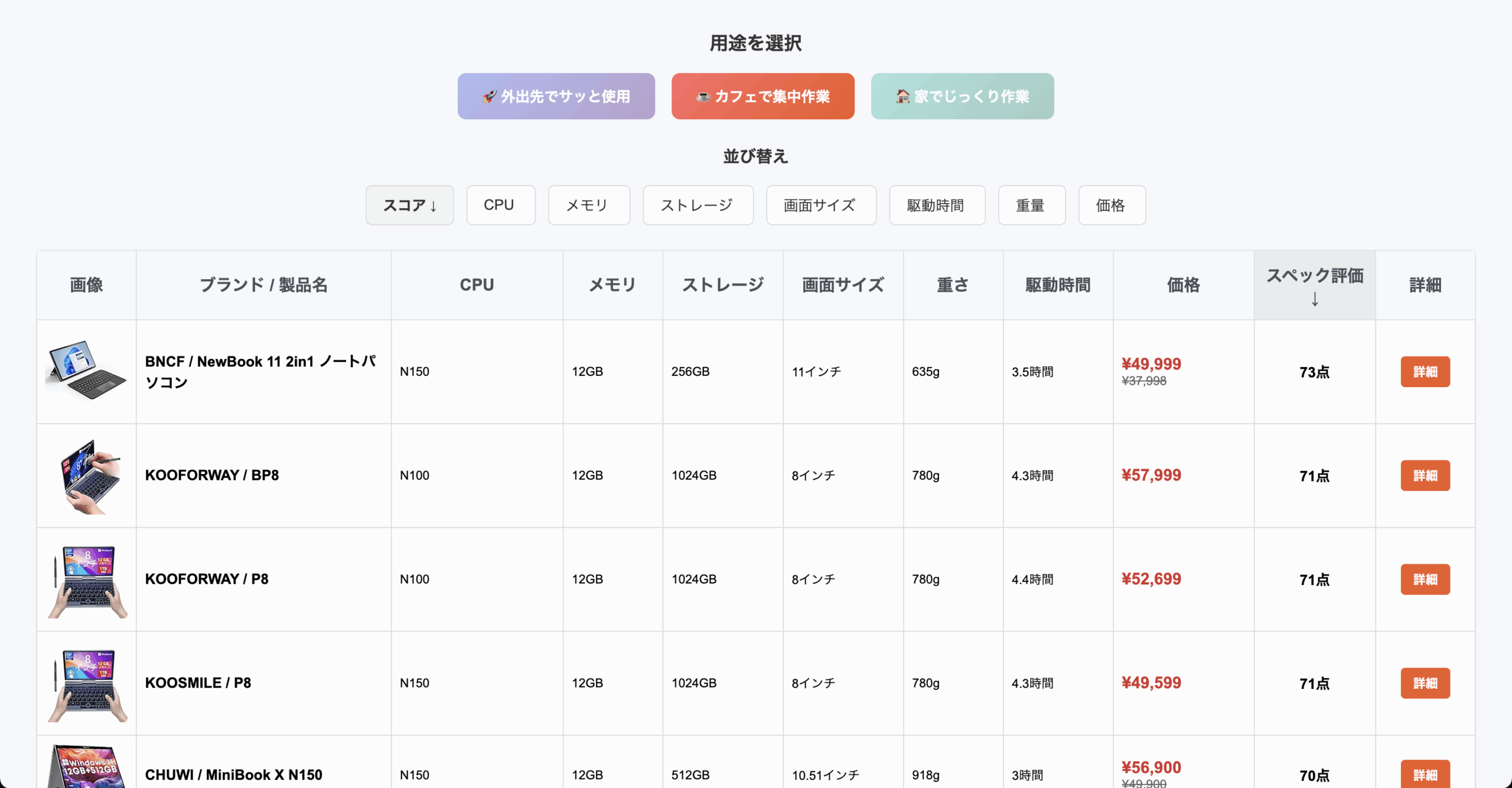
AmazonCompare compact Windows tablets, mini PCs, and laptops by specs and score.
Run by the same operator.
Related Articles
-


- Can You Trust Amazon Laptop Reviews? What to Check Before Buying
- MacBook Pro 14-inch or 16-inch: Which Size Should You Buy?
- When to Buy a Computer for a Child: Elementary and Middle School Guide
- What Computer Do You Need for Japan e-Tax? Card Reader, Phone, Printer
- Can the iPad A16 Stream with OBS? Screen Recording, Storage, and iPad Air Tradeoffs
- Is the iMac Good for Video Editing? M4, Memory, SSD, and Ports
- Is iMac Good for College? Home Study, Campus Use, and MacBook Air
- Is MacBook Neo good for Zoom? 8GB RAM, camera, and screen sharing

- iPad Pro or MacBook Pro: Which Should You Buy for Creative Work?
