iMac or MacBook Air: Which Should You Buy for Home, College, or Work?
Is the Mac mini Good for Illustrator and Photoshop? M4, M4 Pro, and Memory Choices

About the Author
Sesera editorial account organizes laptop, mini PC, smartphone, and gadget buying guides so readers can check the important points before buying.
“Can a Mac mini really handle Illustrator and Photoshop?”
“Should I buy the cheaper M4 model, move up to M4 Pro, or just get a MacBook Pro instead?”
That is the right question to ask before buying. Mac mini can be a very good Adobe machine, but only when the whole desk makes sense: memory, SSD storage, monitor, external drives, keyboard, mouse, and whether you ever need to work away from the desk.
Here is the short answer. If you make web graphics, banners, thumbnails, light print work, and normal photo edits at one desk, start with Mac mini M4 and 24GB memory. If you work with large PSD files, many RAW photos, several Adobe apps, 4K video on the side, or a multi-monitor studio setup, move toward M4 Pro with 48GB or 64GB memory. If the same work needs to leave the desk, buy MacBook Pro instead.
This guide is not a direct translation of the Japanese article. It is localized for English readers who are comparing a Mac mini desk setup against iMac, MacBook Pro, and Windows creative PCs.
Start with the desk, not the chip
Mac mini is strong for Illustrator and Photoshop because it lets you build a fixed creative desk. You can choose a larger monitor, keep an external SSD connected, use a better keyboard and mouse, and leave everything ready for the next session.
That advantage disappears if you only compare the box price. A Mac mini still needs a display, keyboard, mouse or trackpad, speakers or headphones, storage, backup, and sometimes a webcam. If you are buying every accessory from zero, the real comparison is not only Mac mini M4 vs M4 Pro. It is Mac mini desk vs iMac simplicity vs MacBook Pro portability.
Apple lists the current Mac mini with M4 and M4 Pro. The M4 model starts with 16GB unified memory and can be configured higher. The M4 Pro model starts with 24GB and can be configured higher again, with stronger graphics, more memory bandwidth, higher storage options, and Thunderbolt 5 on the rear ports.
Sources:
Apple Mac mini technical specifications
Apple Support Mac mini tech specs
Adobe Illustrator system requirements
Adobe Photoshop system requirements
| Workload | Better starting point | Why |
|---|---|---|
| Social images, banners, light photo edits | M4 with 24GB | Fast enough, better value |
| Daily Illustrator and Photoshop work | M4 with 24GB or M4 Pro with 48GB | Depends on file size and multitasking |
| Large PSD files, RAW batches, heavy layers | M4 Pro with 48GB or 64GB | Memory headroom matters |
| Adobe plus video editing | M4 Pro | Sustained exports and multitasking benefit |
| One clean all-in-one desk | iMac | Display, camera, speakers, and input devices are bundled |
| Creative work away from the desk | MacBook Pro | Mac mini is not portable |
| NVIDIA, CUDA, certain studio software | Windows creative PC | Compatibility can matter more than macOS |
Choose M4 for lighter design work
Choose Mac mini M4 if your Illustrator and Photoshop work is mostly web graphics, blog images, SNS assets, simple banners, YouTube thumbnails, light print layouts, photo correction, and learning Adobe tools. For those jobs, the regular M4 chip is not the weak link.
The weak link is usually the cheapest configuration. Adobe lists 8GB as a minimum and 16GB or more as recommended for Photoshop, while Illustrator also recommends 16GB. That is the software floor, not the comfortable buying target for a main creative Mac. Once you add browser tabs, cloud sync, fonts, stock assets, chat, and multiple Adobe apps, 24GB becomes the cleaner starting point.
If the budget is limited, I would rather buy M4 with 24GB memory than jump to M4 Pro while keeping the rest of the setup thin. Illustrator and Photoshop feel better when the whole desk has room to breathe.
Related guide:
Mac mini M4 vs M4 Pro
Move to M4 Pro when waiting is part of the job
M4 Pro starts to make sense when heavy creative work is normal, not occasional. Large layered PSD files, batch RAW edits, several Adobe apps open all day, 4K video work on the side, multiple high-resolution displays, fast external SSDs, and years of professional use all push the decision toward M4 Pro.
The reason is not only benchmark speed. M4 Pro gives you more headroom around graphics, memory bandwidth, ports, external storage, and higher memory configurations. If Illustrator and Photoshop are tied to paid work, that extra headroom is easier to justify.
If your work is still light, do not buy M4 Pro just because it feels safer. Spend first on 24GB memory, a proper SSD size, and a monitor that actually helps design work.
Use 24GB as the practical Adobe baseline
For a Mac mini used mainly for Illustrator and Photoshop, 24GB is the practical baseline I would start from. It gives enough room for Adobe apps, browser references, cloud storage, messaging, fonts, previews, and smaller photo libraries without treating memory pressure as a daily tax.
16GB is acceptable for light learning, occasional image edits, and simple assets. I would avoid it for a main Adobe desk Mac unless the budget is strict and the projects are genuinely small.
48GB or 64GB belongs to heavier work. Choose it when the Mac mini is already moving toward M4 Pro: large files, heavy layers, RAW photo sets, multiple displays, daily client work, or several creative apps open together.
| Memory | Good fit | Buying judgment |
|---|---|---|
| 16GB | Learning, light web graphics, occasional edits | Usable, but not my first choice for a main Adobe Mac |
| 24GB | Regular Illustrator and Photoshop work | The best starting point for many buyers |
| 48GB | Large PSD files, RAW, daily professional work | Strong M4 Pro target |
| 64GB | Heavier creative desk, long ownership, mixed Adobe and video | Worth considering when time saved matters |
Related guide:
Mac mini memory and SSD guide
Choose SSD size by active projects
Illustrator and Photoshop do not only use storage for final files. They also create caches, previews, downloads, exports, fonts, cloud files, and working copies. Once the internal drive gets tight, the Mac still works, but ownership becomes annoying.
For a light Adobe setup, 512GB can work if you keep project archives on external storage. For a main creative desk, 1TB is the safer default. Move to 2TB or more when current photo libraries, RAW projects, video files, or design archives need to stay on the internal SSD.
Mac mini is friendly to external SSDs because the drive can stay plugged in at the desk. Still, I would not use external storage as an excuse to buy too little internal space for active work.
| SSD | Best for | Watch out for |
|---|---|---|
| 256GB | Very light use | Too cramped for an Adobe desk |
| 512GB | Light design and cloud-first storage | Needs external storage discipline |
| 1TB | Main Illustrator and Photoshop machine | The safer default |
| 2TB or more | Large active photo, design, and video files | Expensive, but clean for production work |
The monitor matters more than it looks
Mac mini can be better than iMac for Adobe work when you care about the display. A 27-inch or larger 4K monitor, a color-focused display, a vertical second screen, or a dual-monitor setup can make Illustrator and Photoshop easier to use than a small laptop screen.
This is also where the budget can get away from you. If you buy a Mac mini, then add a good monitor, keyboard, mouse, external SSD, webcam, and speakers, the total can move close to iMac or MacBook Pro territory. That is not bad if you want the flexible desk. It is bad if you only chose Mac mini because the base price looked cheap.
Related guide:
External monitor guide for laptop and Mac desk setups
Mac mini beats iMac when you want a flexible desk
Choose Mac mini over iMac if you already own a good monitor, want a larger display than 24 inches, prefer a specific keyboard or mouse, use external SSDs, or may replace the display separately later. It is the better choice when the desk setup is part of the point.
Choose iMac if you want one neat purchase with the display, camera, speakers, keyboard, and mouse handled together. For a clean family desk or simple home office, iMac can be the easier answer.
For Adobe work, the decision is not only performance. It is whether you want the convenience of an all-in-one or the flexibility of a separate monitor and accessories.
Related guide:
iMac vs Mac mini
MacBook Pro wins when the work moves
If you create at a client site, classroom, coworking space, studio, cafe, or while traveling, Mac mini is the wrong shape no matter how good the specs are. A fixed desktop is powerful only when your work is fixed too.
Choose Mac mini when the best version of your work happens at one desk with a real monitor and connected storage. Choose MacBook Pro when the same Adobe work needs to move. For heavier Photoshop, Illustrator, and video work on the go, MacBook Pro is the cleaner fork.
Related guide:
MacBook Pro vs Mac mini
Windows is still better for some studios
For Illustrator and Photoshop alone, Mac mini is easy to recommend. But some creative desks are not only Adobe desks. If your work depends on NVIDIA GPUs, CUDA tools, certain 3D workflows, game production, upgradable internal parts, or company-standard Windows software, a Windows creative PC may be the better machine.
Do not treat Mac mini as automatically superior because it is a Mac. Treat it as a compact Adobe-friendly desktop. If your surrounding tools point to Windows, listen to that before buying.
Tool:
Compare creative PCs on Specsy
Use this configuration before checkout
- Light Adobe learning and simple assets: M4, 16GB or 24GB memory, 512GB SSD.
- Regular Illustrator and Photoshop work: M4, 24GB memory, 1TB SSD.
- Daily paid design work with larger files: M4 Pro, 48GB memory, 1TB to 2TB SSD.
- Heavy PSD, RAW, Adobe plus video, or long ownership: M4 Pro, 48GB or 64GB memory, 2TB SSD if active files are large.
- Portable creative work: MacBook Pro before Mac mini.
- One simple all-in-one desk: iMac before building a Mac mini setup from scratch.
My default recommendation is simple. For most fixed-desk Illustrator and Photoshop users, start with Mac mini M4, 24GB memory, and 1TB SSD. Move to M4 Pro only when the files, deadlines, displays, or side work clearly ask for it.
Not sure whether Mac mini is the right creative desk?
Use Specsy to narrow down desktop type, memory, SSD size, display needs, and budget before paying for chip upgrades.
Useful US Amazon searches
Use these as search shortcuts, then confirm the exact chip, memory, SSD size, seller, and return policy before buying.
Frequently asked questions about Mac mini for Adobe
Is Mac mini good for Illustrator and Photoshop?
Yes. Mac mini is good for Illustrator and Photoshop when the work is done at a fixed desk. For regular design work, start with M4, 24GB memory, and 1TB SSD. Move to M4 Pro when files are large, deadlines are frequent, or Adobe work is mixed with video and other heavy apps.
Is M4 enough for Illustrator and Photoshop?
M4 is enough for web graphics, banners, thumbnails, light print layouts, photo correction, and learning Adobe tools. For a main creative Mac, pair it with 24GB memory instead of choosing the cheapest configuration.
Who should choose Mac mini M4 Pro for Adobe work?
Choose M4 Pro if you work with large PSD files, RAW batches, several Adobe apps at once, video editing, multiple displays, fast external SSDs, or paid creative work where waiting time costs money.
How much memory should a Mac mini have for Photoshop and Illustrator?
16GB is usable for light Adobe work, but 24GB is the better baseline for a main Mac mini. Choose 48GB or 64GB when heavy PSD files, RAW work, video editing, or long-term professional use justify M4 Pro.
Should I buy Mac mini or MacBook Pro for Illustrator and Photoshop?
Buy Mac mini if the work stays at one desk and you want a larger monitor, external SSDs, and a fixed setup. Buy MacBook Pro if the same creative work needs to move between home, school, clients, a studio, or travel.
Compare specs on Specsy
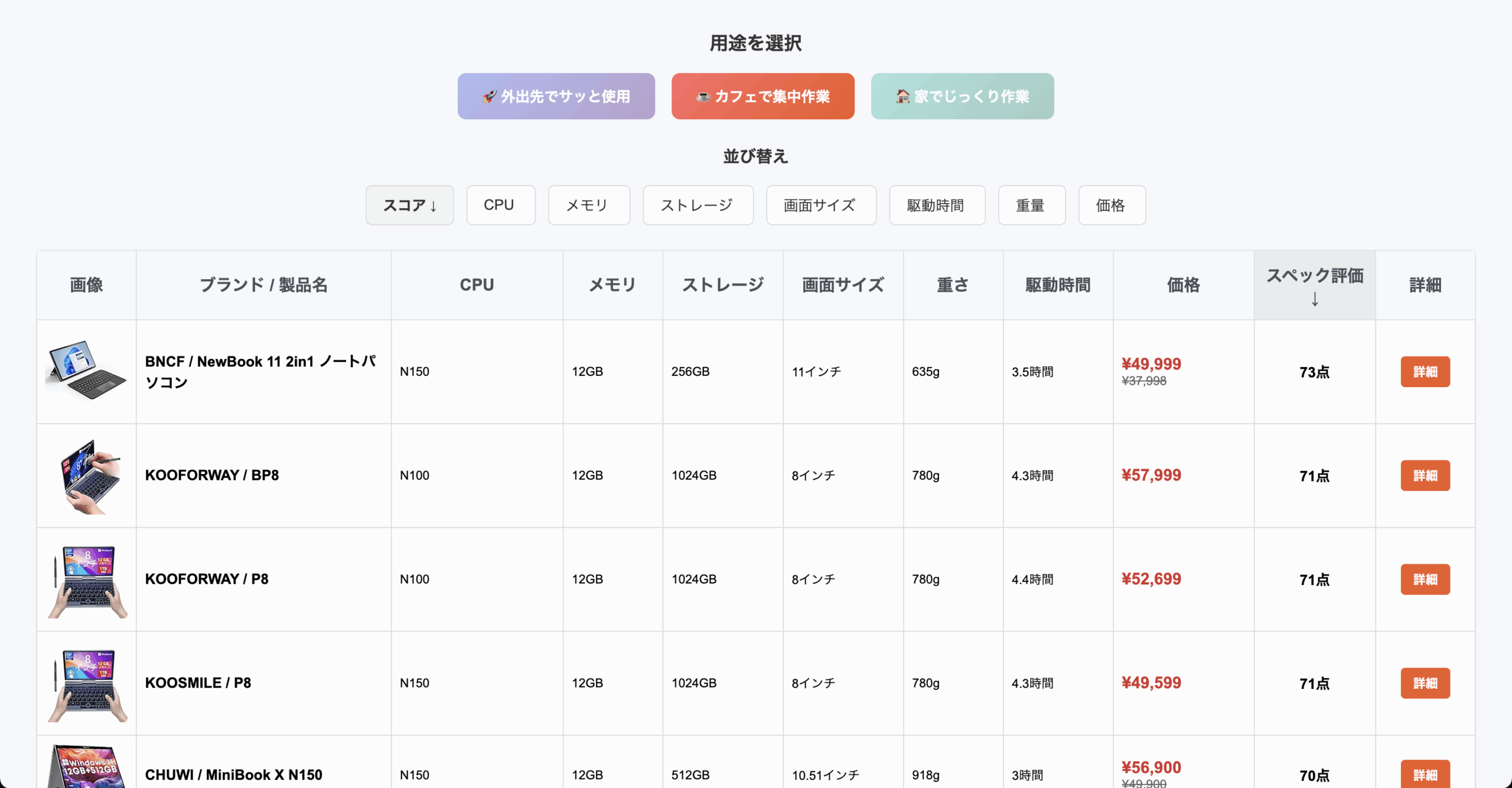
AmazonCompare compact Windows tablets, mini PCs, and laptops by specs and score.
Run by the same operator.
Related Articles
-


- Is the iMac Good for Photo and Video Editing? M4, Memory, and SSD Choices
- Is MacBook Neo good for remote work? Zoom, Office, 8GB RAM, and limits
- What Computer Do You Need for Japan e-Tax? Card Reader, Phone, Printer
- iPad Air 11-inch or 13-inch: Which Size Should You Buy?
- Best Computer for Photo Storage: SSD Size, Backup, and Family Photos
- How much memory for MacBook Air: 16GB, 24GB, or 32GB?
- Is MacBook Air good for programming? M5, memory, and Docker limits
- Is iPad Pro good for drawing and video editing? M5, storage, and Pencil choices
- Is iPad Air Good for Music Production? Logic Pro, Storage, and Limits
