MacBook Pro or Mac mini: which Mac is better for creative work and development?
Is the iMac Good for Illustrator and Photoshop? M4, Memory, and SSD Choices

About the Author
Sesera editorial account organizes laptop, mini PC, smartphone, and gadget buying guides so readers can check the important points before buying.
“Is the iMac actually good enough for Illustrator and Photoshop?”
“Or should I skip the all-in-one design and buy a Mac mini or MacBook Pro instead?”
That is the right question to ask before paying for upgrades. The current iMac can be a very comfortable Adobe machine, but it is not the right answer for every creative desk. The screen is excellent, the setup is clean, and the M4 chip is fast enough for a lot of design work. The parts that usually cause regret are memory, SSD storage, ports, and the fixed 24-inch display.
Here is the short answer. Choose iMac if Illustrator and Photoshop work stays at one desk and you want the display, camera, speakers, keyboard, and mouse handled in one purchase. For light web images and photo edits, 16GB can work. For a main Adobe desk, start at 24GB memory and 1TB SSD if the budget allows. Choose 32GB when large PSD files, RAW photos, and several creative apps will be open every day. Skip iMac if you need a larger custom monitor setup, M4 Pro, NVIDIA/CUDA software, or a portable creative machine.
Choose iMac for a clean Adobe desk
The iMac makes the most sense when you want a complete creative desk without assembling every part yourself. You get a 24-inch 4.5K Retina display, Apple silicon, camera, microphones, speakers, keyboard, and mouse in one tidy setup. For Illustrator artboards, Photoshop panels, browser previews, and client assets, that simplicity has real value.
The tradeoff is that iMac is less flexible than a Mac mini setup. You cannot choose a 27-inch or 32-inch display as the main screen. You cannot move to M4 Pro inside the iMac line. You also need to decide memory and storage at purchase, because those upgrades are not something you fix later.
Apple lists the current iMac with the M4 chip, up to a 10-core CPU, up to a 10-core GPU, up to 32GB unified memory, up to 2TB storage, and a 24-inch 4.5K Retina display. The display is 4480 by 2520 pixels at 218 ppi, with 500 nits brightness and P3 wide color.
Sources:
Apple iMac technical specifications
Apple Support iMac tech specs
Adobe Illustrator system requirements
Adobe Photoshop system requirements
| Workload | iMac fit | Configuration to consider |
|---|---|---|
| Social images, blog graphics, simple banners | Good fit | 16GB or 24GB, 512GB SSD |
| Daily Illustrator and Photoshop work | Good fit | 24GB, 1TB SSD |
| Large PSD files and RAW photo work | Possible, but upgrade carefully | 32GB, 1TB or 2TB SSD |
| Adobe plus frequent video editing | Think twice | Compare Mac mini or MacBook Pro |
| Large custom monitor setup | Mac mini is better | Choose your own display |
| Creative work away from the desk | MacBook Pro is better | Portability matters more |
| NVIDIA, CUDA, gaming, special Windows tools | Windows may be better | Check software first |
M4 is enough for lighter design work
For web graphics, thumbnails, SNS images, blog illustrations, light print layouts, logo drafts, and normal photo correction, the M4 iMac is not the problem. Illustrator and Photoshop are often limited by memory, storage space, file size, fonts, plug-ins, and how many other apps are open.
Adobe lists 8GB as the minimum memory for Illustrator, with 16GB recommended. Photoshop also lists 8GB as the minimum and 16GB or more as recommended on Mac. Those numbers are useful as a floor, but they are not the same as a good buying target for a main creative computer.
If you are learning Adobe apps or making light assets for a blog, store, YouTube channel, or school project, iMac M4 is a reasonable place to start. If you are billing clients, editing large images, keeping Lightroom, Photoshop, Illustrator, browser tabs, cloud sync, and chat open together, spend the upgrade money on memory before worrying about the chip name.
Memory matters more than the chip name
For an Adobe-focused iMac, I would treat 24GB as the practical baseline. 16GB is usable for lighter work, but it leaves less room once Photoshop, Illustrator, Safari or Chrome, cloud storage, fonts, previews, and messaging apps are running at the same time.
Choose 16GB only when the work is genuinely light: occasional graphics, simple photo edits, Canva-like assets, school use, and small files. It is not wrong, but it should be a conscious choice, not just the cheapest box in the store.
Choose 24GB when the iMac will be your main desk Mac for Illustrator and Photoshop. It is the safer middle choice for people who make graphics weekly, handle client assets, open multiple Adobe apps, or want the machine to stay comfortable for several years.
Choose 32GB when the iMac becomes a fixed creative workstation. Large layered PSD files, many RAW photos, heavy brushes, big Illustrator files, and several creative apps open together are the cases where the extra memory is easier to justify.
Related:
How much memory and SSD storage for iMac
Start storage at 512GB, prefer 1TB
Do not underestimate storage for Adobe work. Photoshop files, Illustrator documents, fonts, stock assets, exports, iPhone photos, downloads, cloud sync folders, and caches can fill a small SSD faster than expected. A nearly full internal drive also makes the whole machine feel more cramped.
256GB is too tight for a main Adobe iMac unless almost everything lives in cloud storage and the work is occasional. It can be made to work, but it turns storage management into a regular chore.
512GB is the minimum I would consider for light creative use. It is fine if you use an external SSD for archives and keep only current projects on the iMac. For a main Illustrator and Photoshop desk, 1TB is the cleaner choice. It gives enough space for active projects, exported files, photo libraries, and a few messy months before you need to clean up.
Choose 2TB only when you already know why you need it: large photo libraries, many project folders, local video assets, or a workflow where keeping work on the internal SSD saves time. Otherwise, 1TB plus a good external SSD is often the better balance.
The 24-inch display is the main decision
The iMac display is one of the strongest reasons to buy it. Text is sharp, colors are wide-gamut, and the resolution gives Illustrator and Photoshop much more room than a basic 1080p monitor. If you are coming from a small laptop screen, the iMac can feel like a serious upgrade even before performance enters the conversation.
The problem is not quality. It is size and flexibility. Some Photoshop users want a 27-inch or 32-inch display. Some Illustrator users want a vertical second monitor for references, browser previews, or long documents. Some photographers want a specific color-managed display. If that sounds like your desk, Mac mini is the more flexible route.
Choose iMac when you want one polished screen and a clean desk. Choose Mac mini when the monitor is part of the creative decision.
Related:
iMac or Mac mini for a clean desk or custom setup
Mac mini for Illustrator and Photoshop
Four ports are safer for creative gear
The port decision looks small until the desk fills up. A simple iMac setup with keyboard, mouse, cloud files, and one external SSD can survive on fewer ports. Adobe work often grows past that: card reader, external SSD, drawing tablet, audio interface, camera, dock, backup drive, and sometimes an external display.
Apple separates the lower two-port iMac configuration from the four-port versions. For casual design work, two ports can be enough. For a main Adobe desk, I would rather have the four-port model. It reduces adapter clutter and leaves room for the workflow you will probably build later.
This matters most if you work with photos. Camera cards, backup drives, and external SSDs are not accessories you plug in once. They become part of the routine.
Mac mini wins for flexible studios
Choose Mac mini instead of iMac when you want a larger monitor, dual displays, faster external storage, more control over accessories, or M4 Pro. Mac mini is also easier to pair with a display you already own, which can make the real total cost lower than it first appears.
For Illustrator and Photoshop, the regular M4 Mac mini can cover a lot of the same light and middle work as iMac. The difference is the desk. Mac mini lets you build around the apps. iMac gives you a clean finished desk from day one.
If your creative work is getting heavier, do not force the iMac just because the display looks good. A Mac mini with a 27-inch display, more memory, external SSDs, and a better input setup may be the more honest long-term tool.
MacBook Pro wins when work moves
If you need to work at home, at school, in an office, at a client site, or while traveling, the iMac is the wrong main machine. It can be excellent at one desk, but it cannot become portable later.
MacBook Pro is the better choice when the same Illustrator and Photoshop files need to move with you. It also makes more sense when heavy work runs for long sessions and you want stronger Pro or Max-class headroom. The iMac is about a clean fixed setup. MacBook Pro is about taking serious work with you.
Related:
MacBook Pro or Mac mini for creative work
Windows still matters for some workflows
For pure Illustrator and Photoshop work, macOS is a comfortable choice. The reason to consider Windows is usually not Adobe itself. It is the rest of the workflow: NVIDIA GPU tools, game development, specific plug-ins, company software, certain printers or cutters, upgradeable desktop hardware, or a workplace that standardizes on Windows.
If the job requires those tools, do not buy an iMac first and hope the rest will fit. Check the software and device requirements before choosing the computer. The best Adobe machine is still the wrong machine if the surrounding workflow breaks.
If you want to compare Mac and Windows creative PCs by CPU, memory, GPU, and price, Specsy can help with the broader shortlist.
Related tool:
Specsy video editing and creative PC comparison
Buy the configuration around your files
The safest way to choose the iMac is to start with your files, not with Apple’s color options or the lowest price. Small web graphics and occasional photo edits can start lighter. Daily Adobe work deserves 24GB memory, 1TB storage, and enough ports. Large PSD files, RAW batches, and long-term paid work push the iMac toward 32GB.
My practical pick for most people using Illustrator and Photoshop on iMac is 24GB memory, 1TB SSD, and the four-port model. Go down only if the work is clearly light. Go up to 32GB if the iMac will be a fixed creative workstation for several years.
Do not buy the iMac because it is the prettiest Mac. Buy it because you want a clean, fixed Adobe desk and the 24-inch screen fits the way you work.
Frequently asked questions
Is the iMac good for Illustrator and Photoshop?
Yes. The iMac is good for Illustrator and Photoshop when the work stays at one desk and you want a clean all-in-one setup. It is strongest for web graphics, banners, photo correction, light print work, and everyday Adobe use.
Is M4 enough for Illustrator and Photoshop?
M4 is enough for lighter and middle Adobe work. For a main creative iMac, the more important decision is memory and storage. Choose 24GB memory for regular Adobe use, and consider 32GB for large files and long-term creative work.
How much memory should I choose for Adobe apps?
Choose 16GB only for light or occasional work. Choose 24GB for a main Illustrator and Photoshop desk. Choose 32GB if you use large PSD files, RAW photos, several creative apps, or want the iMac to stay comfortable for years.
How much SSD storage do I need?
512GB is the minimum for light creative work. 1TB is the better choice for a main Adobe iMac. Choose 2TB only if large photo libraries, video assets, or project folders will stay on the internal drive.
Should I buy iMac or Mac mini for Adobe work?
Buy iMac if you want a complete fixed desk with a built-in 24-inch display. Buy Mac mini if you want a larger monitor, dual displays, more external storage, M4 Pro, or a more flexible studio setup.
Compare specs on Specsy
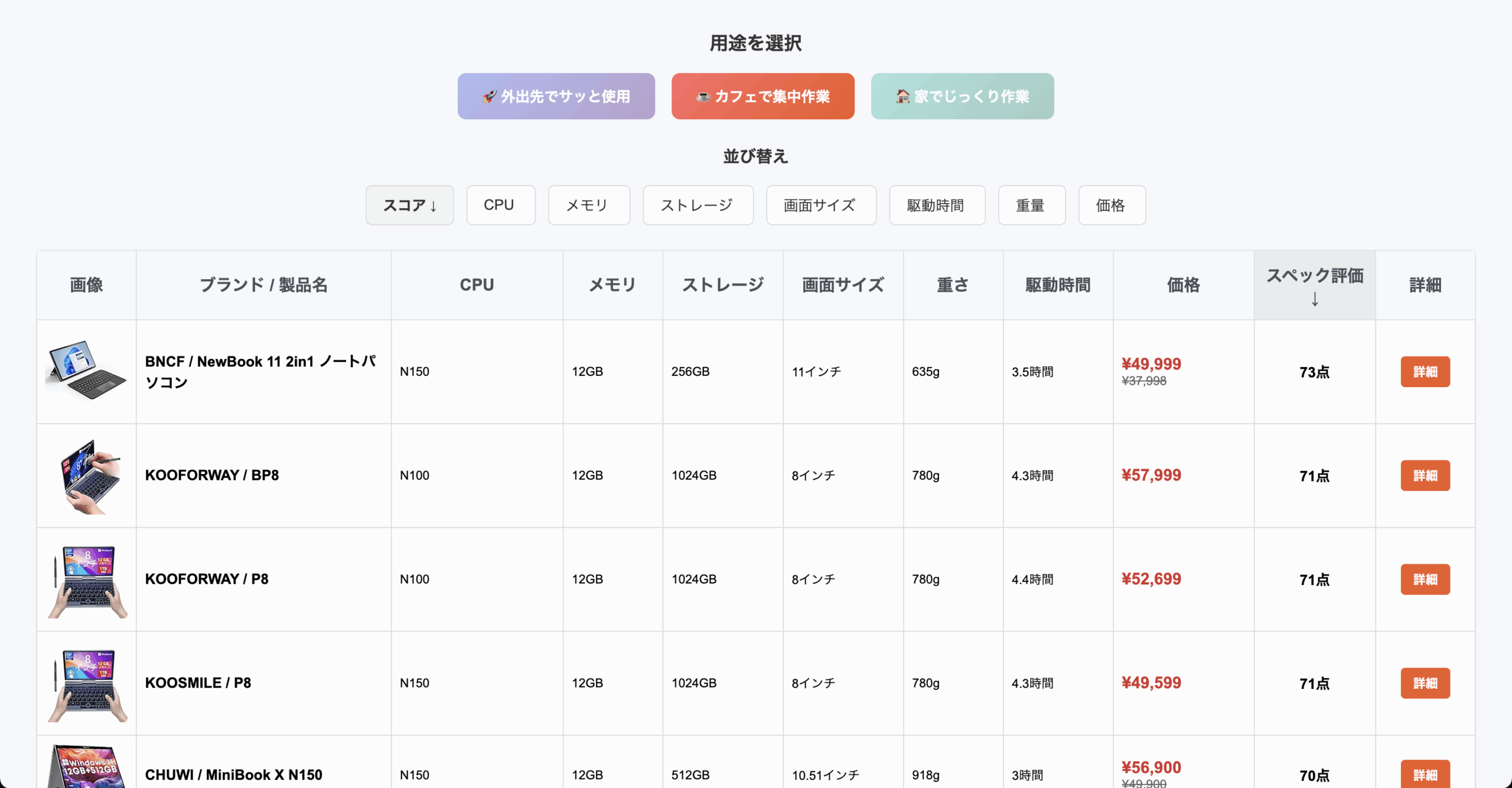
AmazonCompare compact Windows tablets, mini PCs, and laptops by specs and score.
Run by the same operator.
Related Articles
-


- Is iPad Pro good for video editing? M5, storage, and Final Cut Pro
- Is the MacBook Air Good for Music Production? M5, Memory, and Storage
- Is the MacBook Pro Good for Music Production? M5 Pro, Memory, and Storage
- Is the iMac Good for Music Production? M4, Memory, Storage, and Ports
- Is the Mac mini Good for Music Production? M4, M4 Pro, Memory, and Storage
- How Much iPad Storage Do You Need: 128GB, 256GB, 512GB, 1TB, or 2TB?
- Can you edit video on iPad Air? M4, storage, and iPad Pro tradeoffs
- Mac mini for programming: M4 vs M4 Pro, memory, and Docker
- Is the iMac Good for Blender? M4, Memory, and 3D Work Limits
