Is the Mac mini Good for Music Production? M4, M4 Pro, Memory, and Storage
Can the iPad Air Stream with OBS? M4, Screen Recording, and Mac Limits

About the Author
Sesera editorial account organizes laptop, mini PC, smartphone, and gadget buying guides so readers can check the important points before buying.
“Can I use the iPad Air for OBS streaming?”
“If I only want to record lessons, app demos, or drawing videos, do I need a Mac instead?”
The practical answer is this: iPad Air is a strong device for screen recording, app walkthroughs, study videos, drawing process videos, and short tutorial footage. It is not the right device to buy as your main OBS Studio computer.
If you want to record the iPad screen and make clean videos from it, start with iPad Air 256GB. If you will keep recordings, edit on the iPad, and export finished clips regularly, 512GB is the safer buy. If you want scenes, chat overlays, alerts, external cameras, audio mixing, local recording, and a full live-streaming setup, buy a Mac or Windows PC instead.
Treat iPad Air as a capture device
The iPad Air makes the most sense when the job starts on the screen. Recording a class explanation, showing an app, drawing with Apple Pencil, marking up a PDF, or capturing a study workflow all fit the tablet shape. You can touch the interface directly, record the screen, add microphone audio, and turn that footage into a short video without building a desk setup.
That is different from controlling a produced stream. OBS-style streaming usually means a starting screen, scene switching, chat, alerts, audio sources, cameras, capture cards, overlays, and a local recording running at the same time. iPad Air can supply footage for that workflow. It should not be the control center.
| Use case | iPad Air fit | Practical call |
|---|---|---|
| Screen recording | Strong | Air is a good fit |
| Class or study videos | Strong | Choose 256GB or more |
| Drawing process clips | Strong | Air works well |
| Short app tutorials | Strong | Keep the workflow simple |
| OBS Studio host | Weak | Use a Mac or PC |
| Gaming stream setup | Weak | Use a Windows PC |
Related guides:
Can the iPad A16 stream with OBS?
iPad Air or MacBook Air for college and work
Do not buy it as your OBS computer
OBS Studio is a desktop streaming and recording app. OBS lists desktop operating systems such as Windows, macOS, and Linux in its system requirements, and the current OBS download page is organized around Windows, Mac, and Linux releases. iPadOS is not the same target.
This matters because the limit is not simply chip speed. A stream with multiple scenes depends on browser sources, audio routing, plug-ins, capture cards, window capture, file management, hotkeys, and quick control over several inputs. Those pieces are still much cleaner on a laptop or desktop.
Sources:
OBS Studio system requirements
OBS Studio downloads
Single-app live streaming stays limited
You can still go live from an iPad Air in simple ways. Some social apps, education apps, meeting tools, and screen-sharing workflows let you stream or present without OBS. If the whole job is a casual class, quick explanation, private lesson, or simple live drawing session, that may be enough.
The problem starts when you want the stream to feel produced. A waiting screen, scene changes, chat panel, alerts, background music, separate microphone control, second camera, and local recording all push you away from an iPad-only setup. At that point, the iPad Air stops being the simple answer and becomes one more device in a larger setup.
iPad screen recording is the real strength
Built-in screen recording is where iPad Air is easy to recommend. Apple lets you add Screen Recording to Control Center, start after a short countdown, include microphone audio, and save the result to Photos. For your own slides, notes, app demos, interface tutorials, study sessions, and drawing footage, that covers a lot of real work.
There are still limits. Some apps can block recording, and screen recording cannot be used at the same time as screen mirroring. It is also not a tool for capturing protected video. Treat it as a clean way to record your own iPad work, not as a universal capture machine.
Sources:
Apple Support: take a screen recording on iPad
M4 helps editing more than streaming control
The M4 chip gives iPad Air plenty of power for the work it is actually good at. Apple lists the current iPad Air with an M4 chip, 8-core CPU, 9-core GPU, 16-core Neural Engine, 120GB/s memory bandwidth, and 12GB unified memory. Apple also lists hardware acceleration for H.264, HEVC, ProRes, ProRes RAW, and AV1 decode.
That helps when you record the screen, trim footage, make thumbnails, export a short video, or clean up a lesson clip. It does not turn iPadOS into a full desktop streaming environment. If your problem is OBS scenes, plug-ins, audio routing, and capture devices, more chip performance is not the missing piece.
Sources:
Apple iPad Air technical specifications
Start storage at 256GB for recordings
If recording is a real use case, do not treat 128GB as the comfortable choice. It can work for short clips and light use, but recordings, editing apps, project files, thumbnails, exports, and downloaded assets fill a tablet faster than casual browsing does.
For most people buying iPad Air with screen recording in mind, 256GB is the sensible starting point. Choose 512GB if you will keep footage on the iPad and edit there regularly. Choose 1TB only when you want a larger local library of lessons, drawing footage, photos, and project files.
| Storage | Best fit | Buying call |
|---|---|---|
| 128GB | Short recordings and light use | Too tight for regular video work |
| 256GB | Screen recording and light editing | The starting point |
| 512GB | Recording plus regular editing | The safer creator pick |
| 1TB | Large local footage library | Only if you keep projects onboard |
Choose size by how you record
Choose the 11-inch iPad Air if you will hold the tablet, carry it often, record quick app demos, use it in class, or work at small desks. It is easier to pick up and easier to keep in a bag. That matters when the iPad is a capture tool you open many times a week.
Choose the 13-inch iPad Air if the iPad will sit on a stand, connect to a keyboard, show notes beside the app you are recording, or handle light editing after capture. The larger canvas gives you more room for timelines, scripts, PDFs, and split view. It is less comfortable as a hand-held tablet.
| Recording style | Better size | Why |
|---|---|---|
| Handheld app demos | 11-inch | Easier to hold and move |
| Study videos at a desk | 13-inch | More space for notes and apps |
| Drawing process clips | 13-inch | Larger canvas helps |
| Travel recording | 11-inch | Less weight in the bag |
| Editing after capture | 13-inch | Timeline work is easier |
Related guides:
iPad Air 11-inch or 13-inch
Is iPad Air good for college?
External gear quickly makes a Mac cleaner
iPad Air gives you USB-C, external display support, and room to connect accessories through a hub. You can add a microphone, external SSD, keyboard, stand, or monitor depending on the setup. For simple recording, that flexibility is useful.
Once the desk has a hub, power, microphone, camera, SSD, headphones, and maybe a capture device, the iPad advantage gets thinner. A MacBook Air or Mac mini handles that kind of fixed setup with less friction. If the gear stays on a desk, choose the computer that was built to manage files, windows, audio devices, and OBS at the same time.
iPad Pro is better, but not for OBS
iPad Pro is the better iPad for people who care about the display, speaker quality, heavier video editing, Thunderbolt accessories, and the higher-end feel of the device. If your work is drawing, video, color-critical review, or a premium tablet experience, Pro can make sense.
That does not change the OBS answer. iPad Pro is still an iPad. If your main goal is a full OBS control room, moving from iPad Air to iPad Pro does not solve the desktop-app problem. For screen recording and simple footage creation, iPad Air is already enough for many buyers. For serious OBS, buy a Mac or PC.
Related guides:
Is iPad Pro worth it for college?
iPad Pro or MacBook Pro for creative work
Use a Mac when the stream gets complex
A Mac is the cleaner choice when you want OBS Studio itself. MacBook Air can handle light streaming and recording setups, especially when the scenes are simple. Mac mini is better for a desk setup with a monitor, microphone, and external storage. MacBook Pro is the safer pick when streaming is tied to heavier editing, long sessions, or more demanding production work.
The simple split is useful before checkout: iPad Air records the touch-based footage; the Mac manages the stream. If you already own a Mac, iPad Air can become a very good capture and companion device. If you do not own a real computer yet, do not buy iPad Air first for OBS.
Use Windows for game streaming
If the target is game streaming, a Windows PC is usually the safer starting point. Game capture, GPU encoding, capture cards, Steam, launchers, chat tools, browser sources, and streaming hardware are easier to combine on a desktop-style gaming setup.
iPad Air can still be useful beside that setup. It can show notes, control chat, display a script, record a touch-based app demo, or serve as a second screen in some workflows. It should not be the machine expected to run the stream, capture the game, manage audio, and store the recording.
The buying answer before checkout
| What you want to do | Best buy |
|---|---|
| Short iPad screen recordings | iPad Air 256GB |
| Record and edit on the iPad often | iPad Air 512GB |
| Keep many projects locally | iPad Air 1TB |
| Record while carrying the tablet | 11-inch iPad Air |
| Edit, draw, and work at a desk | 13-inch iPad Air |
| Run OBS Studio as the main tool | MacBook Air, Mac mini, or MacBook Pro |
| Stream games seriously | Windows PC with a suitable GPU |
Buy iPad Air for screen recording, lessons, app tutorials, drawing clips, study videos, and footage creation. Start at 256GB. Move to 512GB if recording and editing will be routine.
Do not buy iPad Air as your main OBS computer. The M4 chip is strong, but the streaming workflow is still better on macOS or Windows. If the stream needs scenes, alerts, chat, cameras, microphones, capture cards, and long recordings, put the money toward a Mac or Windows PC first.
FAQ
Can the iPad Air run OBS Studio?
No. iPad Air is not a normal OBS Studio computer. OBS Studio is built for desktop operating systems such as Windows, macOS, and Linux. Use iPad Air for screen recording, app demos, lesson videos, and footage capture, then use a Mac or PC when you need full OBS control.
Can you stream from the iPad Air by itself?
You can use supported apps for simple live sessions, screen sharing, or direct streaming. It becomes weak when you need OBS-style scenes, chat overlays, alerts, multiple audio sources, external cameras, and long local recording.
How much storage should I choose for iPad Air screen recording?
Start at 256GB if recording is part of the reason you are buying the iPad Air. Choose 512GB if you will keep recordings, edit on the iPad, and export finished videos. Choose 1TB only if you want to store a large amount of footage locally.
Is iPad Air better than the iPad A16 for recording?
Yes, if you record and edit regularly. iPad Air gives you the M4 chip, more workspace options, 11-inch and 13-inch sizes, and better headroom for editing. The iPad A16 is still fine for simple screen recordings and light app demos.
Should I buy a Mac instead for OBS streaming?
Buy a Mac or Windows PC if OBS streaming is the main job. iPad Air is the better tablet for capturing touch-based footage, notes, drawing, and app demos. A MacBook Air, Mac mini, MacBook Pro, or Windows gaming laptop is cleaner for managing the actual stream.
Compare specs on Specsy
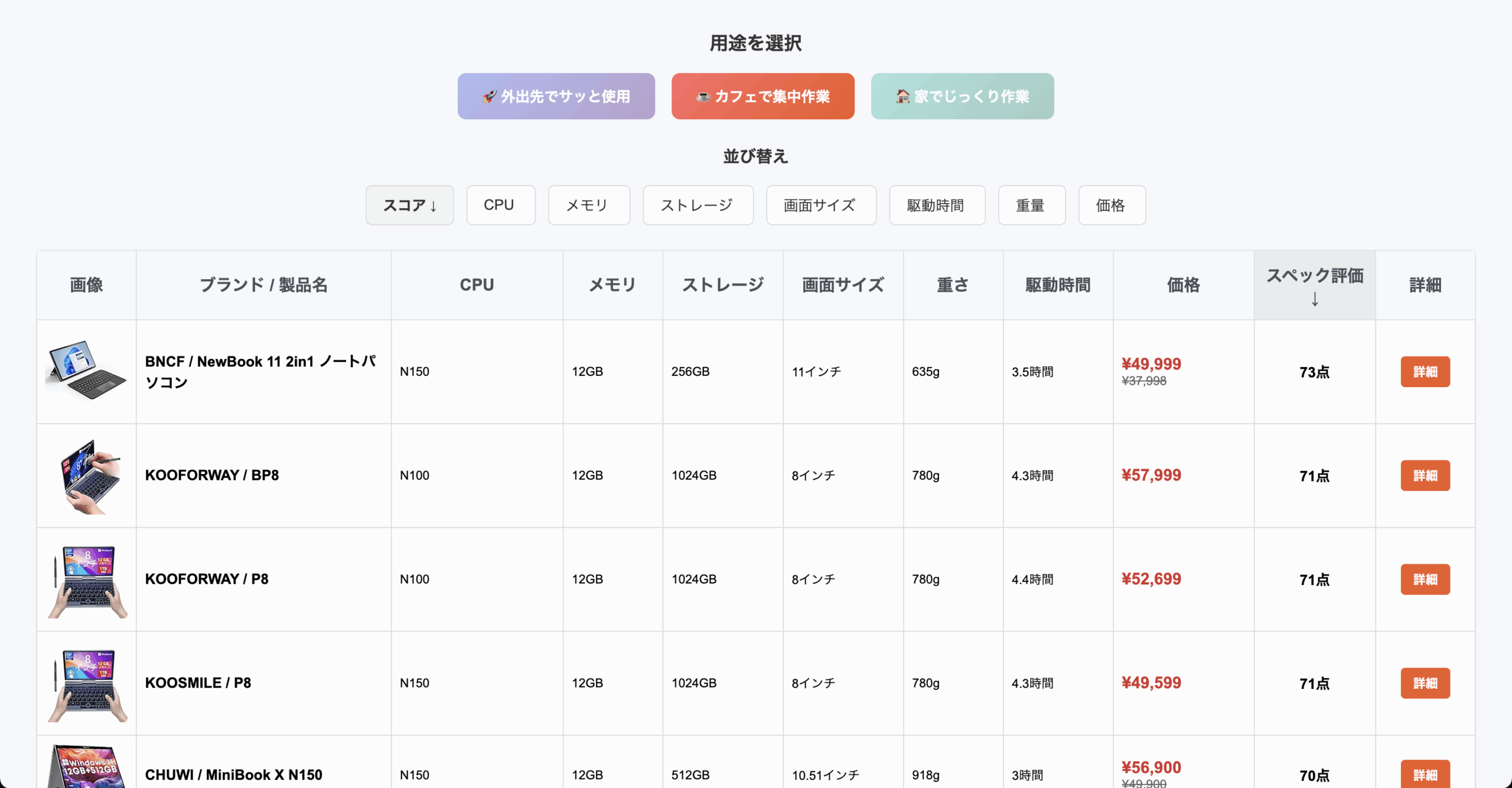
AmazonCompare compact Windows tablets, mini PCs, and laptops by specs and score.
Run by the same operator.
Related Articles
-


- Is MacBook Pro good for programming? M5 Pro/Max, memory, and Docker
- Are Cheap Laptops on Amazon Worth It? Specs to Avoid Before Buying
- Best Laptop Brands by Use: Work, College, Home, and Creative Tasks
- Is the MacBook Air Good for Blender? M5, Memory, and 3D Limits
- How Much iPad Storage Do You Need: 128GB, 256GB, 512GB, 1TB, or 2TB?
- iMac or MacBook Air: Which Should You Buy for Home, College, or Work?
- What to Ask Before Buying a Laptop in a Store
- What Computer Do You Need for Japan e-Tax? Card Reader, Phone, Printer
- Mac mini or MacBook Air: Which Should You Buy for Desk or Portable Use?
