iPad or iPad Air: Which Should You Buy for Notes, Study, and Storage?
iMac or Mac mini: Which Should You Buy for a Clean Desk or Custom Setup?

About the Author
Sesera editorial account organizes laptop, mini PC, smartphone, and gadget buying guides so readers can check the important points before buying.
"Should I buy the simple iMac setup, or build a desk around a Mac mini?"
"Mac mini looks cheaper, but does it still win after adding a monitor, keyboard, mouse, webcam, and speakers?"
The practical answer is this: choose iMac if you want a clean fixed desk and do not want to shop for every part of the setup. Choose Mac mini if you already own a good monitor, want a 27-inch or larger display, need dual monitors, or want M4 Pro in a compact desktop.
The common mistake is comparing the iMac price with only the Mac mini box. Mac mini is not a complete computer setup by itself. The opposite mistake is buying an iMac for simplicity, then realizing later that you wanted a larger monitor, a different keyboard, multiple displays, or M4 Pro performance.
This guide localizes the iMac versus Mac mini decision for English readers: display, total cost, accessories, M4 Pro, home office work, creative work, portability, Windows needs, and when a MacBook or Windows PC is the better answer.
Start with the desk you want
The first decision is not the chip. It is the desk. iMac is an all-in-one Mac built around a 24-inch 4.5K Retina display. Mac mini is a small desktop that needs everything else around it.
Apple lists the current iMac with the M4 chip, a 24-inch 4.5K Retina display, a 12MP Center Stage camera, speakers, microphone system, and Magic Keyboard options. Apple lists Mac mini with M4 or M4 Pro, HDMI, Ethernet, front USB-C ports, and more flexible external display support. That difference explains the buying choice better than the starting price does.
Sources:
Apple iMac technical specifications
Apple Mac mini technical specifications
Apple Mac comparison
| Situation | Better choice | Why |
|---|---|---|
| You own no desk gear | iMac | The display, camera, speakers, keyboard, and mouse are handled |
| You are happy with 24 inches | iMac | The built-in 4.5K display is the main value |
| You already own a monitor | Mac mini | You avoid paying for another built-in display |
| You want 27 inches or larger | Mac mini | You choose the display yourself |
| You want multiple monitors | Mac mini | The desk can grow around the computer |
| You need M4 Pro | Mac mini | iMac does not offer M4 Pro |
| You need to carry it | MacBook | Both iMac and Mac mini are fixed-desk choices |
| You mainly want Windows games | Windows PC | Mac is usually the wrong starting point |
Choose iMac for a complete fixed desk
iMac is best when you want one purchase to create a clean desk. The computer, display, camera, microphones, speakers, keyboard, and mouse are part of the same setup, so there are fewer decisions before you can start working.
That matters for home offices, family rooms, shared desks, simple study areas, blog writing, office documents, video calls, photo organization, and light creative work. If 24 inches is enough, iMac saves you from turning a computer purchase into a monitor and accessory project.
The decision becomes weaker if you already know you want a large external display, a special keyboard, a separate webcam, studio speakers, a wired desk, or a more modular setup. In that case, iMac's simplicity can become a limit rather than a benefit.
Related guides:
iMac or MacBook Air for home, college, or work
How much memory and SSD storage for iMac
Choose Mac mini for a custom setup
Mac mini is best when the desk is part of the plan. You choose the monitor size, keyboard, mouse or trackpad, speakers, webcam, external SSD, backup drive, hub, and network setup yourself.
If you already own a strong monitor, Mac mini often makes more sense than iMac. The same is true if you want a 27-inch, 32-inch, ultrawide, vertical secondary display, or a dual-monitor setup. You are buying the Mac without locking the display to the computer.
Mac mini is also easier to replace later. If the display and accessories still work, you can change only the small computer. That matters for people who like a stable desk but want the Mac itself to be replaceable over time.
Related guides:
Mac mini or MacBook Air for desk or portable use
How much memory and SSD storage for Mac mini
Best external monitor for a laptop or desk setup
Count the total cost, not the box
Mac mini looks cheaper when you compare only the computer. That comparison is incomplete. You still need a monitor, keyboard, mouse or trackpad, and often a webcam, speakers, USB-C hub, external SSD, backup drive, or better cables.
iMac looks more expensive because it includes the main pieces of a working desk. If you own nothing, comparing iMac with only the Mac mini starting price will push you toward a false bargain. If you already own the accessories, Mac mini becomes much more attractive.
| Cost item | iMac | Mac mini |
|---|---|---|
| Computer | Included in the all-in-one | Small desktop only |
| Display | Built in | Bought separately |
| Keyboard and pointing device | Handled in the normal setup | Bought separately if you do not own them |
| Camera and speakers | Built in | May need separate gear |
| Upgrade path | Replace the whole all-in-one | Keep the desk gear and replace the Mac |
| Best cost case | No gear, want simple setup | Already own monitor and accessories |
For budget planning, write down the real desk you will use for three years. A cheap Mac mini plus a poor monitor is not automatically better than an iMac. A Mac mini connected to a great monitor you already own can be the smarter buy.
Tools:
Use the Specsy PC checklist
Compare home and desktop PC options on Specsy
The screen decision changes everything
iMac's biggest value is the 24-inch 4.5K Retina display. It is sharp, bright enough for normal indoor use, color-friendly for everyday photo work, and tidy because the screen and computer are one unit.
The limit is also obvious: it is a 24-inch all-in-one. If you regularly keep large spreadsheets, reference documents, timelines, design tools, browser windows, and chat side by side, 27 inches or larger can feel more comfortable. Mac mini lets you pick that screen from the start.
If you are unsure, think about your current frustration. If your problem is cable clutter and decision fatigue, iMac solves it. If your problem is workspace, monitor size, or multi-monitor flexibility, Mac mini solves it better.
Related guides:
How to choose an external monitor
Choose Mac mini if you need M4 Pro
If M4 Pro is part of the reason you are shopping, choose Mac mini rather than iMac. The current iMac is an M4 all-in-one Mac. It is a clean desktop for ordinary work and light creative use, not the M4 Pro route.
Mac mini M4 Pro makes more sense for longer video editing, heavier software development, DTM sessions with more tracks and plugins, 3D work, local AI experiments, multiple displays, faster external storage, and a more expandable desk.
Do not buy M4 Pro just because it sounds safer. For office work, web calls, browsing, writing, family use, light photo editing, and short video projects, the choice between iMac and Mac mini should usually be based on desk design and total cost first.
Related guides:
MacBook Pro or Mac mini for creative work and development
Mac mini memory and SSD storage guide
Home office setups favor fewer decisions
For a simple home office, iMac is often the cleaner answer. It gives you a sharp screen, camera, microphones, speakers, keyboard, and pointing device in one setup. For documents, spreadsheets, browser work, email, chat, and video meetings, that is enough for many people.
Mac mini becomes better when the home office is more serious: a larger monitor, two displays, a wired network, a specific keyboard, separate speakers, a better webcam, external SSDs, or a work and personal device sharing the same desk.
The decision is less about remote work as a category and more about how fixed the desk is. If you want the desk finished quickly, choose iMac. If you want to shape the desk, choose Mac mini.
Creative work depends on sustained load
For photo organization, light image editing, short videos, simple music projects, and hobby creative work, iMac is comfortable. The built-in display makes the setup easy, and you do not need to build a creator desk before starting.
For heavier work, Mac mini M4 Pro is the more honest desktop choice. Long video timelines, frequent exports, 3D work, larger Logic or Ableton sessions, external SSD workflows, and multiple monitors all fit the Mac mini setup better.
If creative work also needs to happen outside the desk, neither iMac nor Mac mini is enough by itself. In that case, compare MacBook Pro against Mac mini, because the real question is desk power versus portable power.
Related guides:
MacBook Pro or Mac mini for creative work
Neither one works as a portable Mac
If the computer must go to college, a cafe, the office, a client meeting, a trip, or another room every day, remove both iMac and Mac mini from the top of the list. They are fixed-desk Macs.
A Mac mini is small, but it still needs a display, keyboard, mouse, and power. It is not a practical portable computer. iMac is even more clearly a desk machine. For portable work, MacBook Air is the lighter everyday option, and MacBook Pro is the stronger mobile workstation.
Related guides:
iMac or MacBook Air for home, college, or work
Mac mini or MacBook Air for desk or portable use
Windows and gaming need an early check
Some buyers should stop before choosing between iMac and Mac mini. If you need Windows-only software, engineering tools, heavy Excel macros, niche USB hardware, anti-cheat games, or NVIDIA GPU workflows, check compatibility first.
Modern Apple silicon Macs are excellent macOS machines, but they are not general Windows gaming PCs. Virtualization can solve some business software cases, but it is not a universal answer for games, GPU-heavy tools, or every corporate environment.
Sources:
Apple Boot Camp Assistant guide
Microsoft Windows 11 system requirements
Related guides:
Best laptop brands by use case
The safer choice before checkout
Choose iMac if you own little or no desk gear, want a clean fixed setup, are happy with a 24-inch display, do office work, video calls, family use, study, writing, photos, and light creative work, and do not need M4 Pro.
Choose Mac mini if you already own a monitor, want 27 inches or larger, need multiple displays, want M4 Pro, use external SSDs and hubs, prefer a custom desk, or want to replace the computer without replacing the display later.
If you are still undecided, ask one question: do you want Apple to finish the desk for you, or do you want to build the desk yourself? The first answer points to iMac. The second points to Mac mini.
FAQ about iMac and Mac mini
Is iMac or Mac mini better for most people?
Choose iMac if you want one clean fixed-desk computer with the display, camera, speakers, keyboard, and mouse handled in one purchase. Choose Mac mini if you already have a good monitor, want a 27-inch or larger display, need multiple monitors, or want M4 Pro.
Is Mac mini always cheaper than iMac?
No. Mac mini looks cheaper when you compare only the computer, but it needs a monitor, keyboard, mouse or trackpad, and possibly a webcam, speakers, hub, external SSD, and backup drive. If you own those already, Mac mini can be cheaper. If you own nothing, compare the full desk setup.
Should I buy iMac if I want M4 Pro?
No. The current iMac is an M4 all-in-one Mac. If your work needs M4 Pro for longer video edits, heavier development, DTM, 3D work, multiple external displays, or faster external storage, Mac mini M4 Pro is the better desktop direction.
Is iMac good enough for home office work?
Yes, for office documents, browsing, video calls, email, chat, family use, and light photo or video work, iMac is usually the simpler home office choice. Mac mini becomes better when you want a larger monitor, multiple displays, wired networking, or a more customized desk.
What should I buy if I need to carry the computer?
Neither iMac nor Mac mini is the right choice if the computer needs to leave the desk. For college, commuting, travel, meetings, or working from different rooms, compare MacBook Air and MacBook Pro instead.
Compare specs on Specsy
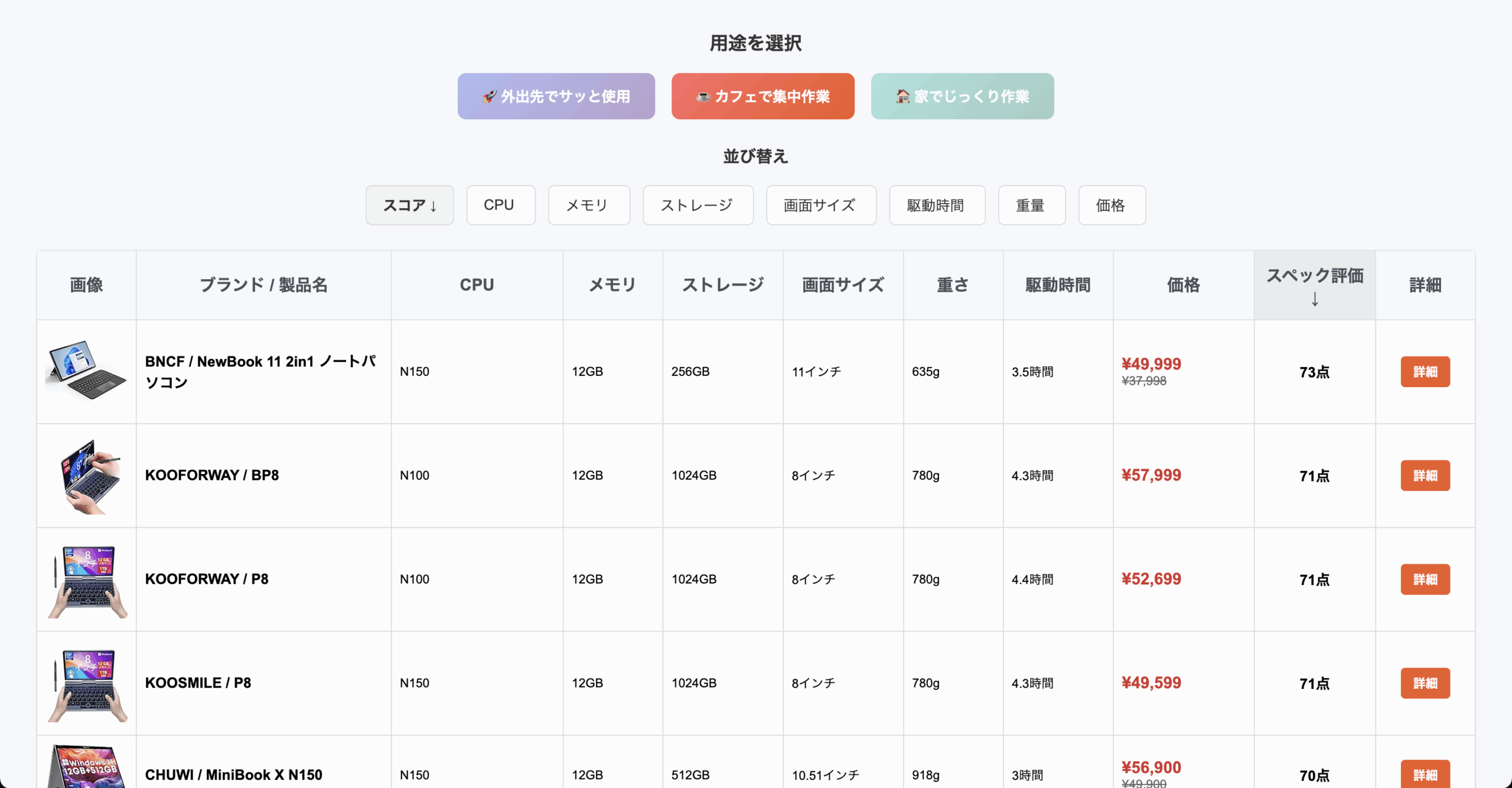
AmazonCompare compact Windows tablets, mini PCs, and laptops by specs and score.
Run by the same operator.
Related Articles
-


- Can an iPad Pro Replace a Laptop for Work? Office, External Monitor, and MacBook Limits
- How Much iPad Storage Do You Need: 128GB, 256GB, 512GB, 1TB, or 2TB?
- Is the iPad Pro Good for Study Notes? 13-inch, Storage, and iPad Air Tradeoffs
- Can you edit video on MacBook Air? M5, memory, and Pro limits
- When to Buy a Computer for a Child: Elementary and Middle School Guide
- Can You Edit Video on the iPad A16? Storage, Final Cut, and iPad Air Tradeoffs
- Is iPad Air Good for College? Notes, Reports, and Pro Tradeoffs
- Is the MacBook Pro Good for Illustrator and Photoshop? Memory and SSD Guide
- Is the Mac mini Good for Illustrator and Photoshop? M4, M4 Pro, and Memory Choices
