Best Space Exploration Encyclopedias: 3 Books to Explore Space

Best Moon Atlases: 3 Picks for Lunar Observation

About the Author
Sesera editorial account organizes laptop, mini PC, smartphone, and gadget buying guides so readers can check the important points before buying.
Choosing a Moon atlas can be tricky when you want a useful reference for observing or exploring lunar features.
These books offer different ways to follow the Moon, from indexed maps of named formations to photographs of the same landscape under different lighting.
This time, we’ll round up three atlases: The Atlas of the Near Side of the Moon, The Cambridge Photographic Moon Atlas, and 21st Century Atlas of the Moon.
Quick-reference table of recommended products
| Product name | Binding | Count of individual lunar maps | Count of photographs | Mapped lunar coverage |
|---|---|---|---|---|
 The Atlas of the Near Side of the Moon | Hardcover | 76 | — | Near-side maps, including libration and detail maps; index of main and subfeatures. |
 The Cambridge Photographic Moon Atlas | Hardcover | — | 388 | 69 lunar regions with corresponding charts; each two-page spread shows a region in multiple lighting situations. |
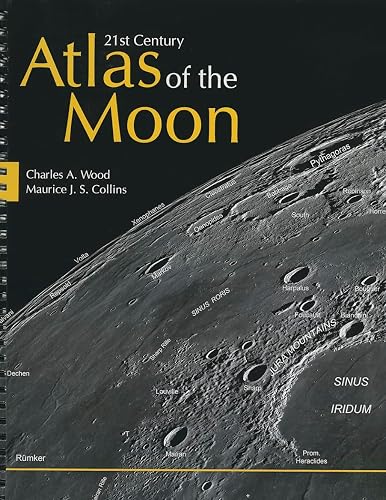 21st Century Atlas of the Moon | Spiral bound | — | — | Maps of the limb and far side, Apollo and Soviet landing sites; LRO altimetry-based images of major basins and their mare ridge. |
The Atlas of the Near Side of the Moon
For observers who want a detailed reference to named features on the Moon’s near side, The Atlas of the Near Side of the Moon is recommended. Its 76 individual maps draw on high-resolution Lunar Reconnaissance Orbiter imagery, and a comprehensive index lists the main and subfeatures. Libration maps and detail maps of areas such as Apollo landing sites provide additional points of reference.
The Atlas of the Near Side of the Moon
The Cambridge Photographic Moon Atlas
For readers who want to identify lunar formations through photographs and compare how they appear under different lighting, The Cambridge Photographic Moon Atlas is recommended. It covers 69 lunar regions with corresponding charts and descriptions of each region’s location and topography; each two-page spread shows one region in multiple lighting situations, making it possible to compare the same landscape at different lunar phases.
The Cambridge Photographic Moon Atlas
21st Century Atlas of the Moon
For backyard amateur astronomers who want a reference for telescopic Moon observation, 21st Century Atlas of the Moon is recommended. At the telescope or as a desk reference, it includes over two hundred Lunar Reconnaissance Orbiter images and details on more than one thousand named Moon features to help readers identify features of interest. The atlas also maps the limb, far side, and Apollo and Soviet landing sites; its LRO altimetry-based images show major basins and their mare ridge.
21st Century Atlas of the Moon
Choosing a Moon Atlas
- Readers looking for indexed maps of named features on the Moon’s near side
- Readers who want to compare lunar regions in photographs under different lighting
- Backyard amateur astronomers seeking a reference for telescopic Moon observation